Digital boost, stickers, TV pieces: see where parties should spend the R$4.9 billion from the Electoral Fund
⚡ Quick Summary
2026 electoral fund: check out how the R$4.9 billion will be distributed The candidates' spending forecast for the campaign for the 2026 general elections became a priority for the parties with the disclosure by the Superior Electoral Court (TSE) of the division of the Electoral Fund's money between the parties.
2026 electoral fund: check out how the R$4.9 billion will be distributed
The candidates' spending forecast for the campaign for the 2026 general elections became a priority for the parties with the disclosure by the Superior Electoral Court (TSE) of the division of the Electoral Fund's money between the parties.
The criteria for sharing the amount received by each subtitle became a top priority for the subtitles.
💰 This year, the Court will distribute R$4.9 billion to 30 parties, those that will receive the most money from the fund are:
PL - R$881 million;
PT - R$615 million;
União Brasil - R$526 million;
PSD - R$421 million;
PP - R$417 million.
The Electoral Fund emerged after private donations were banned by the Federal Supreme Court (STF).
Campaigns also account for expenses with the Party Fund, used for party administrative expenses.
Presidential Candidates
The spending of presidential candidates in 2022 gives an overview of the biggest expenses that campaigns are expected to have in 2026.
"Only in August will we have a more complete overview of the division of expenses. We are studying very carefully and using the past campaign as a reference", said José de Filippi Junior, treasurer of Lula's re-election campaign.
💵 According to data from the Superior Electoral Court (TSE), candidates for the Presidency of the Republic declared a total of R$336.7 million in expenses paid in 2022, of which R$244.9 million were financed with public money (72.74%) and R$91.8 million (27.26%) with private resources.
From the share of public resources:
R$215.3 million (87.9%) were paid with money from the Special Campaign Financing Fund, the Electoral Fund.
R$29.6 million (12.1%) were paid with money from the Party Fund, an amount that parties receive every year.
🔎 The Electoral Fund is aimed exclusively at campaigns. The Party Fund's funds are used to cover the parties' administrative expenses, such as electricity, water and rent bills.
📊 In the last elections, the ceiling for the presidential campaign was R$88.9 million for the first round and R$44.3 million for the second round. For this year, the ceilings have not yet been officially closed by the TSE, but the rule has been to correct the value of the last campaign by the IPCA.
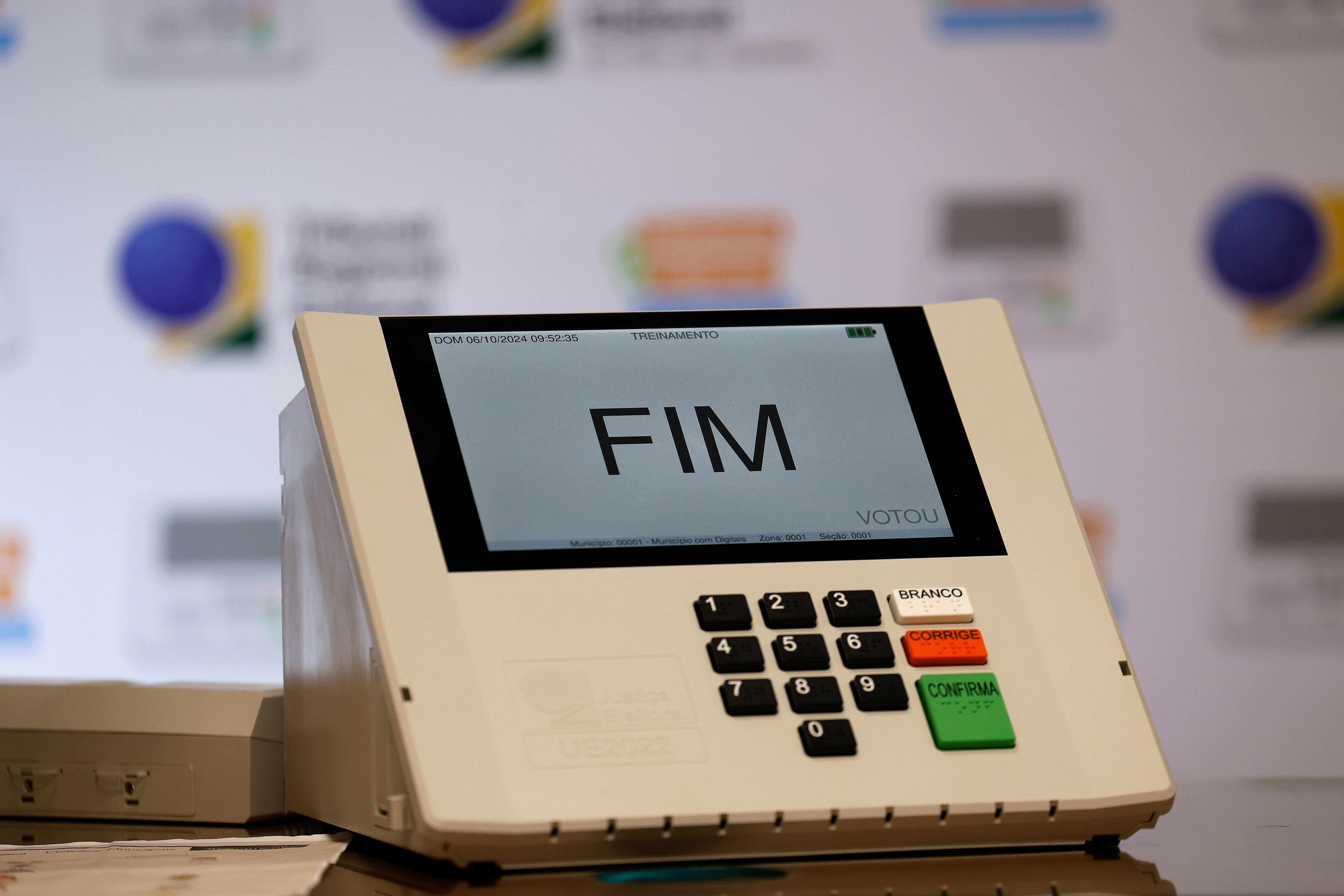
Electronic ballot box displayed at an event at the Regional Electoral Court of Rio de Janeiro (TRE-RJ), in Rio
Tânia Rêgo/Agência Brasil
Biggest expenses
📺 Expenses for producing programs for radio, television or video topped the list of the biggest expenses for presidential candidates in 2022 with R$81.3 million, followed by promoting content on the internet, with R$67.3 million.
Former president Jair Bolsonaro (PL) accounted for almost half of spending on this type of expense in the last election, with R$33 million. President Lula's campaign spent R$25 million on promoting content. The total value considered private and public resources.
They also appear among the biggest campaign expenses declared by presidential candidates in 2022:
contracting of services: R$52.9 million;
printed advertising: R$41.9 million;
stickers: R$19.5 million.
📱 Google was the biggest supplier of the presidential campaign. The platform received R$55.7 million, followed by consultancy companies in communication, marketing, films and advertising. Facebook appears in 7th place on the list, with R$8.7 million.
The parties are still fine-tuning the details about the destination of spending in this campaign.
The PT, for example, determined only priority use of the funds for Lula's re-election as President of the Republic with the highest possible amount allocated to the president's campaign, but did not define the criteria for transfer to the other candidates.
"We are discussing this weekly. We are defining the distribution according to what the PT established in its political resolution last year: priority number 1 for the re-election of Lula and then Congress", said Gleide Andrade, PT's national finance secretary. In addition to candidates for the Senate and the Federal Chamber, the parties also distribute resources from the fund that also needs to be distributed to candidates for state governments and Legislative Assemblies and the Legislative Chamber of the Federal District.
The focus of each campaign will be at the discretion of each candidate, without specific party direction.
The scrap of the pan
Missão, the youngest party in Brazil, will have access to a minimum quota of 2% of the fund to which all parties registered with the TSE are entitled in 2026.
💰 The amount will be R$ 3,307,679.85. This amount will be aimed at candidates for federal deputy, given that the size of the benches in the Chamber of Deputies will directly influence the size of electoral financing for the next elections.
The party will have Renan Santos as a candidate for President of the Republic, but given the meager public funding, the party organized a fundraiser that has already raised more than R$1 million through 17 thousand donors. This amount, says Renan's campaign, will be used to finance the candidate's travels.
“The main expenses will occur, as in the pre-campaign, with trips to all states of the Federation, maintaining the commitment to visit not only the capitals, but also smaller cities", said Amanda Vettorazzo, Renan Santos' campaign manager.
Artificial intelligence
AI tools will be used more by candidates in this year's campaign. The TSE released a resolution with rules for use.
The Court also created a permanent commission aimed at systematizing initiatives related to the use of technology in the Electoral Court.
Electoral lawyer Gabriela Rollemberg assesses that AI will be one of the biggest challenges of these elections, mainly due to the fact that the tools have evolved in recent years.
"Certainly the trend is for spending on artificial intelligence to increase, especially because many new tools have emerged. We already had AI in previous elections, but nothing like now. The tools have evolved a lot", he stated.
Electoral lawyer and member of the Brazilian Academy of Electoral and Political Law (Abradep) Alexandre Bissoli says that the use of AI itself should not weigh so much on the parties' pockets, but rather the hiring of professionals qualified to use AI.
"I think that the tools themselves are not the most expensive. But rather the professionals who will have expertise in using them, adding micro-segmentation and complying with algorithm rules", he said.
According to the lawyer, campaigns no longer need the “genius of a thinking mind” to create an advertising piece to air in the radio and TV campaign, but rather professionals who carry out the micro-segmentation of the content and the need for several messages for specific interest groups.
"It's similar to the issue of algorithms. More and more campaigns are investing in paid traffic professionals and agencies and less in traditional marketers", he analyzed.
📰 Related Articles
The best gardening equipment for every type of home
CartaCapital
Notebook with local AI: why Nvidia wants to change the PC
CartaCapital
Highway Police seize almost 160 kilos of drugs in two incidents in the interior of SP
G1 Globo
Mega-Sena, contest 3018: check the numbers drawn
G1 Globo
BH City Hall begins dismantling the cycle path on Avenida Afonso Pena; cyclists take legal action
G1 Globo