Unicamp students join teachers and end strike; servers remain paralyzed
⚡ Quick Summary
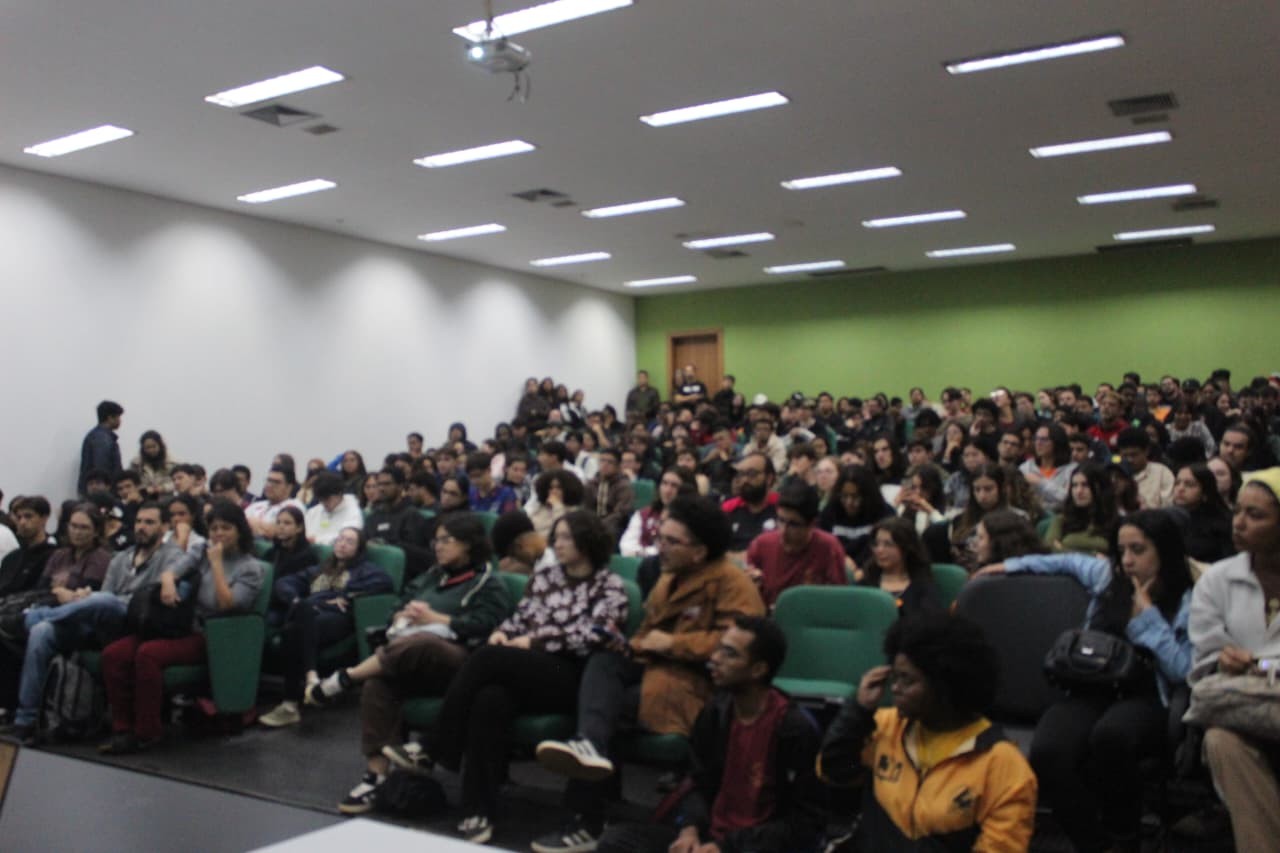
Assembly in Limeira was held on Friday night Victor Guglielmoni Students at the State University of Campinas (Unicamp) confirmed this Friday (12) the end of the strike over student residence and housing policies.
Assembly in Limeira was held on Friday night
Victor Guglielmoni
Students at the State University of Campinas (Unicamp) confirmed this Friday (12) the end of the strike over student residence and housing policies. The decision was taken one day after the Central Student Directory (DCE) achieved progress in negotiations with the rectory, with 95% of the agendas approved.
Just this Thursday (11), students on the Campinas (SP) campus had already voted to end the strike. Completion must be confirmed in each course gradually.
However, the agreement of the students from Limeira (SP) was still lacking, which occurred in an assembly on Friday night.
At the meeting, the commitments signed by the university rectory were read and there was a vote for closure, which was unanimously approved. Classes may resume from Monday (15).
"It's very hard work, very difficult, sometimes we subject ourselves to certain situations, but in the end it's rewarding. Today at the assembly we got emotional at times. It was certainly a victory", commented Víctor Guglielmoni, representative of the Academic Directory of Limeira.
✅ Click here to follow the g1 Campinas channel on WhatsApp
The end of the students' strike comes one day after the teachers also ended the strike after approving the proposal for a 3.92% salary increase negotiated between the Council of Rectors of São Paulo State Universities (Cruesp) and the Fórum das Seis.
🔎 Fórum das Seis is a trade union and student union that brings together representatives from the three state universities in São Paulo (Unicamp, USP and Unesp) and the Paula Souza Center (Ceeteps).
Now, only the Unicamp Workers Union (STU) remains on strike and is expected to hold a new assembly on Tuesday (16). The report requested and awaits a position from the institution on the matter.
Negotiation
Aerial image of the Unicamp campus in Campinas
Reproduction/EPTV
On Thursday night, the students participated in a negotiation table. The DCE assessed the meeting as "victorious", after having 95% of the agenda included in the Rectory's proposals, and informed g1 that it voted to end the strike.
On Monday (8), striking students occupied the General Directorate of Administration (DGA) building, stating that the proposals presented by the rectory at the last negotiation table left out central points of their demands.
The institution had said in a statement that it regretted the occupation, stating that "acts of demand should not obstruct the right to come and go", and that the interruption of activities at the DGA "harms the progress of essential services, such as the provision of healthcare, the release of salaries, scholarships and student aid".
READ ALSO:
On strike, Unicamp students occupy the administrative building; rectory says that act harms essential services
Six people are arrested after trying to break into the USP building
USP students approve end of student strike after 54 days of strike
What does Unicamp propose to students?
Workers block entrance to the Unicamp campus for demonstration
Unicamp's rectory presented a list of commitments to the student movement after a negotiation table held on Tuesday (2). The proposals were presented 25 days after the start of the shutdown of courses on the Campinas (SP) campus.
Among the proposals are:
Permanence and Student Housing:
Investments in student housing on the Campinas and Limeira campuses;
Creation of a working group to discuss student housing alternatives in Limeira;
Improvement of discussions regarding scholarships and living allowances. Mobility, Infrastructure and Coexistence:
Actions aimed at improving student transport and mobility between campuses;
Travel outside on weekends on the Limeira campus;
Expansion and qualification of spaces intended for coexistence, student representation and community activities;
Continuity of investments in infrastructure, accessibility and more servers.
Reception, Inclusion and Student Support:
Expansion of psychosocial support teams;
Strengthening reception structures, combating violence and promoting inclusion;
Establishment of monitoring mechanisms aimed at diversity, accessibility and permanence policies.
Programs and Student Participation:
Creation of working groups to improve the ProFIS and ProFIIVI programs;
Possibility of accumulating housing allowances and internship grants;
Advancement of discussions related to student representation and monitoring of permanence policies.
"The commitments assumed were defined based on a careful assessment of their academic, administrative and budgetary viability, seeking to ensure that they can be effectively implemented and sustained over time", stated Unicamp.
What are the students' main demands?
The student movement states that the strike seeks "dignity to live, study and work". Among the main demands are:
scholarships and actions to guarantee permanence;
improvements to transportation within and between campuses;
access to specialized and mental health services;
implementation of the Sexual Violence Care Service (SAVES) in Limeira (already existing in Campinas);
physical space for academic centers and directories
end of outsourcing of services;
against the autarchization of the Hospital de Clínicas.
According to the DCE, the strike will only end after a direct response from Unicamp on the eight agendas, with priority given to student housing and permanence policies.
Start of the strike
Protesters protest at a roundabout at the entrance to Unicamp, Campinas
Johnny Inselsperger/EPTV
The strike was motivated by the lack of response to demands at the meeting of the Council of São Paulo State Universities (Cruesp), held on May 4th.
🔎 Cruesp is formed by the deans of the University of São Paulo (USP), Unicamp and the Universidade Estadual Paulista (Unesp), in addition to the secretaries of Economic Development and Education. Currently, the council is chaired by Paulo Cesar Montagner, rector of Unicamp.
"The student agenda was not placed on the negotiating table in the last Cruesp session this past Monday. We realized that the student agenda was being put aside [...] we then realized the need to make a little greater movement", stated Guglielmoni.
📅 The strike movement began in a staggered manner. The Limeira (SP) campus went on strike on May 5th, while courses in Campinas began joining on May 8th. The university's general strike was approved later, on May 18th.
➡ According to the Central Student Directory (DCE), all courses joined the movement with the exception of the Faculty of Dentistry of Piracicaba (SP). Last Wednesday (3), two other courses left the strike, but the DCE did not say which ones.
End of the teachers' strike
Unicamp teachers, as well as students, had been on strike since May 18th. According to ADunicamp, the category committed to reopening negotiations in the second half of the year if the ICMS collection in São Paulo reaches the projection of R$ 187.1 billion predicted by the state government.
Still according to the category, both the ADunicamp Board of Directors, members of the Strike Command and teachers who participated in the assembly evaluated as "extremely positive and strong the joint actions of the three categories of the University, coordinated and decided in common by ADunicamp, STU and DCE". In addition to salary recovery, the unified agenda also calls for broader decisions and actions from the rectors and the State Government, such as improvements in working and study conditions, strengthening student retention policies and expanding funding for public universities in São Paulo.
VIDEOS: Everything about Campinas and the Region
See more news about the region on the g1 Campinas page
📰 Related Articles
PHOTOS: 5th night of the Festa do Peão de Americana 2026
G1 Globo
Book Fair has an audience of 93 thousand people; see best-selling titles
CNN Brasil
National navigation technology is validated on a rocket even after explosion
CNN BrasilTrump says that the US Armed Forces carried out an attack on the leader of the Tren de Aragua criminal group; VIDEO
G1 Globo
Judge suspends vote on the request for impeachment of Renato Freitas in the Legislative Assembly of Paraná
G1 Globo