Cutting fruit, folding clothes and cooking: with cameras on their heads, Indians train AI robots to do domestic tasks
⚡ Quick Summary
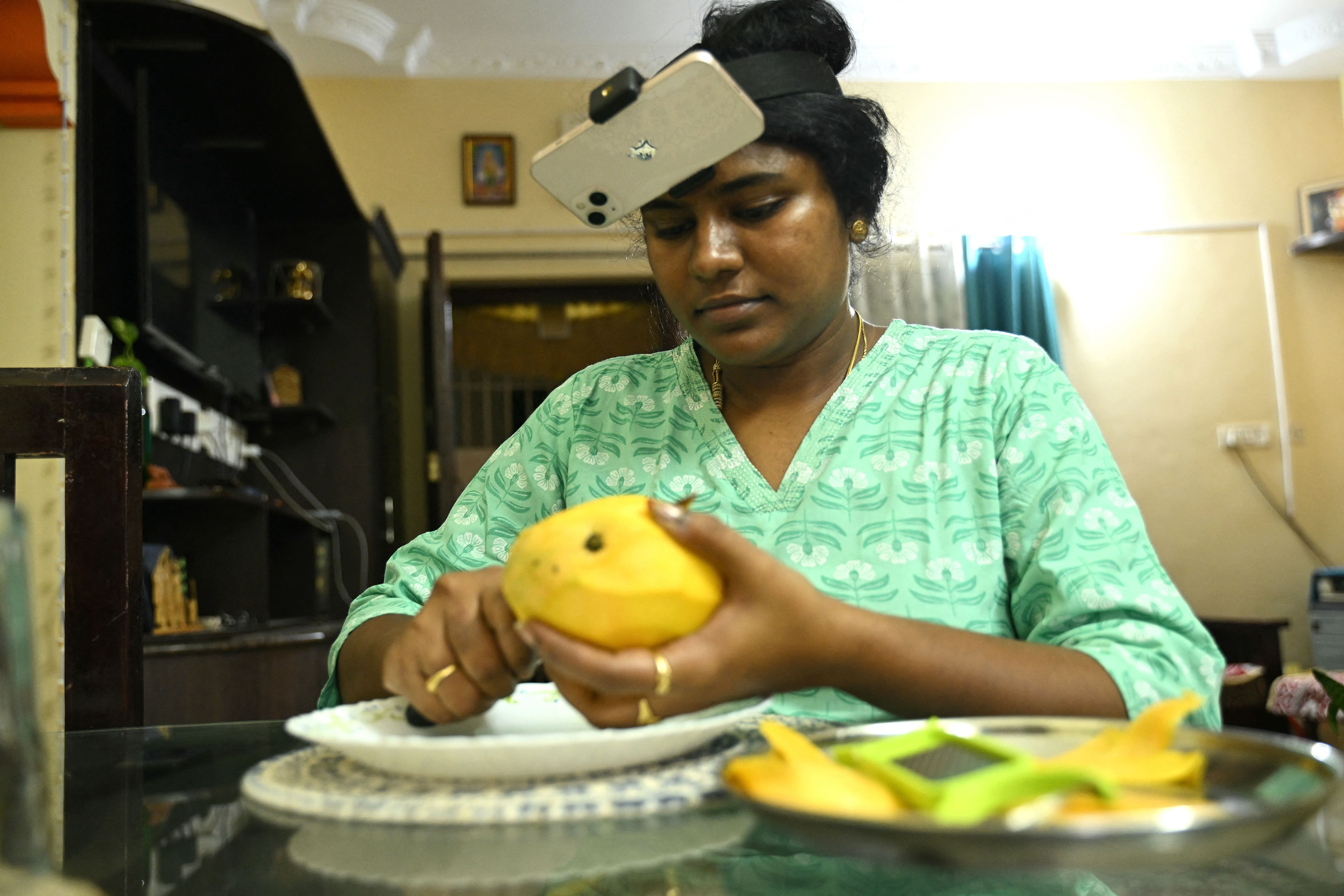
Indians get paid to record household chores and help train AI robots R.SATISH BABU / AFP With a smartphone strapped to her head, Indian housewife Nagireddy Sriramyachandra records herself cutting mangoes to train artificial intelligence robots that will, in the future, do household chores.
Indians get paid to record household chores and help train AI robots
R.SATISH BABU / AFP
With a smartphone strapped to her head, Indian housewife Nagireddy Sriramyachandra records herself cutting mangoes to train artificial intelligence robots that will, in the future, do household chores.
His videos, for which he receives around two dollars an hour (10.35 reais), are sent to technology companies that program machines to move like people in the real world.
This 25-year-old is part of a growing army of thousands of AI systems trainers in the world's most populous country.
“Who else is going to pay you 250 rupees an hour just for doing housework?” asked Sriramyachandra in Chennai, in the southern Indian state of Tamil Nadu.
AI chatbots and image generators process enormous amounts of digital data, but it is more difficult to build systems that can perform in real environments.
Developers believe that feeding specialized artificial intelligence models with first-person recordings will help robots imitate humans.
Some trainers work from home, others in factories or specialized studios. They wear glasses that film, cameras attached to their heads and motion sensors.
“A 'hands not detected' warning sounds when I'm not recording properly,” said Sriramyachandra, who uploads his videos via a special app to Objectways.
The AI company, with offices in India and the United States, counts Fortune 500 multinationals among its clients. It works with Amazon SageMaker, a platform for machine learning models.
Worker with a GoPro camera on his head, recording his actions via motion capture while folding towels inside a model bathroom in the data company's office
R.SATISH BABU / AFP
'Better things'
The market for humanoid robots is booming, and Morgan Stanley estimates that by 2050 there will be more than one billion in use. In India, this emerging field of spatial AI is generating new jobs. For now.
“Folding clothes, making coffee, cooking something very specific, preparing sandwiches,” explained Objectways director Ravi Shankar about the videos requested by customers. The 50-year-old executive lives in the United States, but hires people from the Indian technology hub of Tamil Nadu, where he grew up.
At a textile factory in Karur, workers attach labels to caps and iron fabric bags. The AFP observed eight people there with cameras on their heads.
"It's possible that these data collection services will expand," predicted digital labor expert Aditi Surie of the Indian Institute for Human Settlements in Bangalore.
Now on g1
Furnished environments
In an Objectways studio there are furnished environments for recording. "Today I sit here, tomorrow I'll be standing there," commented engineering student Rani N., 21, who records herself folding a towel.
Each video lasts four minutes, and she records about 90 a day. She finds the job "tolerable" but feels like she always has a camera strapped to her head.
In other rooms, his colleagues position water bottles, pencil sharpeners and crayons to form patterns that are captured with cameras with depth sensors.
Andhra Pradesh-based consultancy Qanat, an Objectways outsourcer, provides the recordings to nearly 10 data companies.
Some of its 2,000 employees perform tasks with motion sensors on their "wrists, hands and legs", explained executive Thaslim Pattan.
Manish Agarwal of Humyn Labs records conversations in addition to videos. Collaborators discuss assigned topics, ranging from politics to sports, for clients who want to process speech patterns.
Agarwal denies that robots will steal jobs from humans and believes that one day they will "work together". “A welder in India could control a welding robot in Prague,” he commented.
An Indian housewife, wearing a smartphone on her head as she records her actions through motion capture while washing dishes in her home in Chennai
R.SATISH BABU / AFP
📰 Related Articles

Lego. Sagrada Família is the set with the most pieces
Observador
Man arrested for attacking elderly mother is remanded in custody
Observador
App motorcyclist is shot after running a red light in SP and names a guard as the perpetrator
G1 GloboCan AI be the best employee of a MEI? See how technology is helping small businesses
Exame
Cultural agenda: Yasmim Santos, Katinguelê and June festivals rock the weekend in Vale do Paraíba and the region
G1 Globo