


Similarities between Brazil and South Africa go beyond green and yellow
⚡ Quick Summary
South Africa debuts in the World Cup this Thursday (11), in the opening of the World Cup, against Mexico.
South Africa debuts in the World Cup this Thursday (11), in the opening of the World Cup, against Mexico. The match will be at 4pm, in Mexico City, capital of the country that hosts the football tournament alongside Canada and the United States.
>> Playing at home, Mexico is the highlight of Group A of the World Cup
Related news:
Playing at home, Mexico is the highlight of Group A of the World Cup.
The African continent takes 10 teams to the 2026 World Cup.
Unstable summer weather could turn the World Cup into a test of endurance.
Just like the Brazilian team, the South African team will enter the field wearing green and yellow. But the similarities between the two countries go beyond the uniform. Brazil and South Africa share socioeconomic and political characteristics, in addition to defending internationally convergent positions, such as the search for peace.
In terms of football, the South African team is one of former coach Joel Santana's favorites. In an interview with Agência Brasil, he said that, after a ten-year absence, “Bafana Bafana” are playing football with an increasing technical level.
"After we, Brazilians, went there, their level of football has gradually risen", said Joel, who led the South Africans between 2008 and 2009. "I'm going to bet on them until the end", he added.
Cooperation with Brazil
Off the field, South Africans do not want rivals, but partners, as stated by the president, Cyril Ramaphosa. In a meeting with President Luiz Inácio Lula da Silva, in March this year, in Brasília, he said that he hopes to expand relations with Latin America, starting with economic cooperation with Brazil.
"We should [Brazil and South Africa] cooperate at a much higher level," he declared at the time. “We are the two most industrialized countries on our continents, and trade between us needs to be much greater,” said Ramaphosa.
For the South African, it is necessary to work together in sectors such as agriculture and livestock, energy, mining and defense. Lula added that annual exchange between Brazil and South Africa has been stagnant for almost 20 years, reaching US$2.3 billion.
"There is no political explanation why trade between countries is not US$10 billion," said Lula.
Currently, Brazil exports mainly poultry meat, sugar and road vehicles to the African country, while purchasing silver, platinum and other minerals.
In March, the countries reached an agreement to reinforce cooperation in tourism, aiming to increase air connectivity and promote destinations. Then came technical partnerships in agriculture, with a focus on combating foot-and-mouth disease and improving animal health surveillance measures in the other country.
Meeting between President Luiz Inácio Lula da Silva and the President of South Africa, Cyril Ramaphosa. Photo: Fabio Rodrigues-Pozzebom/Agência Brasil
Apartheid and the war in the Middle East
During his state visit to Brazil, Ramaphosa also endorsed Brazil's international stance for a peaceful solution to the wars in the Middle East. The attacks, he said, violate the Charter of Nations and cause death and destruction.
In the opinion of experts, South Africa's position has important weight, given the moral authority of the country that faced apartheid for 50 years. The political regime segregated blacks and whites, privileging the second group.
“South Africa has moral authority, because it experienced a terrible internal moment and managed to overcome it without civil war”, analyzed the senior researcher at the National Institute of Science and Technology (INCT), William Gonçalves.
Retired professor of International Relations at the State University of Rio de Janeiro and witness to historical facts, he claims that this “authority” makes South Africa feel comfortable condemning Israel for actions in Gaza and Lebanon. “They can say: this is a war crime, this is genocide”, he added. Well after the end of apartheid, in 2015, South Africa helped the UN itself to approve the Nelson Mandela Rules ─ former president of that country detained for his fight against apartheid. The series of rules prohibits torture in the criminal system and ensures a fair trial, which Mandela did not have, as well as hundreds of people from Palestine detained in Israeli prisons, according to complaints from human rights organizations.
The torture of Palestinian children, women and men is systematic, widespread and has become state doctrine in Israel, according to the United Nations (UN).
In the 1970s, when the African nation was experiencing racial segregation, Brazil was one of the countries that pressed for the end of the regime, recalled the professor.
The South American country froze diplomatic and commercial relations with Pretoria, forced by internal pressure from the black movement and a coalition of African countries that threatened to suspend oil shipments to Brazil. At that time, the African country was Brazil's largest trading partner on the continent, and Brazil produced less oil.
Mandela Centenary Exhibition, at the Itamaraty Palace. José Cruz/Agência Brasil
Defense of sovereignty
With the transition to a democratic regime led by Nelson Mandela in the 1990s, South Africa underwent positive changes, such as growth in GDP (Gross Domestic Product), a drop in unemployment and inflation, as well as improvements in the education and health system, although inequalities still persist.
South Africa is the main economy on the African continent and became closer to Brazil again in the 2000s. Interest was not restricted to short-term economic objectives, but included the construction of an alliance for development in the global south.
"Brazil's development experience and its performance on the world stage against inequalities attracts partners with the same objectives", stated Gonçalves.
For the researcher, both countries fight for development, despite their complexities. “They struggle with difficulty, but they have taken significant steps,” said Gonçalves. He reports that South Africans have achieved nuclear autonomy, being the only country on the African continent to produce nuclear energy on a commercial scale, for example.
Official photo of Brics with its members. From left to right: Minister Sergei Lavrov (Russia), Khaled bin Mohamed Al Nahyan (Emirates), Prabowo Subianto (Indonesia) Cyril Ramaphosa (South Africa) Luiz Inácio Lula da Silva (Brazil) Prime Minister Narendra Modi (India) Premier Li Qiang (China) Abiy Ahmed (Ethiopia) Mostafa Madbouly (Egypt) Abbas Araghchi (Iran) Photo: Joédson Alves/Agência Brasil
Today, Brazil and South Africa also have partnerships in health, in the fight against HIV-AIDS, in the fight against poverty, taking a stand against racism and for sustainable development.
At the Conference of the Parties (COP), in November 2025, in Brazil, South Africa supported the Brazilian proposal to create the Tropical Forest Fund, in addition to publicly sharing values such as defending the countries' sovereignty and independence.
In Gonçalves' assessment, both seek to consolidate their democracies, grow economically and seek a greater role of influence on the global stage, with the approach being beneficial for both sides.
🗞️ 4 sources covered this story

South Africa, which opens the World Cup, almost missed out due to an administrative error
CNN Brasil
GreenYellow invests R$100 million in solar energy for 54 Carrefour stores
CNN Brasil
Mexico x South Africa: where to watch the opening of the World Cup
opovo.com.br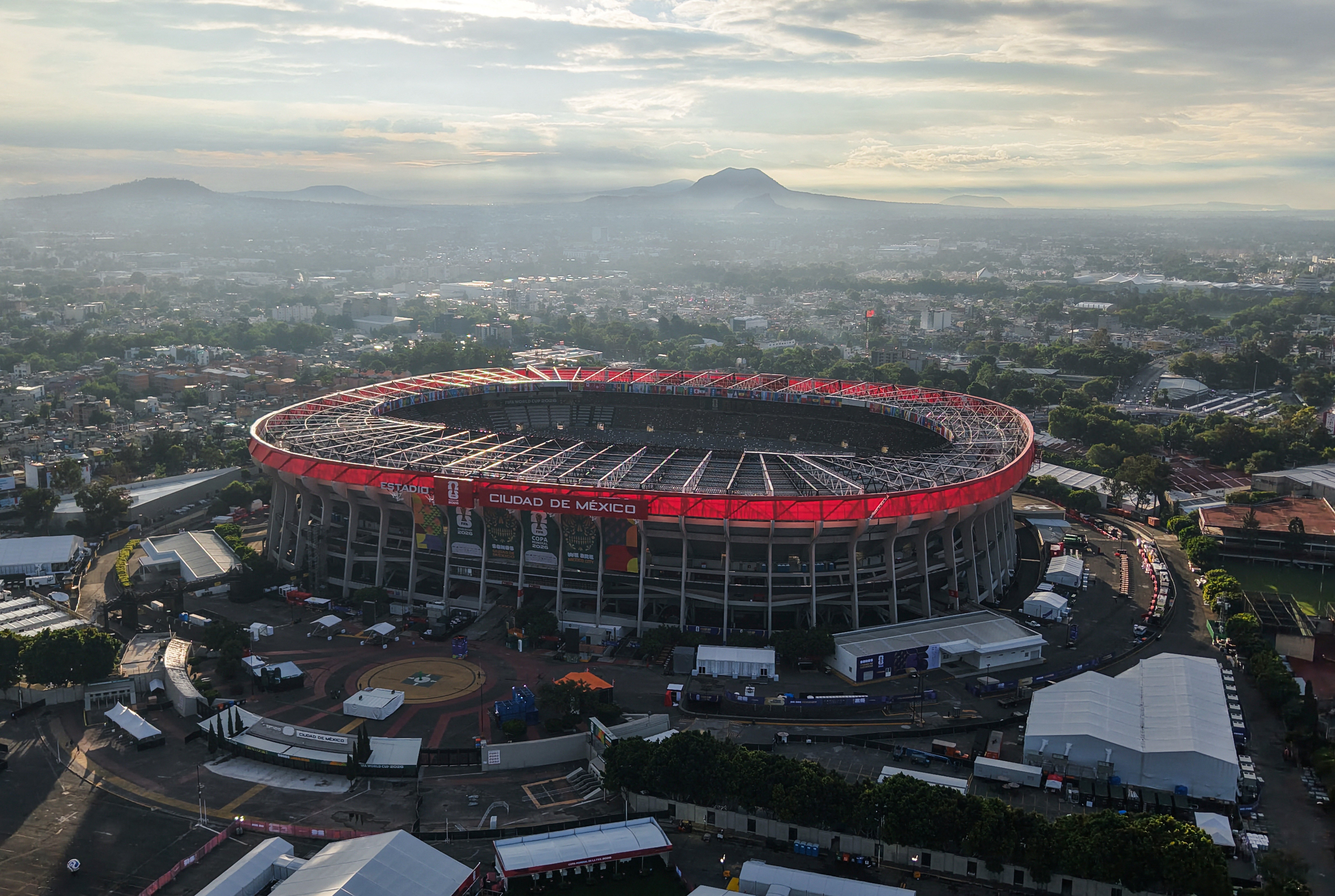
World Cup 2026: who will participate in the opening show before Mexico and South Africa?
G1 Globo📰 Related Articles

Michael Bastos comments on expectations for the start of the 2026 World Cup
CNN Brasil
World Cup 2026. Haiti is forced to change equipment
Observador
World Cup 2026 starts today: everything you need to know
Euronews PT
Government defines opening hours for Brazil's World Cup games
Agência Brasil
Everything you need to know to talk about the World Cup – even if you don't like football
G1 Globo