


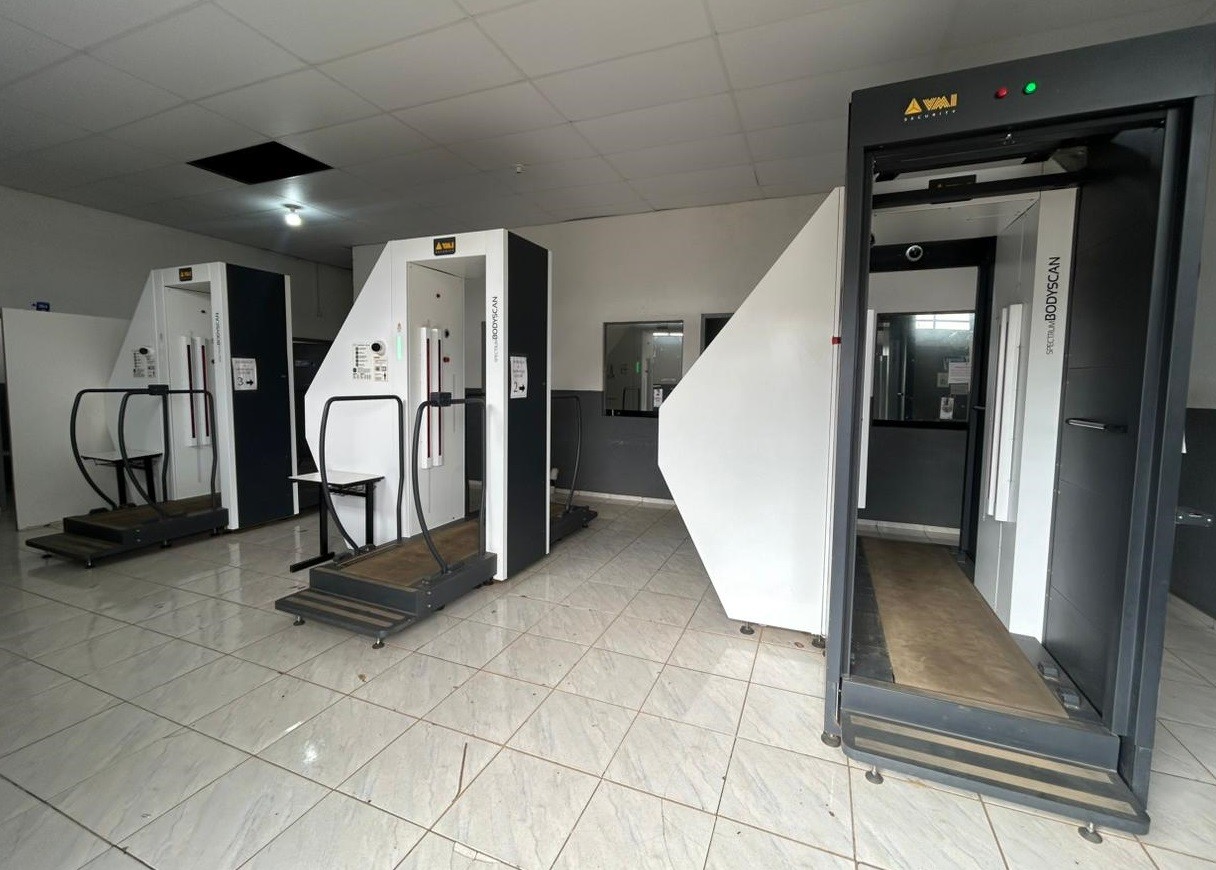
Action by OAB-PR wants to ensure that pregnant lawyers are not subjected to 'body scans' in penitentiaries due to radiation
⚡ Quick Summary
OAB-PR wants to prevent pregnant lawyers from undergoing 'body scan' in penitentiaries The Brazilian Bar Association — Paraná Section (OAB-PR) went to court to ensure that pregnant lawyers are not forced to undergo body scan equipment as a condition for entering prisons.
OAB-PR wants to prevent pregnant lawyers from undergoing 'body scan' in penitentiaries
The Brazilian Bar Association — Paraná Section (OAB-PR) went to court to ensure that pregnant lawyers are not forced to undergo body scan equipment as a condition for entering prisons.
The Public Civil Action was filed on May 18 against the Public Security Secretariat (SESP-PR) and the Paraná Penal Police (PPPR), after the prison administration rejected the OAB-PR's request, defending the safety of the equipment based on data from the manufacturer and standards from the National Nuclear Energy Commission (CNEN).
✅ Follow the g1 PR channel on WhatsApp
➡️🩻 Body scan is equipment that uses ionizing radiation to form internal images of the inspected body.
The OAB-PR claims that the exercise of the profession requires frequent and regular access to prison units, making exposure to radiation from the device a cumulative and progressive risk throughout pregnancy.
The OAB also states that "there is no public information available on the levels of radiation emitted by the equipment used in Paraná's prisons, nor on the technical qualifications of the operators of these machines", which, according to the Order, is mandatory by federal law.
Furthermore, according to the agency, the lawyers do not, at any time, have physical contact with the prisoner. According to OAB-PR, the service takes place in a parlor with thick glass and no opening, with monitoring by cameras and monitoring by criminal police officers.
The Bar Association proposes, as an alternative to body scanning, that access be guaranteed through a non-invasive manual search or visual inspection, so as not to compromise the security protocols of the units.
Body Scan of the Paraná Criminal Police
Paraná Criminal Police
In response to the OAB's administrative request, the Criminal Police suggested that pregnant lawyers opt for remote assistance, via videoconference, which was rejected by the Order's council.
According to the OAB, the action became necessary after the administrative remedies had been fully exhausted.
He also said that the Paraná Penitentiary Department (DEPEN-PR) formally rejected the request and that it defended the safety of the equipment "based exclusively on data from the manufacturer and standards from the National Nuclear Energy Commission (CNEN), without presenting independent clinical studies on the effects of repeated exposure throughout the entire pregnancy."
In a statement, the Criminal Police informed that it is aware of the demand and that the issue is being monitored by the competent areas of the institution. "Relevant clarifications and information will be provided to the responsible bodies, in accordance with applicable procedures", says the note.
READ ALSO:
Health: Even with the law passed more than a year ago, families are still waiting for blood glucose sensors for children with diabetes in Paraná
'She survived to fight against these protocols': Mother of lawyer who saved family in fire vents after insults to daughter
Understand: Fake lawyer suspected of breaking into justice systems to help criminal organization is arrested
Risks of radiation during pregnancy
Ionizing radiation can pose biological risks to the embryo and fetus, mainly because developing tissues are more sensitive to radiation, according to Raquel Corotti, coordinator and professor of the Superior Course in Radiology Technology and coordinator of the postgraduate course in Radiotherapy and Nuclear Medicine at Universidade Positivo.
The professional highlights, however, that the risks are directly related to the dose received, the frequency of exposure and the stage of pregnancy.
"In practice, low and controlled exposures — such as those used in various diagnostic equipment and security systems — usually present a very low risk. Modern radioprotection is based on rigorous protocols that seek to guarantee exposures within limits considered safe and with the lowest possible dose", he details.
The professor emphasizes that international bodies, such as the International Commission on Radiological Protection and the World Health Organization, recommend that exposure to radiation, even if minimal, should be avoided as a preventive measure.
"During the first weeks of pregnancy, intense cell division and formation of the baby's organs occur, which makes fetal tissues more radiosensitive," he explains.
Favorable jurisprudence
In at least three Brazilian states, court decisions guarantee pregnant lawyers the right to enter prison units by alternative means: Rio Grande do Sul, Ceará and Amazonas.
In the Labor Court of Mato Grosso, a Public Civil Action recognized that the ionizing radiation from body scans, on a daily basis, poses a health risk and suspended the indiscriminate scanning of prison staff.
In addition, a 2016 federal law guarantees pregnant lawyers the right to enter court without submitting to metal detectors and X-ray machines.
Lawyer Thaise Mattar Assad, member of the OAB-PR Full Council and rapporteur of the vote that approved the filing of the action, highlights that, although the law concerns courts, the legal interpretation of the rule can be expanded.
"There is no ontological distinction, for health protection purposes, between the X-ray machine used in a court and the body scan operated in penal units; the biological risk arising from ionizing radiation is identical and, therefore, requires the same legal protection", states the vote.
Action by OAB-PR wants to ensure that pregnant lawyers are not subjected to 'body scans' in penitentiaries due to radiation
Leandro Taques/Disclosure/OAB-PR
VIDEOS: Most watched on g1 Paraná
Read more news on g1 Paraná.
📰 Related Articles
Cemig offers 150 places in a free electrician course; there are opportunities in Montes Claros
G1 Globo
Man receives call, leaves home and is killed with nine shots in Jacintinho, in Maceió
G1 Globo
What Bill Gates said about his relationship with Jeffrey Epstein in an investigation by the US Congress
G1 Globo
Chamber approves bill to organize the cable network in Lavras, MG
G1 Globo
Activist denounces death of cats after rat poison was found on public land in the interior of SP
G1 Globo