Frequent frosts and negative temperatures: understand why Maria da Fé is one of the coldest cities in MG
⚡ Quick Summary
Frequent frosts and negative temperatures: Maria da Fé is one of the coldest cities in MG Located at around 1,300 meters above sea level, Maria da Fé, in the south of Minas, recorded negative temperatures again this week, with a minimum of -1.2°C, reinforcing its reputation as one of the coldest cities in the state.
Frequent frosts and negative temperatures: Maria da Fé is one of the coldest cities in MG
Located at around 1,300 meters above sea level, Maria da Fé, in the south of Minas, recorded negative temperatures again this week, with a minimum of -1.2°C, reinforcing its reputation as one of the coldest cities in the state. The phenomenon is favored by the combination of high altitude and the predominance of valleys and lowlands in the territory.
📲 Follow the g1 Sul de Minas page on Instagram
According to climatological consultant Willian Siqueira, the behavior of the cold helps explain the frequency of frosts in the city.
"We think of the cold as if it were water. When we throw water somewhere, it runs down to the lowest point. The cold is the same thing", he says.
Also read:
PHOTOS: Intense cold causes frost in the south of Minas; local stations record minimums below 1°C
South of Minas registers temperatures of up to 0°C and dawns with frost
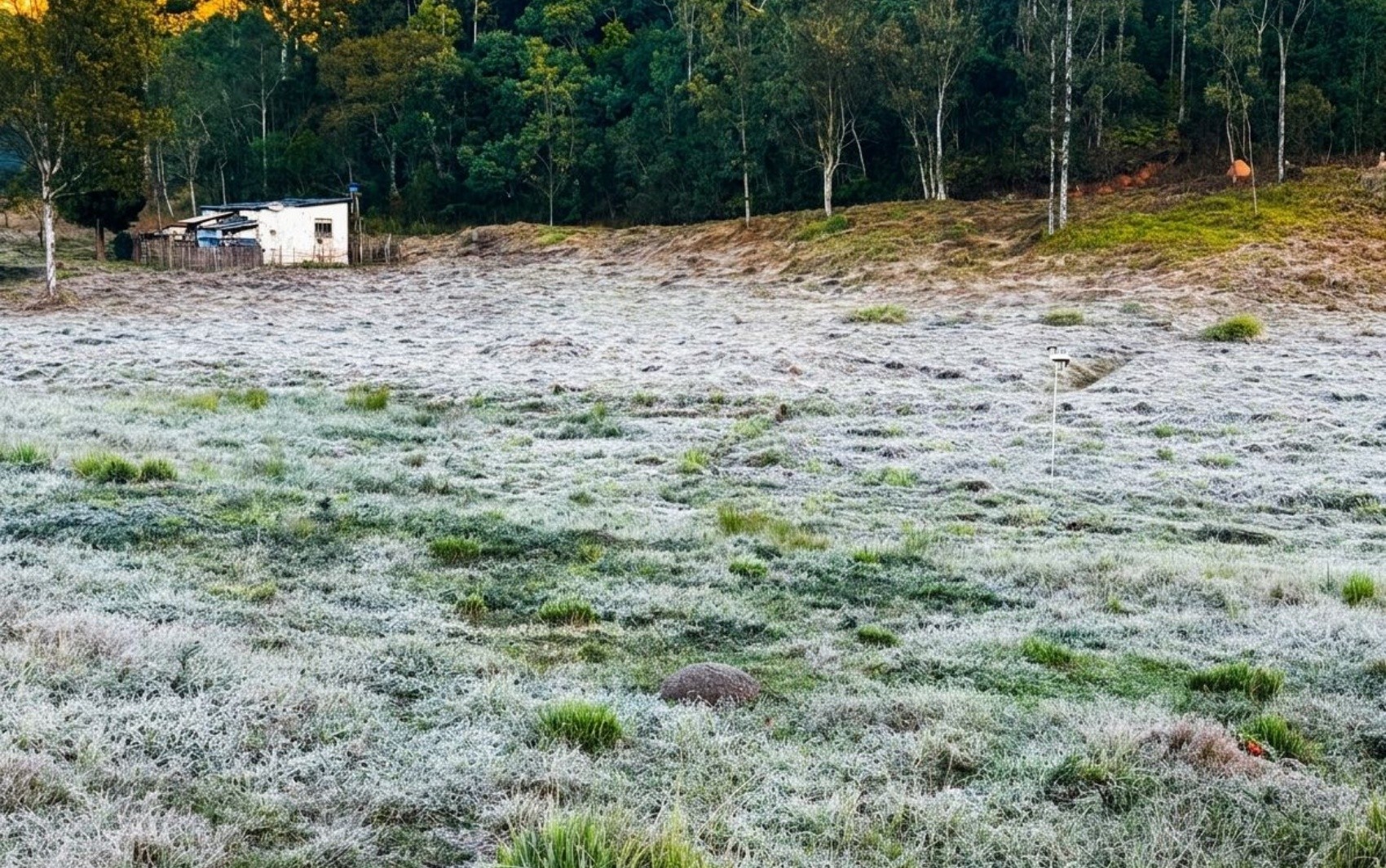
Frost in Maria da Fé (MG) - (12/05/2026)
William Siqueira
According to him, the relief is decisive.
"The cold will settle in the valley areas, which we call lowlands, and that is where the frosts will form. Maria da Fé is 1,300 meters above sea level, but more than 90% of the municipality is precisely in these lowland areas, valleys. That's why the city has so many days of frost", he adds.
The impact of low temperatures is part of the daily lives of residents, who need to adapt their routine during winter. "It's difficult. You don't even want to get out of bed", says Dimas Angelo, who works in general services.
Student Lucinei Mariano also reports the difficulty of facing the cold in the early hours of the day. "It's difficult to wake up early in this weather. I only have this blouse on, but it's thick", he says.
Frost in Maria da Fé (MG) - 07/31/2025
William Siqueira
Cold lasted this year
This year, the cold took longer to intensify. Experts point out that the action of El Niño contributed to higher temperatures in recent months. Even so, thermometers already indicate the advance of winter in the region. The last wave of extreme cold was recorded in July 2021, when Maria da Fé reached -6°C, according to data from the municipal monitoring network.
For those who have lived in the city for decades, temperatures influence even the simplest habits. In rural areas, preparation to face the cold is even more rigorous. Producer Francisco Diogo states that he needs to reinforce protection before starting work.
“Although we were born and raised here in Maria da Fé, we don’t get used to the cold because each year it comes in a different way”, he says.
Maria da Fé, in Serra da Mantiqueira, is famous for its low temperatures
Cold favors olive tree cultivation
Despite the challenges, the climate is also an important ally of the local economy. Low temperatures favor the cultivation of olive trees, which need to accumulate hours of cold to produce well. According to the Minas Gerais Agricultural Research Company (Epamig), Serra da Mantiqueira has 25 agribusinesses, four of which are in Maria da Fé.
Winter also boosts tourism in the city, attracting visitors in search of the mountain climate and experiences linked to the production of olive oil and specialty coffees.
Olive grove in Maria da Fé, in the south of Minas Gerais
Saulo Vieira/ TV Globo
"The cool thing about Maria da Fé is that it has the olive trees, the olive oil, and the special coffee. And here it has a mountain climate. So, if you want to go for a walk, visit, get to know Maria da Fé also because of the cold. It's worth it", highlights tourist consultant Rayhani Resende.
At the beginning of the week, data from the National Institute of Meteorology (Inmet) placed municipalities in the south of Minas among the coldest in the state, including Maria da Fé, Monte Verde (Camanducaia district), Varginha, Machado and Passos.
See more news from the region on g1 Sul de Minas
📰 Related Articles

First European National Geographic event in Portugal
Observador
Cake slice festivals boost confectionery shops on the coast of SP: 'Work and demand have tripled'
G1 Globo
Man arrested after holding 3-month-old son hostage confesses to assaulting ex on the coast of SP
G1 Globo
Abuses. Government debates proposal to exempt compensation
Observador
Survodutida reduces liver fat in almost 60% of patients and marks a turning point in the dispute over obesity pens
G1 Globo