


TCU approves Lula government accounts for 2025 with reservations
⚡ Quick Summary
The Federal Court of Auditors (TCU) unanimously approved this Wednesday (10) the accounts of President Luiz Inácio Lula da Silva's government for 2025, but with several reservations and warnings related to budgetary and financial execution.
The Federal Court of Auditors (TCU) unanimously approved this Wednesday (10) the accounts of President Luiz Inácio Lula da Silva's government for 2025, but with several reservations and warnings related to budgetary and financial execution.
The ministers fully followed the opinion of the rapporteur of the Union's accounts, Benjamin Zymler, who in his vote stated that “the accounts are reliable”. However, Zymler pointed out problems in controlling tax exemptions and the trajectory of public debt, among others.
Related news:
TCU demands adjustments to Correios’ recovery plan.
TCU Minister releases new INSS consignees after AGU appeal.
Among the main reservations indicated is the R$12 billion loan to Correios, which, in the rapporteur's assessment, was approved by the government without adequate technical analysis.
“There was no adequate examination of the recovery plan nor of the fiscal risks associated with the granting of a guarantee, by the Union, for the loan taken to the Post and Telegraph Company”, said Zymler when presenting the results of the examination of the accounts carried out by the TCU technical staff.
The accounts were examined in an extraordinary session at the TCU headquarters, in Brasília, which was attended by three government ministers: Bruno Moretti (Planning), Vinícius de Carvalho (General Comptroller of the Union) and Miriam Belchior (Civil House).
In the report, Zymler recognized compliance with the fiscal target for 2025, which was spending equal to revenue, with a tolerance of 0.25% deficit. However, he noted that the Central Government deficit (National Treasury, Social Security and Central Bank) was 0.47%, equivalent to R$58.6 billion.
Another point highlighted by the rapporteur was the size of the expenses that, due to Congressional approval, remained outside the formal fiscal target, in the order of R$48.7 billion. This undermines confidence in fiscal rules, Zymler highlighted.
The TCU technical staff pointed out the discrepancy between the fiscal effort made and that necessary to stabilize the public debt trajectory. According to calculations by the court of accounts, a primary surplus of 1.94% would be necessary in the Central Government.
Among the warnings, the report pointed out, for example, the rigidity in budget execution, with 91.4% of spending carried out by the government being mandatory in nature.
Another warning concerns the size of tax waivers, which reach R$544 billion, or 4.7% of the Gross Domestic Product (GDP). Of this amount, 47% have no validity period, while more than 47% of 21 of the main policies do not undergo periodic evaluation. Such waivers compromise the government's effort to meet the fiscal target.
The TCU also highlighted the pressure on public accounts exerted by the high level of the economy's basic interest rate, the Selic, which stands at 14.5% per year and increases the cost of public debt.
The opinion approved by the TCU plenary must now be forwarded to the National Congress, which is responsible for the final decision on the approval of the government accounts, that is, whether they comply with the new fiscal framework.
🗞️ 4 sources covered this story

Lula will launch a profile on social media in defense of the government’s “legacies”
CNN Brasil
TCU approves Lula government accounts with reservations about Correios and debt
CNN BrasilTCU approves Lula government accounts with reservations about Correios and debt
CNN Brasil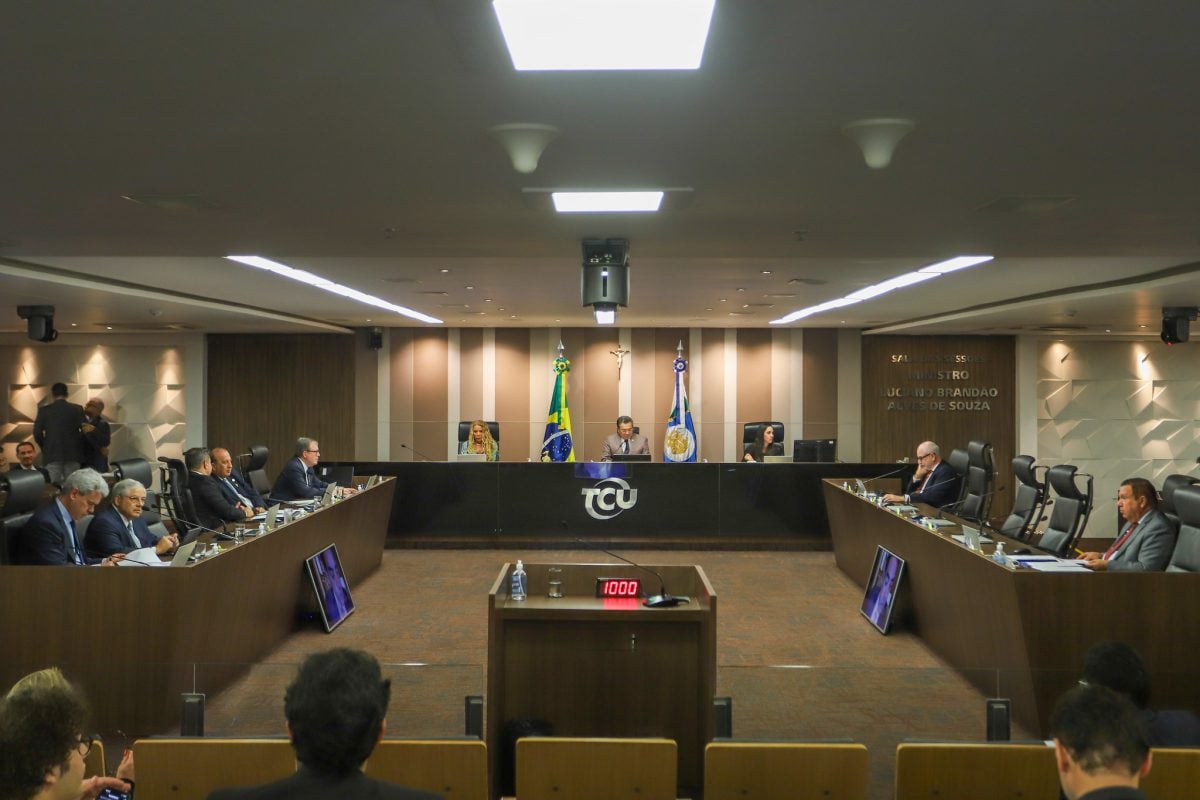
TCU approves Lula government accounts for 2025
CartaCapital📰 Related Articles

Rat infestation worries employees and families of patients at Agamenon Magalhães Hospital: 'Huge risk'
G1 Globo
Film "First Date" by Luís Filipe Borges awarded
Observador
Taste of São João: learn how to make queijadinha, a traditional sweet from the June festivals
G1 Globo
Pitbulls attack and kill a dog that kept an elderly woman company in Palmas; VIDEO
G1 Globo
NFL Flag launches profile in Portuguese on social media
CNN Brasil