'Prisoner in one's own home': how British homes are being taken over by criminals and used by drug traffickers
⚡ Quick Summary
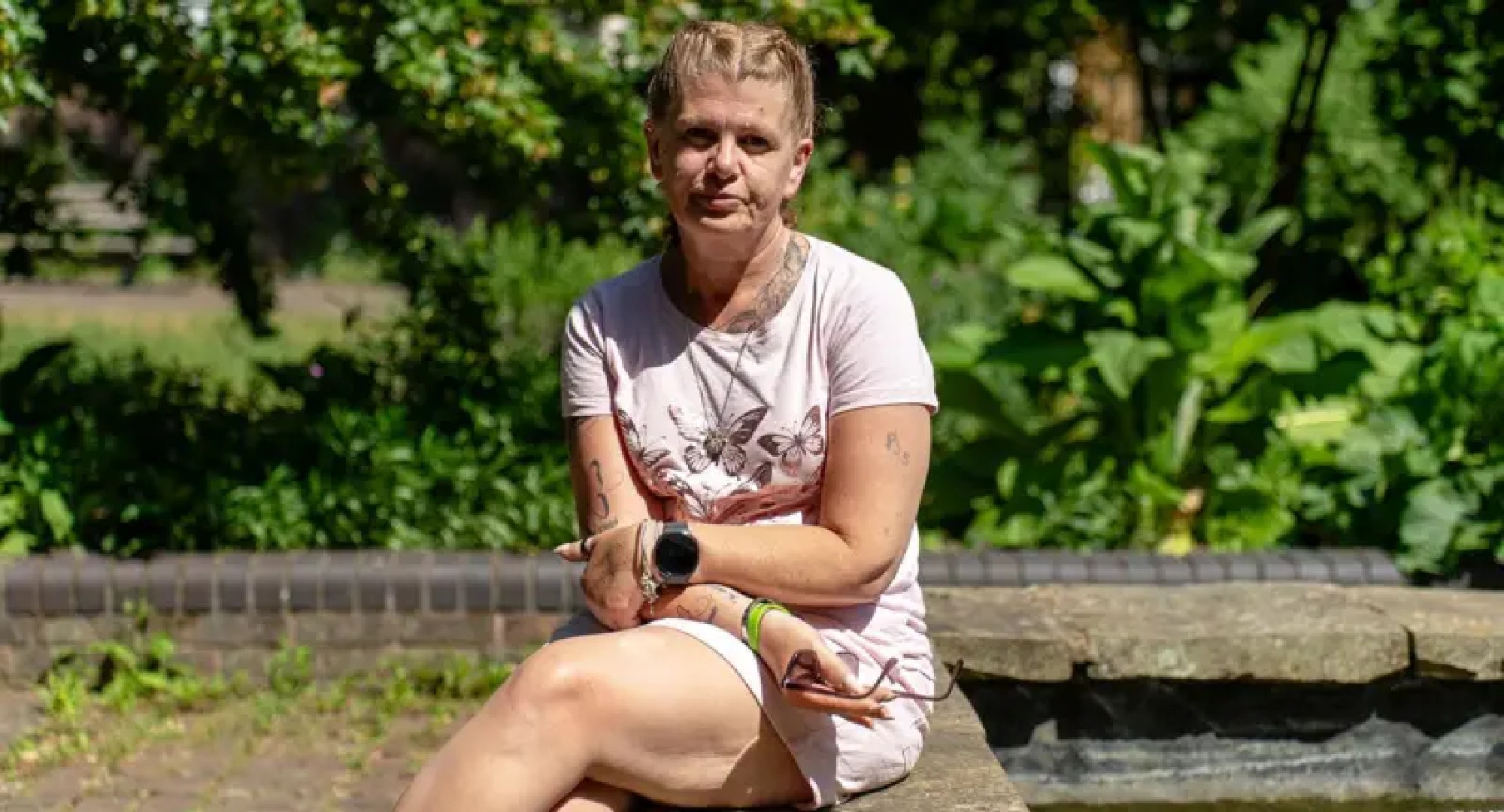
A drug dealer took over Jackie's house.
A drug dealer took over Jackie's house. Today, she helps other victims of so-called cuckooing
BBC
Hundreds, perhaps thousands, of homes are broken into by criminals every week in the UK, usually to store and sell drugs, police chiefs told the BBC.
Those responsible for so-called cuckooing (criminal occupation of vulnerable homes) often target vulnerable people, including the elderly and people with disabilities, by breaking into their homes to carry out illegal activities.
In some cases, drug users are exploited by gangs who take over properties and refuse to leave.
Cuckooing is not yet classified as a specific crime in the United Kingdom, which limits the available data on the scale of the problem.
However, figures shared exclusively with the BBC show that 1,539 cases of cuckooing were recorded by London police between May 2025 and April 2026. Of that total, 1,275 victims were men.
The UK's National Police Chiefs' Council (NPCC) said "horrible things" had happened to victims, who were often trapped in their own homes.
"We have had cases where victims were forced to eat dog feces or perform sexual acts. These situations were recorded and then used as a form of blackmail. The criminals said: 'if you don't do what I say, we will show this to your friends and post it on social media'," Kirsten Dent, from the NPCC, told the BBC.
"It's something hidden, that happens inside people's homes, and it's not always easy to detect."
Cuckooing, named after cuckoos, birds that often occupy the nests of other species to lay their own eggs (a practice known in Portuguese as "brood parasitism"), should become a specific crime by the end of the year in the United Kingdom, with a maximum penalty of five years in prison.
The measure forms part of the Crime and Policing Act 2026, but the government still needs to publish official guidance for police forces before the legislation can come into force.
Before the implementation of the new law, the BBC accompanied officers from the London Metropolitan Police during visits to properties suspected of being used in cases of cuckooing and found shocking signs of unsanitary conditions.
The BBC report also heard from victims who said they felt like prisoners in their own homes and were afraid to go to the police for fear of violent reprisals.
Jamie says his head injury left him vulnerable and he felt he couldn't defend himself
BBC
Jamie, 34, suffered a brain injury after being hit in the head with a glass bottle and, as a result, has difficulty moving and speaking properly.
Two years ago, a criminal gang took advantage of his condition by approaching him in a friendly manner before occupying his home without his consent and using his apartment as a drug selling point.
“These people went from being very kind and friendly to me to just taking everything they could,” Jamie said.
"They stole my clothes," he added. "They started taking everything that had any value in my house, stealing without me noticing. And, when I found out it was them, they denied it."
He said that one of the most humiliating situations was being slapped by a teenager much younger than him. Jamie said that because of his condition, he felt it was impossible to confront the gang.
"I [have] a brain injury and a hard punch could seriously hurt me. I can't fight or argue," Jamie said.
Earlier this year, he said he managed to leave his apartment and move to another part of the country to escape the gang. 'Prisoner inside her own house'
The UK's National Police Chiefs' Council visited 683 addresses suspected of cuckooing at the beginning of March this year as part of a week of operations aimed at combating so-called county lines, the practice of taking drugs from large cities to smaller, rural areas.
According to police officers, county lines and cuckooing operations are directly linked. Traffickers who transport drugs often look for properties from which they can operate.
"We suspect that hundreds, perhaps thousands, of properties are being used in cuckooing cases across the UK every week," NPCC's Dent said.
One of these victims was Jackie, who told the BBC that she was a heroin and cocaine user. The drug dealer who supplied her with drugs allowed her to accumulate a large debt. When Jackie was unable to pay, he added another 2,000 pounds (about R$14,500) to the amount owed and said that a drug dealer would have to live with her until the debt was paid off.
She said she had been the victim of cuckooing for months and said she had become a "prisoner in her own house".
"I asked him to leave many times, and he would say, 'My boss said I have to stay here.'"
"That meant I had to stay in one room. I tried to go into the living room and the kitchen, but he said, 'No, you're not going in'. I had to stay in my room. Every now and then he would say something like 'I'll buy you chicken and fries', but that was very rare," he said. She said she used drugs to cope with the situation.
After several months occupying the property, the drug dealer finally left. Jackie said she believes he left because he suspected he was being monitored by police.
Today, she no longer uses drugs after undergoing rehabilitation and works with different support groups to raise awareness about cuckooing and show that it can happen to anyone.
"It's not just about drugs. It could involve anything. It could be a partner [who refuses to leave the house]. It could be a family member. It could be anyone who refuses to leave their property. And that could be used for all kinds of exploitation: money, stolen goods, anything they think they can use against you," Jackie said.
When the BBC visited properties in London with officers from the Metropolitan Police, officers said poor and unsanitary conditions are common in properties used in cuckooing cases.
Food wrappers were scattered across the floor, doors had come off their hinges and a strong smell of feces permeated the room.
The team was taken to a kitchen where there was raw chicken abandoned in the sink. There were bloodstains on a comforter, and a dirty folding table was used as a bed. The toilet in one of the bathrooms was blocked. All the properties had a disgusting smell.
Now on g1
Repeat victims
Officials from the Metropolitan Police, Britain's largest internal security force, said they had identified a pattern of those who ended up being exploited.
"What the data shows us is that if you are a white male aged 40 to 49 and potentially a drug addict, the chances are quite high that you will become a victim of this crime [...] We are also seeing repeat victims, where sadly people targeted before have moved or stayed in their homes and ended up becoming victims again," said Inspector Andrew Cameron.
Data obtained by the BBC via access to information laws indicates 380 investigations in the 2023/2024 fiscal year in which this crime of criminal occupation of residences was mentioned as the main potential concern. The numbers rose to 1,078 in 2025/26. The Metropolitan Police stated that the increase is mainly linked to greater awareness within the institution about how this type of crime occurs, but it is also linked to more drug dealers using this tactic in their businesses. Furthermore, the institution also said that the data collection methodology has also changed over time, which may also help explain the increase in registered cases.
While cuckooing is not classified as a crime, police officers say they try to frame and arrest suspects on other charges, such as drug possession and practices similar to slavery.
Sources interviewed by the BBC in several police forces in England say that closure or interdiction orders have been used more to stop cuckooing practices.
These measures allow police and local authorities to temporarily close properties. A partial closure order, for example, allows the current resident to remain in the residence, but other visitors or people are barred from entering.
Some victims, however, criticize how this measure has been adopted.
"I have no faith in the police. They are useless," said one of the victims who spoke to the BBC on condition of anonymity.
They (the victims) believe that vulnerable people need more support and that there is still a lack of measures to prevent this type of exploitation.
The UK's National Police Chiefs' Council said it is working to increase trust among victims and believes that changing the law making cuckooing a crime will help in this regard.
Amy Loughery, a researcher at the University of Leeds, in the United Kingdom, who works on cuckooing and other forms of exploitation, says that the police do not always recognize when vulnerable people are being exploited.
"Victims of cuckooing are not necessarily seen as victims because they have generally had other experiences or interactions with the police."
Although awareness of the problem has improved in recent years, Loughery told the BBC that "there is still a long way to go." She calls for more guidance and policies to help identify exploitation and improve responses to the crime of cuckooing.
A UK Home Office spokesman said the statements given to BBC News were "appalling".
He added: "We will do everything we can to protect communities from the vile crime of cuckooing, including investing more than £34 million this year in the County Lines Program to combat drug trafficking gangs and organized crime groups."
📰 Related Articles

Demonstrations against racism in Lisbon and Porto
Observador
Leo XIV pays homage to Gaudí on a visit to Barcelona
Observador
Rio PM launches financial education course to combat debt among police officers
G1 Globo
Second hottest May ever in the world was in 2026
Observador
Pilot made hundreds of commercial flights without a license in Canada
Observador