Tourism, beer and betting: who should win from the 2026 World Cup, which could generate R$200 billion
⚡ Quick Summary
With Neymar called up, popular businesses celebrate high sales for the World Cup The 2026 World Cup is expected to inject billions of dollars into the economies of host countries, driven by a sharp increase in consumption that could benefit sectors ranging from tourism to retail and the sporting goods industry, according to analysts.
With Neymar called up, popular businesses celebrate high sales for the World Cup
The 2026 World Cup is expected to inject billions of dollars into the economies of host countries, driven by a sharp increase in consumption that could benefit sectors ranging from tourism to retail and the sporting goods industry, according to analysts.
Scheduled to take place between June 11 and July 19, the tournament will be the biggest in history and could stimulate consumer spending at a time when global demand still shows signs of fragility.
Download GloboPop to watch short vertical videos from Globo
The first World Cup held in three countries — the United States, Canada and Mexico — is expected to add around US$41 billion (around R$212 billion) to the global Gross Domestic Product (GDP), according to a socio-economic impact study by FIFA carried out in partnership with the World Trade Organization (WTO).
👉 Check out the sectors and companies that, in the opinion of financial market analysts, should be favored by the event.
Hotel operators
Consultancy firm B. Riley estimates that the World Cup will attract 13.1 million visitors, including people with and without tickets to the games. The flow of tourists is expected to result in around 21.3 million nights booked through travel platforms.
Analysts estimate that hotel chains such as Marriott, Hilton and Hyatt, as well as accommodation and travel platforms such as Airbnb, Booking and Expedia, are among the companies that can benefit from the tournament.
Marriott believes that the momentum generated by the World Cup could extend into the third quarter.
Airbnb projects that hosts from the New York-New Jersey, Boston and Los Angeles regions will be among those expected to profit most during the event.
Airlines
Goldman Sachs estimates that the World Cup tends to have a positive impact on American airlines.
According to the bank, June tends to see a lower flow of corporate and leisure travel to the United States, which could open up space for the increase in demand caused by the World Cup to boost the sector.
🔎 On the other hand, the rise in aviation fuel prices amid the war involving Iran led American airlines to adjust fares, which could make some consumers postpone or cancel summer trips.
Breweries
Glass of beer being served
Disclosure
Broker Jefferies estimates that more than 1 billion glasses of beer will be consumed globally during the World Cup period, which could increase the volume sold by the industry by 0.3%.
The main gains are expected in markets such as the United States, Mexico, Brazil and China.
"After five consecutive years of volatility, the beer market is expected to perform better in 2026," said Jefferies analysts.
Analysts also highlight that around 75% of the matches will be played in the United States and that 84% of the participating teams' games will take place in time zones favorable to beer consumption.
Bernstein, Goldman Sachs and Jefferies point to Anheuser-Busch InBev, manufacturer of Corona and official sponsor of the World Cup, as one of the main beneficiaries. Heineken is also expected to post gains, driven by its strong presence in Latin America and Europe.
Retail and sporting goods
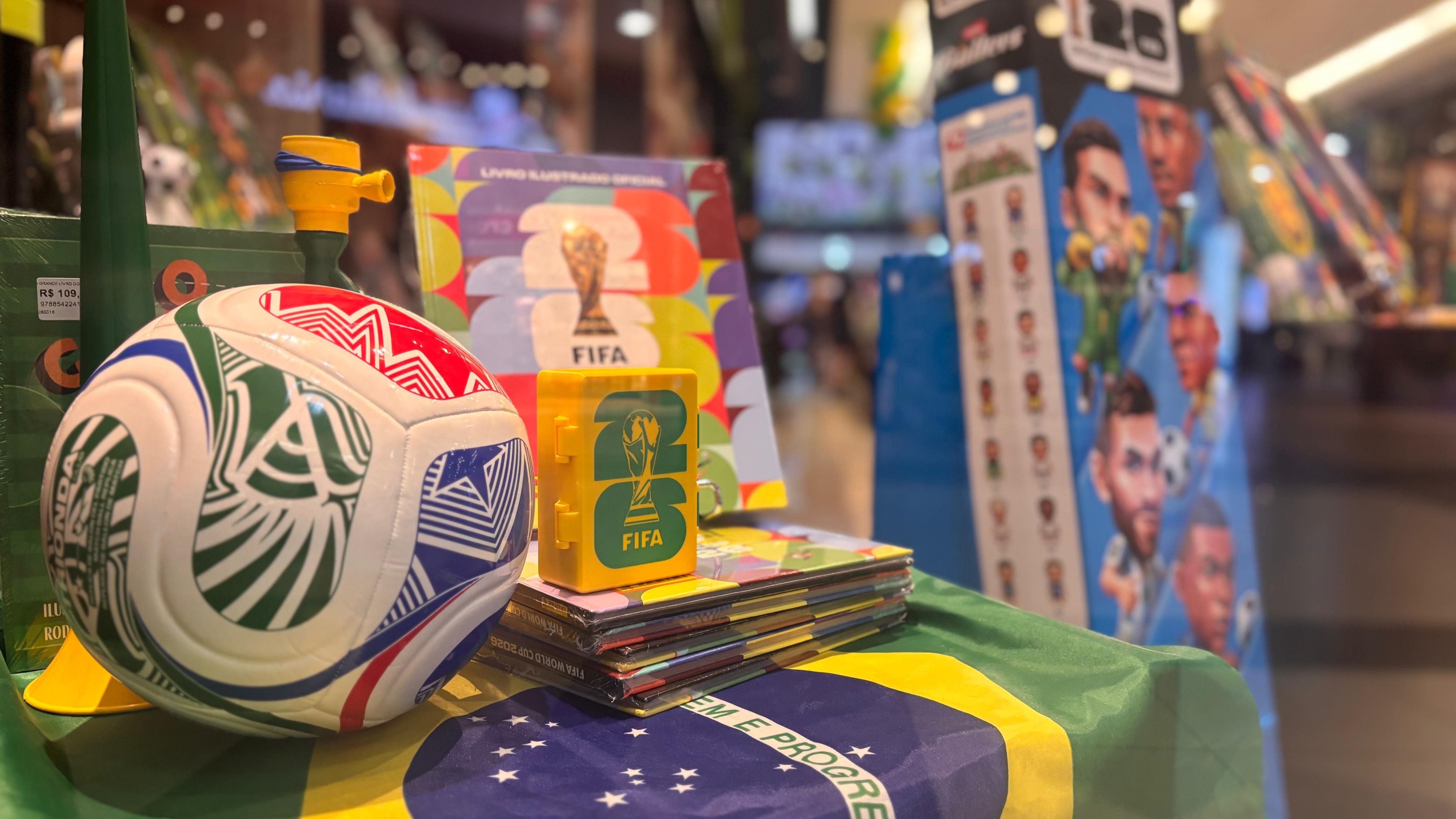
world cup, football, showcase, brazil, ball, sticker, amapá, macapá
Isadora Pereira/g1
Goldman Sachs predicts an increase in demand for official products and items linked to the tournament, which could favor retail chains specializing in sporting goods.
Sports brands such as Adidas, Puma and Nike should also benefit from the greater global visibility and marketing actions associated with the World Cup.
According to Goldman Sachs, Adidas can obtain additional gains by being the official sponsor of the competition ball and providing uniforms for several participating teams. Food, restaurants and delivery
Citi estimates that traditional supermarkets, in addition to large retailers, may register an increase in sales due to greater family consumption during the tournament.
Demand for restaurants is also expected to grow, driven by tourism and group gatherings to watch the games. Food chains, pizzerias and food distributors are among the companies that can benefit from this movement.
Media and digital platforms
Analysts at Deutsche Bank estimate that the 2026 World Cup will generate the highest advertising revenue in the history of the tournament in the United States.
According to Morgan Stanley, the competition could generate between US$300 million and US$400 million in advertising revenue for Fox, which holds the English broadcast rights.
Deutsche Bank points to Telemundo, responsible for broadcasts in Spanish, as another beneficiary.
Digital platforms such as YouTube and Instagram may also see an increase in audience and engagement during the event, according to Citi.
Sports betting
Deutsche Bank believes that online sports betting companies tend to perform above average during the World Cup, driven by the increase in betting volume.
Macquarie bank estimates that the global betting volume will exceed US$50 billion during the tournament, equivalent to almost US$500 million per match. In the 2022 edition, the total exceeded US$35 billion.
Aerial image of the Azteca stadium, where the opening ceremony of the 2026 World Cup takes place.
AP/Fernando Llano/Archive
🗞️ 4 sources covered this story
-1jekynpuxo188.jpg)
From police to the press room, what is it like in the CT where the team is training for the World Cup
terra.com.br
10 books to get you in the mood for the 2026 World Cup
metropoles.comMore stable and shorter range: Tests evaluate how the 2026 World Cup ball should behave
oglobo.globo.com
With Ederson, Brazil brings together representatives from 78 clubs in World Cups
Agência Brasil📰 Related Articles
Pakistani attacks in Afghanistan leave at least 13 dead, says Taliban
G1 Globo
US attacks on Iran are a “violation” of national sovereignty, says Tehran
CNN Brasil
Extortionate prices, swelling, visas and Trump: the many controversies of the 2026 World Cup
G1 Globo
Understand why friends who took photos on a bike path are investigated for manslaughter in the death of a cyclist; see VIDEO
G1 Globo
Remember the last clashes between Isabelle Nogueira and Marciele Albuquerque at the Parintins Festival
G1 Globo