Elections in Peru: Sanchéz surpasses Fujimori with 93.9% of the votes counted
⚡ Quick Summary
In a fierce vote for the presidency of Peru, left-wing Roberto Sanchéz Palomino numerically surpassed right-wing Keiko Fujimori with 93.9% of the votes counted.
In a fierce vote for the presidency of Peru, left-wing Roberto Sanchéz Palomino numerically surpassed right-wing Keiko Fujimori with 93.9% of the votes counted. The partial result is 50.008% for Sánchez, against 49.992% for Keiko. Sánchez started the counting behind her opponent and gradually reduced her advantage until she overtook the Peruvian right-wing candidate. Sanchéz tallies 8,790,560 votes against Keiko's 8,787,618.
The result remains undefined since Sanchéz has just 4,900 votes ahead of Fujimori in a universe of 27 million voters eligible to vote. Of the 92 thousand existing ballot boxes, around 4.6 thousand still need to be counted, according to the National Office of Electoral Processes (ONPE) of Peru.
Related news:
Bolivian Congress approves state of exception law.
7.8 magnitude earthquake hits southern Philippines.
The postgraduate professor of Latin American Integration at the University of São Paulo (USP), Gustavo Menon, highlighted to Agência Brasil that the result remains uncertain because the minutes that most remain to be determined are from abroad, which tends to be more pro-Fujimori, and from the mountainous region of the country, where Sánchez is the favorite.
“The minutes linked more to the mountainous region, in the Andes region, where Roberto Sanchéz has a large advantage in terms of voting, especially in this region of the Peruvian Sierra Sul, remain to be processed,” he said.
Geopolitical dispute
For the specialist in Latin American politics, the result in Peru is fundamental in the correlation of forces in South America. This is because Keiko's victory would represent a closer rapprochement between the country and Donald Trump's government in the United States,
"In fact, it has already made itself available to the US to strengthen policies to combat transnational crimes and classify Peruvian groups as terrorist groups. Peru is going through these geopolitical disputes over its resources, claimed by the US, and as a Pacific country that has increasingly connected with Chinese investments", said Menon.
Keiko vs Sanchez
Roberto Sanchéz and Keiko Fujimori are competing for the presidential term in Peru for the five-year period from 2026 to 2031. The winner will be the ninth president of the South American country in ten years of political crisis. Since 2016, two presidents have resigned and four have been dismissed by the Peruvian parliament, considered the de facto power in the country.
Daughter of former dictator Alberto Fujimori (1990-2000), convicted of human rights violations, which included forced sterilization of indigenous women, Keiko lost in the last three elections in the 2nd round, in 2011, 2016 and 2021.
On the other side, there is Roberto Sánchez, an ally of former president Pedro Castillo, who was dismissed, arrested and convicted of an attempted coup d'état when trying to dissolve Parliament. For his supporters, Castillo was the victim of a coup by the Legislature for representing the country's rural and indigenous vote.
A psychologist by training, Sanchéz is a federal deputy for the Todos pelo Peru party, having been Castillo's minister. As soon as he voted yesterday (7) in Lima, Sanchéz went to the Barbadillo prison, where Castillo is being held, remaining there until the first partial results were released.
Speech moderation
After finishing the first round with 12% of the votes, against Keiko's 17%, Sanchéz moderated his speech and presented an adjustment to his electoral platform to incorporate proposals from parties that began to support him.
In this context, he renounced the proposal to nationalize companies in strategic sectors of the economy. At the same time, he kept his promise to convene a Constituent Assembly to draft a new Constitution, since the current one is a legacy of the Fujimori period.
On the other hand, Sanchéz maintained part of the original program, especially the labor reform proposal to expand rights and formalize workers who are now informal.
🗞️ 4 sources covered this story
Elections in Peru: With more than 93% of the ballots counted, the left-wing candidate surpasses the right-wing candidate with less than 1 point of advantage
O GloboRoberto Sánchez surpasses Keiko Fujimori in the vote count in Peru
CNN Brasil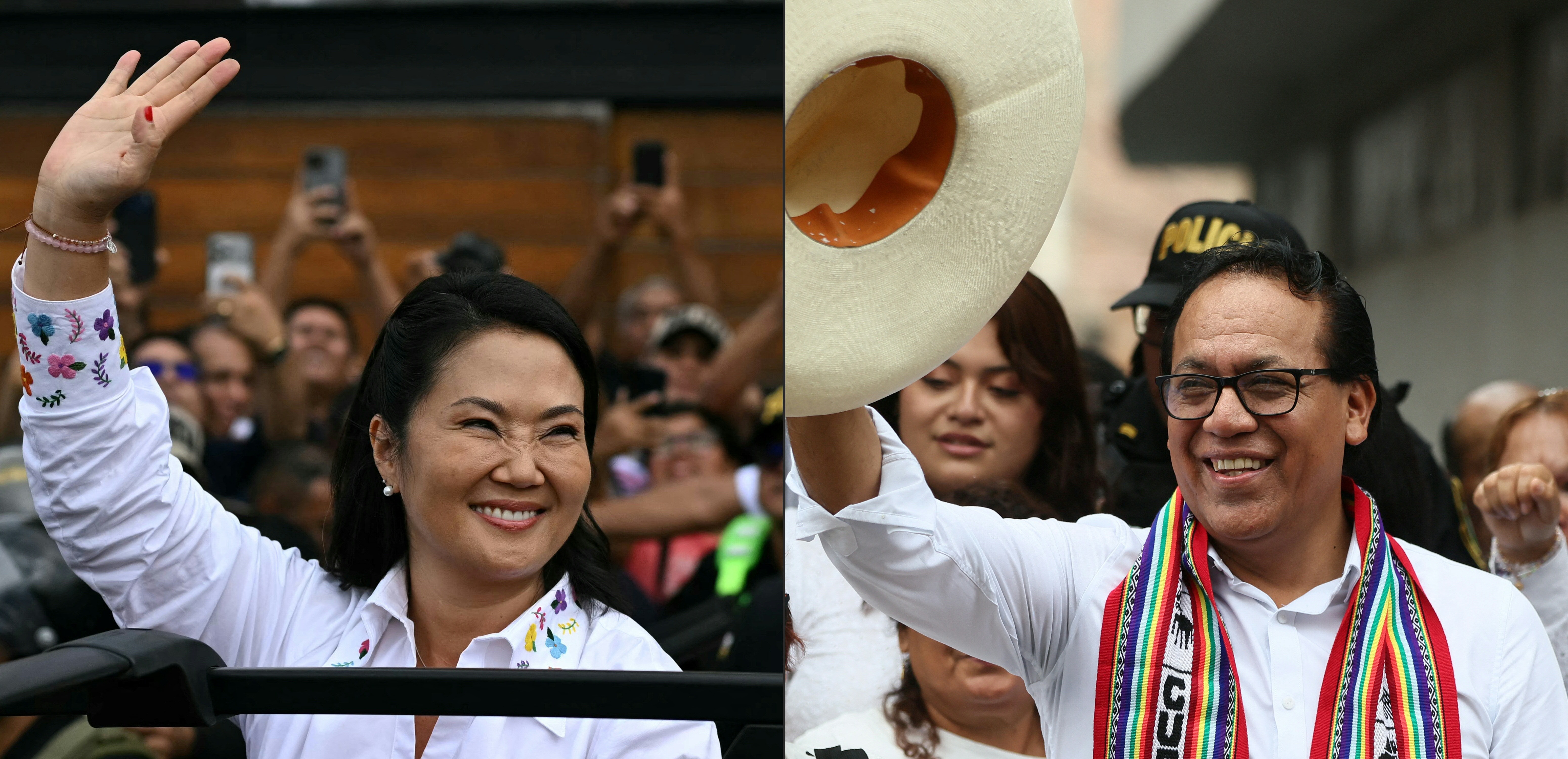
Elections in Peru: Roberto Sánchez turns on Keiko Fujimori with 93% of the votes counted
G1 Globo
Fujimori asks for patience in the investigation in Peru: “We have to wait until the end”
CNN Brasil📰 Related Articles

Outside the World Cup, João Pedro appears in Madonna's short film; watch
G1 Globo
Corpus Christi's long holiday has more than 300 calls for traffic accidents in Amazonas
G1 GloboMessi evolves physically and Argentina gains reinforcements for World Cup debut
CNN Brasil
CPLP approves cooperation plan for the oceans
Observador
National Team Holder reacts to legend's criticism: “No one has five stars”
CNN Brasil