


Oil: find out how the crisis in the Strait of Hormuz benefits Brazilian businesses
⚡ Quick Summary
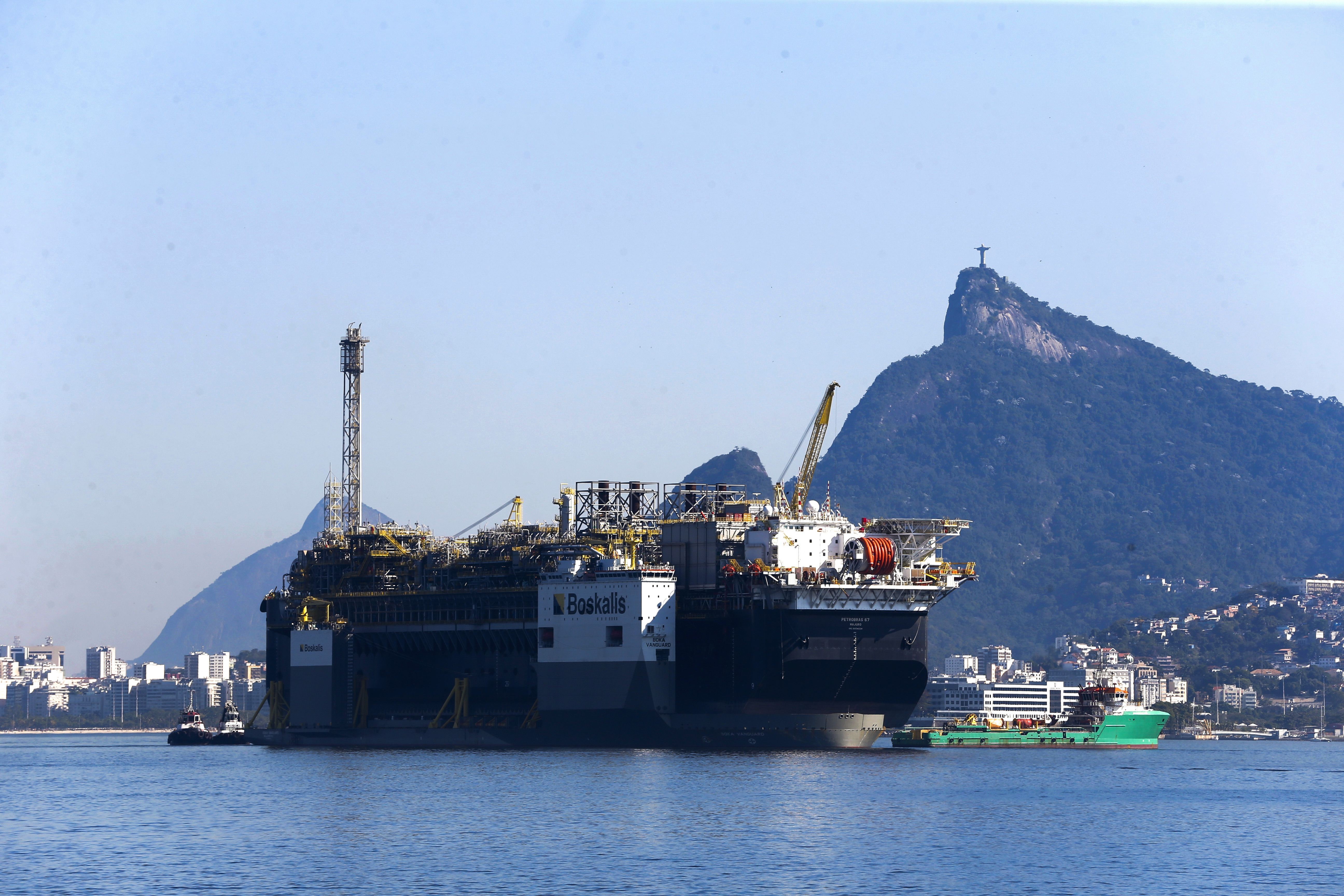
Platform destined for the Campo de Lula Production System, in the pre-salt of the Santos Basin Tânia Rêgo/ Agência Brasil Since the start of the war in Iran and repeated threats to the Strait of Hormuz, a strategic waterway through which approximately 20% of the world's oil passes, the oil market has entered a new era of uncertainty.
Platform destined for the Campo de Lula Production System, in the pre-salt of the Santos Basin
Tânia Rêgo/ Agência Brasil
Since the start of the war in Iran and repeated threats to the Strait of Hormuz, a strategic waterway through which approximately 20% of the world's oil passes, the oil market has entered a new era of uncertainty.
Prices have soared, states are seeking to guarantee their supplies and several oil producers are trying to profit from this instability. Among them is Brazil.
Download GloboPop to watch short vertical videos from Globo
The South American giant is emerging as an alternative to Gulf oil. Its offshore oil, extracted off the Atlantic coast, avoids the Middle East's threatened shipping lanes.
This geographical position, in times of crisis, becomes a strategic advantage. "It is perfectly logical for large consumers to look for more stable suppliers, who are not affected by the chaos that reigns in the Middle East. And this is, obviously, the case in Brazil", confirms Adel El Gammal, expert in energy geopolitics and secretary general of the European Energy Research Alliance (EERA).
See the trending videos on g1
Now on g1
This stability is already reflected in the numbers. Brazil, the ninth largest oil producer in the world, accounts for approximately 4% of global production.
"To give you an idea of the scale, Brazil produces around 4 million barrels per day, which is equivalent to the production of the United Arab Emirates", continues the expert.
A rush for Brazilian oil
Amid the war in Iran, Brazil saw an increase in oil purchases. Two countries, in particular, stood out: China and India. China, which traditionally imported most of its crude oil from the Persian Gulf, has massively redirected its purchases to Brazil.
🔎 According to data from the Brazilian government, oil exports to China doubled in the first quarter, reaching a record US$7.2 billion. More than 60% of Petrobras' exports are now destined for China.
"China represented around 40% of Brazilian crude oil exports before the crisis in the Strait. Now, it is approaching 70%", reveals Adel El Gammal.
The two main Chinese oil companies, China National Petroleum Corporation (CNPC) and China National Offshore Oil Corporation (CNOOC), already had a presence in Brazil through partnerships, but "the conflict in the Middle East only accelerated and strengthened their relationship".
High-quality oil versus poor infrastructure
The strength of Brazilian oil also lies in its nature. The immense offshore reserves discovered in the last twenty years off the coast of Rio de Janeiro are among the most promising in the world.
Extracted from the ultra-deep waters of the Atlantic, this crude oil, known as "pre-salt", has remarkable characteristics.
"Brazilian oil has the advantage of being light and with a low sulfur content. It is an oil that is close to the quality of Brent oil, being considered high quality. Unlike, for example, Venezuelan oil, which is very heavy and difficult to refine", emphasizes Adel El Gammal.
According to Samuele Furfari, PhD in Applied Sciences and professor of Energy Geopolitics at the Free University of Brussels, "the government has encouraged the exploration of the equatorial margin, which is the geological zone that extends from the Brazilian Amazon coast to Guyana. It is a new Eldorado. This entire area is rich in oil", a valuable asset in global markets that seek crude oil that is easy to refine.
However, Brazil faces structural constraints that hamper any rapid development. "The increase in production capacity must be accompanied by an increase in refining capacity. And, in Brazil, this is one of its limitations; it is far from being enough", observes Adel El Gammal. Added to this is what economists call low elasticity, that is, the fact that “it is difficult to significantly increase production in the short term without additional investments and infrastructure development”, continues the researcher.
The same observation was made by Samuele Furfari, who pointed out that "in the oil sector, we work on a long-term scale. What we decide today will have effects ten years from now. Any significant increase in capacity requires investments of several billion dollars and projects that unfold over years."
An ecological paradox?
Petrobras headquarters, in Rio de Janeiro.
Fernando Frazão/Agência Brasil
Thanks to exports, President Lula intends to continue capitalizing on this sector. In recent months, his government has sent several favorable signals to the oil industry.
Petrobras continued the exploration of its gigantic offshore fields, and Brasília recently announced the resumption of drilling in the Urucu field, in the Amazon, where hydrocarbon wells had been idle for more than ten years.
This position may seem paradoxical for a president who, at the same time, tries to present himself as one of the leaders in the fight against climate change.
However, according to Adel El Gammal, this contradiction mainly illustrates the economic realities that Brazil continues to face.
"Lula is in favor of the energy transition, but he is the head of an oil-producing state and needs to take this reality into consideration. Petrobras is a fundamental actor in the Brazilian economy and drives the entire national economy", he explains.
Another reality is that of Brazilian politics. This South American giant operates within a decentralized political system. Lula, even as president, does not have complete freedom of action on all issues.
"Lula is also forced to negotiate, to find a balance with regional powers, with the opposition and with the financial interests deeply rooted in the country. It is the combination of all these factors that reduces his room for maneuver", observes the energy analyst.
For Samuele Furfari, there is nothing absurd about Brasília continuing to develop its oil resources.
"Every State seeks the prosperity of its population. And, when a country has resources, it wants to exploit them." The Belgian expert sees this strategy as a natural evolution for a country that he describes as “a land of the future, rich in agricultural, water and energy resources”.
The end of a “hegemonic market”
Beyond Brazil, the Strait of Hormuz crisis revealed a deeper transformation in the global energy scenario. A world that Samuele Furfari describes like this: “It is no longer a hegemonic market, where a minority of actors dictate the rules; it is a dispersed market, where each producer can find their place.”
The departure of the United Arab Emirates from the Organization of Petroleum Exporting Countries (OPEC) appears, for him, as a symbol of this rupture, because “they understood that the world has changed; OPEC is a thing of the past.”
Good news for Brasília, but this dynamic has its limits. For now, there remains one unknown for Brazil: the duration of the current crisis. While tensions in the Strait of Hormuz offer Brazil an immediate opportunity, there is no guarantee that it will be sustainable in the long term.
Brazil could seize a window of opportunity, but competition is intensifying everywhere. Guyana, Angola, Mozambique, Azerbaijan and Canada are also seeking to strengthen their position in the global market.
With the entry of new producers, the scarcity premium that Brazil currently enjoys is gradually eroding. However, the oil market remains deeply cyclical and extremely sensitive to geopolitical developments.
📰 Related Articles
Tech Drop Holds Back AI Recovery, Middle East Escalation Boosts Oil
TradingView
'Enough is enough': Trump's fear that a new exchange of attacks between Israel and Iran will hinder negotiations between the US and Iranians to end the war
BBC Brasil
'He couldn't sing because he was so drunk': how excessive alcohol on stage and backstage affects artists' routines
G1 Globo
Competitions and job vacancies: check out the opportunities available in Ceará this Monday (8)
G1 Globo
Disappearance, suspected extortion, motivations: what is known about the death of a hairdresser in Franca
G1 Globo