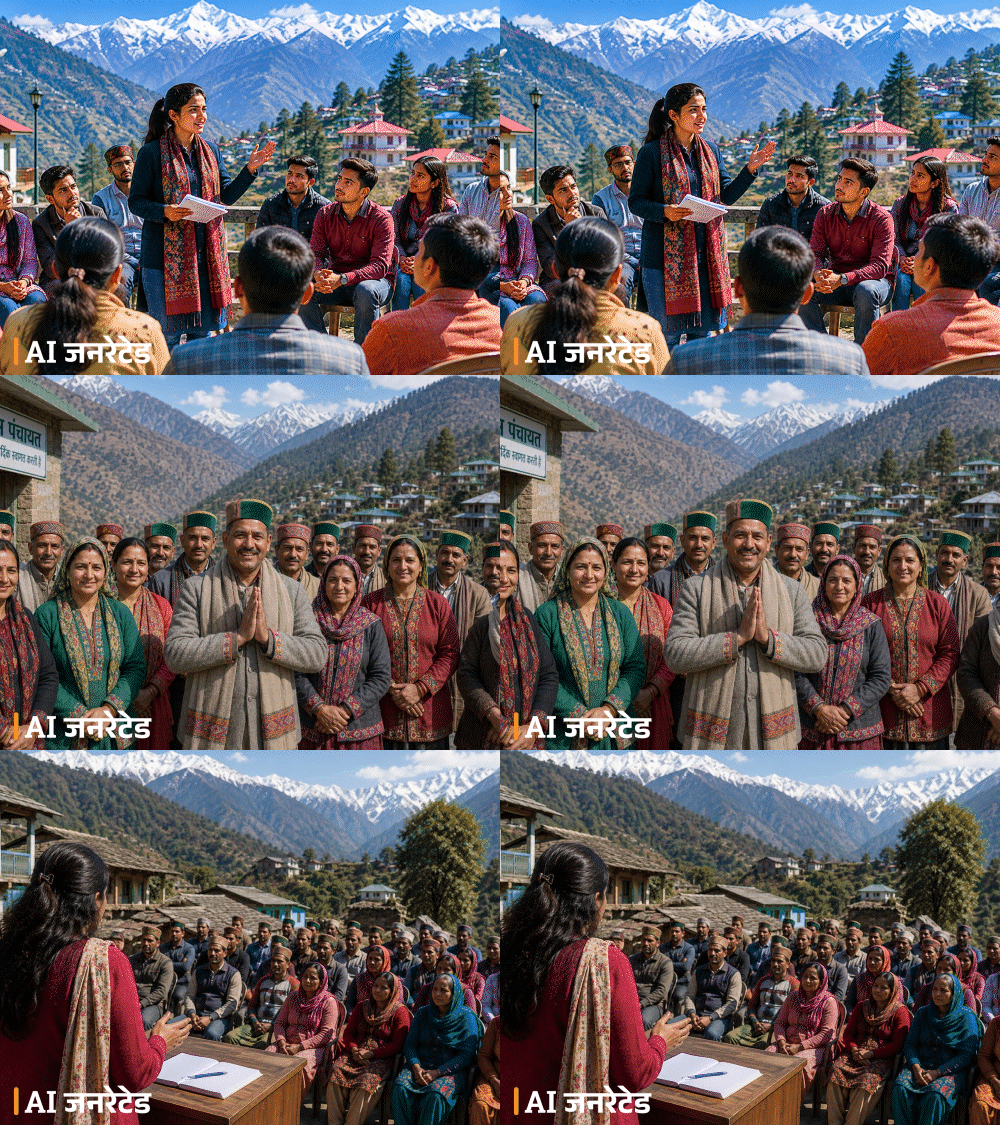
443 illiterate leaders won in Himachal Panchayat elections: 63% public representatives are 10th or less educated, 13% youth of 21-30 years command; femdom
⚡ Quick Summary
Youth participation has increased in the recently concluded Panchayat and urban body elections in Himachal Pradesh. But more educated leaders are not coming into local politics.
Youth participation has increased in the recently concluded Panchayat and urban body elections in Himachal Pradesh. But more educated leaders are not coming into local politics. According to the State Election Commission, 63 percent of the public representatives who have only 10th pass or less education have won the elections. In the state, 443 (1.43%) public representatives were illiterate, 13 thousand 786 (44.46%) had matriculation pass and 5 thousand 748 (18.54%) had less than 10th class education were victorious. Out of 31 thousand 002 public representatives elected in Panchayats, only 1 thousand 251 (4.03%) are MA degree holders, 2 thousand 601 (8.39%) are graduates and 7 thousand 177 (23.15%) are 12th pass.
Entry of youth of 21 to 30 years in politics: 13% youth of 21 to 30 years and 10 thousand 848 (34.99%) representatives of the age group of 31 to 40 years have won the Panchayat elections. Statistics show that the interest of youth in politics has increased. Similarly, the public has also entrusted the responsibility of local leadership to candidates in the age group of 31 to 40 years. Leaders aged between 41 to 50 years have more dominance in urban bodies. At the same time, leaders aged between 41 to 50 years have more influence in urban bodies. This time around 31,002 heads, deputy heads, ward members, BDC members and Zilla Parishad members were elected in the Panchayat elections in the state, while 400 councilors in Municipal Councils and Nagar Panchayats and 63 councilors in 4 Municipal Corporations have won the elections. 26% more women were elected than men. In the 4 municipal corporations of the state, women dominate compared to men. In Solan, Mandi, Palampur and Dharamshala, 63.49% women councilors have been elected, while about 54% women have got command in Panchayats. However, 50% reservation also plays an important role in greater participation of women. Despite this, in many places women have won elections from unreserved (open) seats also. Low participation of poor class in local politics: Statistics of the State Election Commission show that the participation of poor class in local politics is relatively low. In Panchayats, 6.08% public representatives belonging to BPL families and only 1.6% councilors in urban bodies have won the elections. At the same time, 198 taxpayers in Panchayats, 83 in Municipal Council and Nagar Panchayats and 13 taxpayers in four Municipal Corporations have won the elections.
📰 Related Articles
Where do you live? Why do the people of this village stop on this question?
BBC Hindi
Bihar: Bloody conflict in Patna, intense firing due to mutual rivalry, one teenager dead, two injured
Amar Ujala
Aaj Ka Rashifal 8 June: People of these four zodiac signs will get the support of luck and all the work will be completed, read today's horoscope.
Amar Ujala
BJP Candidate List: BJP declared Rajya Sabha candidates for MP and Karnataka, names for MLC elections also decided
Amar Ujala
UP: Akhilesh raised questions on Champat Rai's explanation regarding the alleged scam in Ram Mandir Trust, said- delay is suspicious.
Amar Ujala