Court accepts complaint against Braskem for sinking in Maceió
⚡ Quick Summary
Court orders Braskem to compensate CBTU for VLT interruption The Federal Court in Alagoas received, on Friday (12), the complaint filed by the Federal Public Ministry (MPF) against Braskem, former managers and technicians linked to the mining activity that caused the subsidence of the ground in neighborhoods of Maceió.
Court orders Braskem to compensate CBTU for VLT interruption
The Federal Court in Alagoas received, on Friday (12), the complaint filed by the Federal Public Ministry (MPF) against Braskem, former managers and technicians linked to the mining activity that caused the subsidence of the ground in neighborhoods of Maceió.
In practice, the decision makes the company and executives defendants in the criminal action that determines responsibility for the socio-environmental disaster.
g1 contacted Braskem to ask for a position on the decision, but had not received a response until the last update of this report.
📱Join the g1 Alagoas channel
According to the decision, the complaint presents sufficient elements to justify the opening of the process, with a detailed description of the conduct attributed to the accused, in addition to technical and documentary evidence gathered during the investigation.
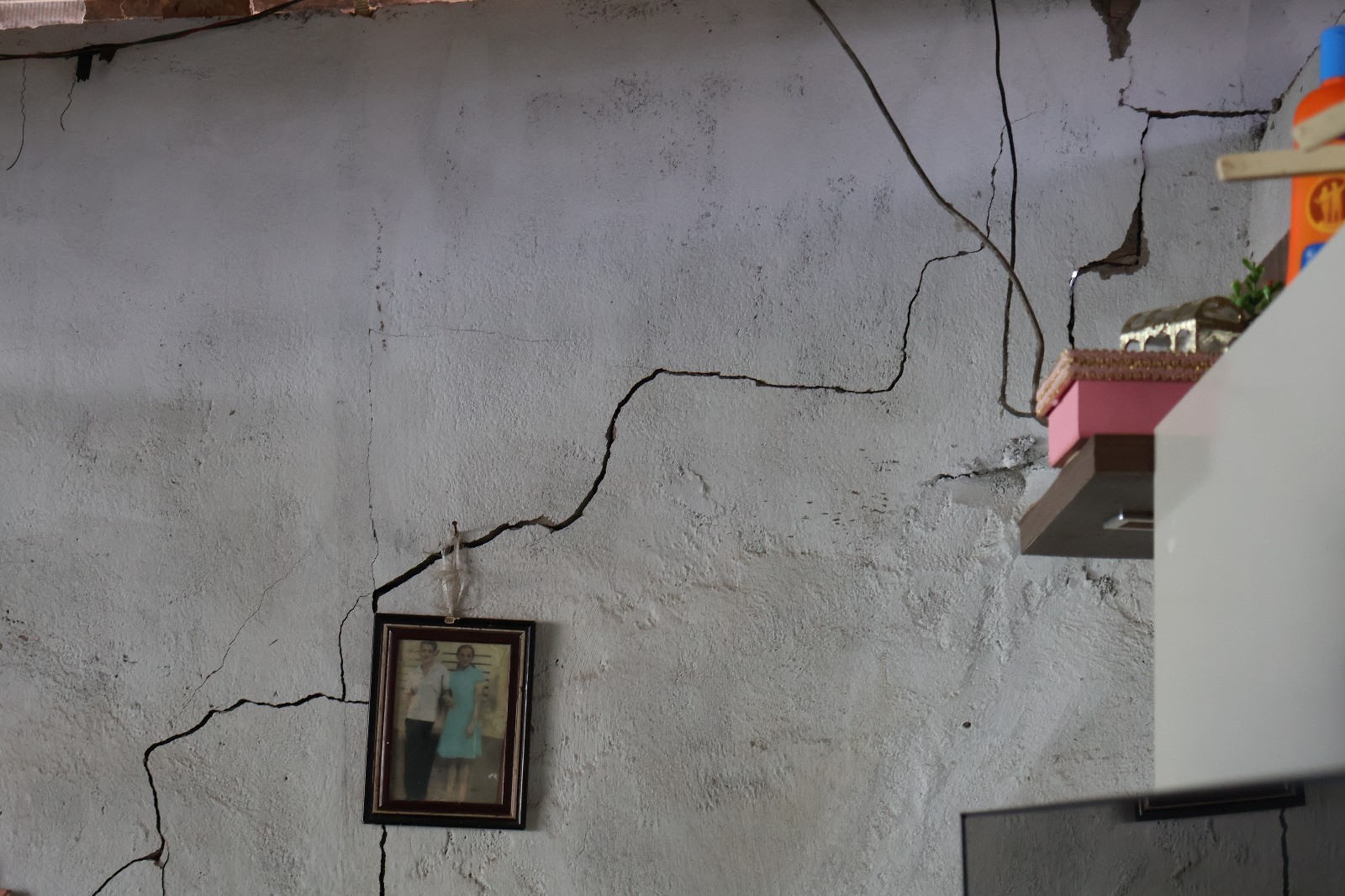
House with cracks affected by rock salt mining in Maceió.
Advice
READ ALSO:
Understand the variation in the rate of soil sinking in a mine area in Maceió
Soil sinking in Maceió: the chronology of cracks in streets and properties to the collapse of mines
INFOGRAPHIC: Understand the risk of collapse of Braskem mines in Maceió
What are the crimes mentioned?
Among the crimes pointed out by the MPF against those involved are:
Qualified environmental pollution;
Preparation and presentation of environmental studies considered false or misleading;
Irregular extraction of mineral resources;
Qualified damage to property.
Next steps in the process
New DGPs, equipment used to monitor soil in the Braskem mine area, in Mutange, in Maceió
Ascom/Civil Defense of Maceió
Upon receipt of the complaint, the accused will be summoned to present their defense. Afterwards, the process will enter the pre-trial phase, when new evidence can be produced and witnesses heard before the trial.
The Federal Court also authorized the continuation of additional investigations by the Federal Police to further investigate the facts.
In the same decision, the judge recognized the prescription of some of the oldest conduct investigated, eliminating the possibility of punishment in these specific cases. Even so, the criminal action will continue in relation to the other facts and accusations considered valid.
What is rock salt and what is it for?
Rock salt depth in Maceió
Art: g1
Rock salt is an ore extracted from rocks that are more than a thousand meters deep in the ground. It forms over thousands of years, as some parts of the ocean gradually evaporate.
In the case of mines in Alagoas, it is removed in a dissolution process. The company digs a well at the depth where the ore is located, around 1,200 meters. It then injects water, forming a brine. Then, this solution is removed to the surface to extract the salt.
Rock salt is used in the chemical industry to manufacture various items such as:
chlorine
caustic soda
hydrochloric acid
sodium bicarbonate
paper and cellulose industries
glass
soap
detergent
toothpaste
Remember the case
Mining in Maceió began in the 1970s, with the former Sal-gema Indústrias Químicas, now Braskem, authorized by the public authorities to extract rock salt from ore used in the production of caustic soda and PVC.
In 2018, the first cracks appeared in the Pinheiro neighborhood. Shortly afterwards, an earthquake worsened the situation and caused structural damage to several houses. The following year, the problem spread to Mutange, Bebedouro, Bom Parto and part of Farol, leading to the evacuation of thousands of residents.
In May 2019, the Brazilian Geological Survey confirmed that the extraction of rock salt by Braskem had caused soil instability. Since then, more than 14 thousand properties have been vacated, affecting around 60 thousand people.
Wall with cracks after Braskem mining.
Advice
Braskem announced the definitive closure of the mines in 2019 and began the process of stabilizing the 35 underground cavities. In this way, a financial compensation program was created to compensate residents, although many still contest the amounts in court.
In 2023, after new tremors and warnings from Civil Defense, part of mine 18 gave way under Lagoa Mundaú, in the Mutange neighborhood. The collapse was controlled after filling the cavity with rock and water from the lagoon.
Braskem's first representative was heard in 2024 by the Senate's Parliamentary Inquiry Commission (CPI) that investigates the company, director Marcelo Arantes acknowledged the company's guilt for the subsidence of neighborhoods in the capital of Alagoas, which caused the displacement of at least 40 thousand people.
In July 2025, the Alagoas Public Defender's Office requested compensation of R$4 billion to compensate for the devaluation of properties belonging to residents of neighborhoods neighboring the geological event.
Check out more news from the region on g1 AL
📰 Related Articles

The incredible journey of the young man who left Peru and rowed alone across the Pacific for 15 months
BBC Brasil
Man is arrested with 2.5 tons of cassiterite illegally transported in RO
G1 Globo
Traffic deaths fall 38.5% in May in Baixada Santista; look
G1 Globo
Restructuring accelerates removal of PS directors
Observador
Seven children have been under the custody of the child protection council for 13 days after being found abandoned in MT
G1 Globo