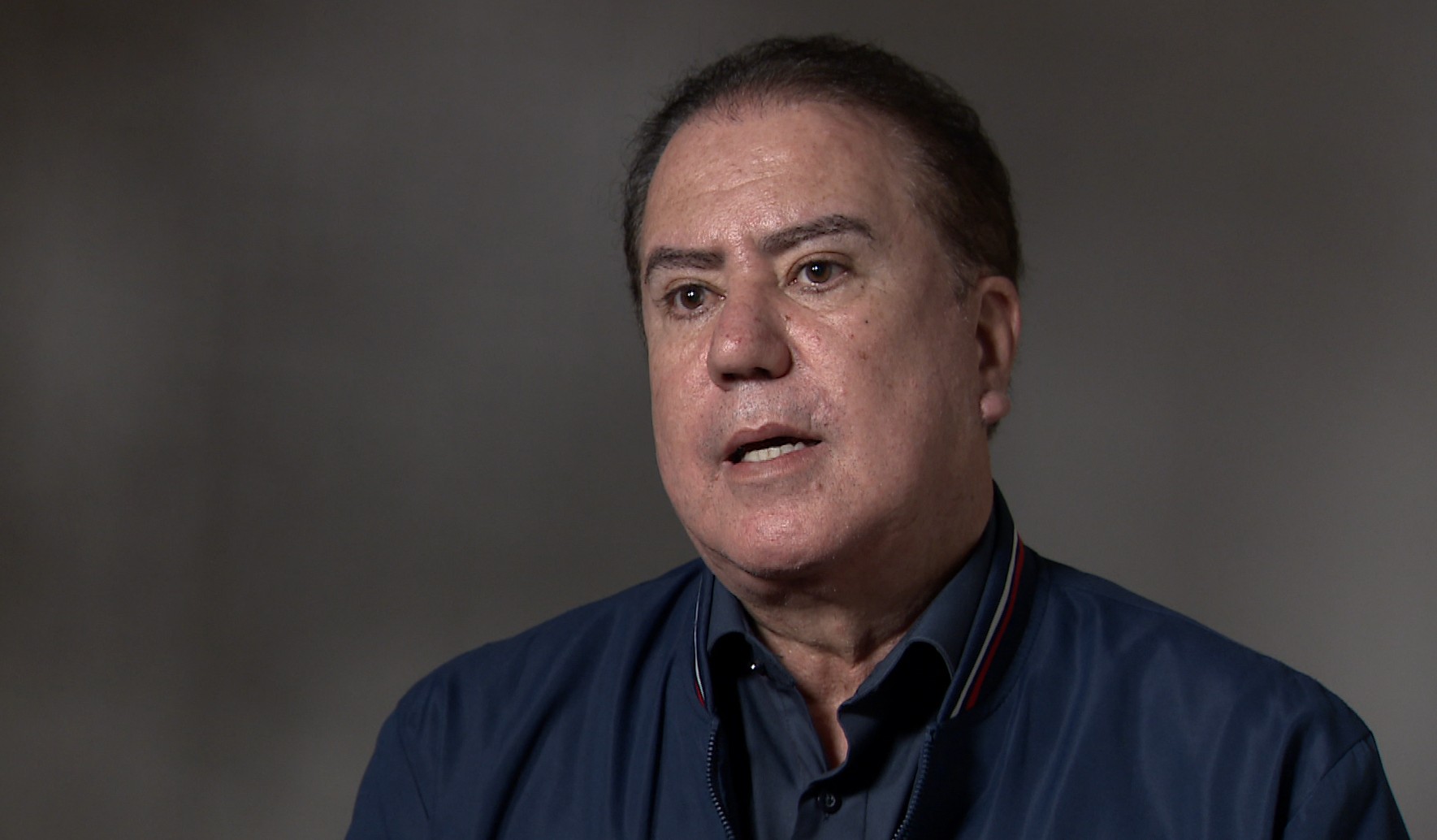
Jonas Donizette sees changes in the electorate with political polarization and wants PSB 'balanced'
⚡ Quick Summary
Jonas Donizette, federal deputy for PSB Pedro Santana/EPTV Federal deputy Jonas Donizette (PSB) stated this Wednesday (16) that party polarization and the internet caused changes in the electorate, with vote fragmentation.
Jonas Donizette, federal deputy for PSB
Pedro Santana/EPTV
Federal deputy Jonas Donizette (PSB) stated this Wednesday (16) that party polarization and the internet caused changes in the electorate, with vote fragmentation. Leader of the party in the Chamber of Deputies, Jonas also defended that the PSB, the basis of the Lula government, be a "balanced" party.
"The PSB, I myself defend that it is a party that welcomes different political opinions. I am a person of the center, I have never been a person identified as left", he said.
Despite being part of Lula's base and having been deputy leader of the government in the Chamber, Jonas voted in favor of the dosimetry bill, which benefited, with a reduced sentence, former president Jair Bolsonaro and some of those convicted of the January 8 coup.
"I was the only one in my party who voted in favor of dosimetry and I didn't receive any kind of reprimand from my party. Why? Because I really think that act on January 8 was a serious act, it undermined democracy. But I saw people there who engaged in so-called herd behavior. [...] So I thought there were very harsh penalties there for people who committed crimes, they should pay, and I voted for the common sense of justice."
Change in the electorate
Jonas Donizette sees change in the electorate with political polarization and wants PSB 'balanced'
Jonas, who gave an interview in Campinas (SP) this Wednesday, was elected in 2022 with 84,044 votes and is one of four federal deputies in the region. Among those elected, he was the one who gathered the lowest number of votes in the election four years ago.
When commenting on the number of votes, he considered it "a 1-0 victory", but claimed that he ran a short campaign in that election.
He also associated the result with political polarization and vote fragmentation caused, according to him, in part by the advent of the internet.
"I have always been an opponent of the PT. The two mayoral elections that I won and also the two for Dário, we defeated the PT. And at the federal level, my party was allied. So there are voters who don't understand this. I have many friends who, some voted for me, happy, others were unhappy. So, you have a loss of votes because of this polarization", he stated.
The deputy will seek re-election this year and is betting on dialogue with the population to increase the electorate.
"In my first election for federal deputy, I had 160 thousand votes before becoming mayor. But it was another reality. The reality that prevails today is a reality in which the fragmentation of the vote is very, very great."
"If you look at the number of candidates who received votes here in Campinas, it's huge. And that always takes away a little bit of votes from those who were always the most voted", he analyzed.
PSB in 2030?
For the deputy, the exit from the 2026 elections could be beneficial for the PSB and, if the scenario outlined is consolidated, the party is considering launching a candidate for president in 2030.
"And I see the PSB leaving, let's say, post-Lula, post-Bolsonaro. I have said that this election, which is the 2026 election, should be the last election that Lula contests and possibly Bolsonaro will also not have a new election to contest. I think there will be a great rearrangement of forces in Brazil," he said.
"And I think that in this rearrangement of forces, the PSB will be able to compete for the presidency of the Republic [...] "Obtaining this success at this moment, we will later think about our own project for Brazil, to compete for the presidency of the Republic", he added.
VIDEOS: everything about Campinas and the region
See more news about the region on g1 Campinas
📰 Related Articles

Messi talks about crying after first goal: “I went through difficult days”
CNN Brasil
Eduardo Bolsonaro sentenced for coercion of justice - The Issue #1741
G1 Globo
World Cup: see Messi's goals and Argentina's best moments 3 x 0 Algeria
CNN Brasil
With Messi at the top, see how the historic World Cup score is
CNN Brasil
Cristiano Ronaldo, Messi and more: what are the secrets to remaining a high-level athlete until the age of 40
G1 Globo