Proposal that criminalizes misogyny advances in the Chamber of Deputies
⚡ Quick Summary
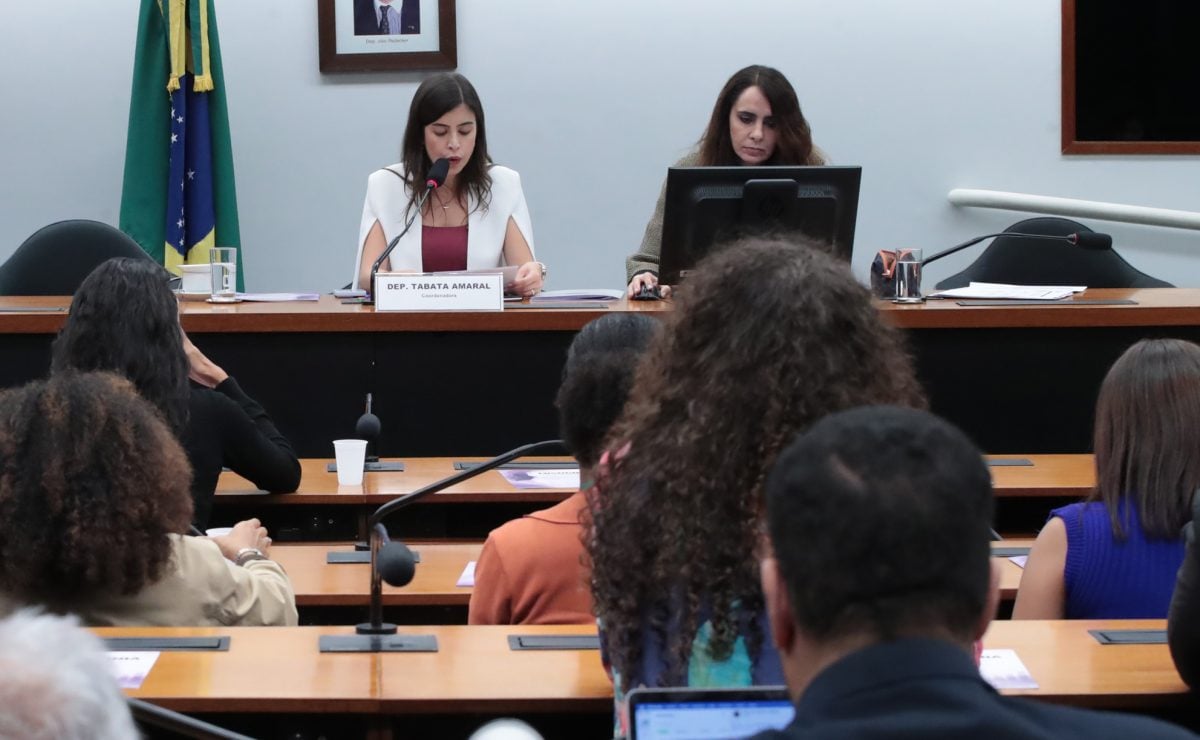
The working group of the Chamber of Deputies that debated the project to combat misogyny approved this Tuesday (16) the opinion of Congresswoman Tabata Amaral (PSB-SP).
The working group of the Chamber of Deputies that debated the project to combat misogyny approved this Tuesday (16) the opinion of Congresswoman Tabata Amaral (PSB-SP). Bill (PL) 896/23 criminalizes the practice, equating it with the crime of racism.
The proposal also expands the punishment for cases committed on the internet with the aim of obtaining profit, audience, engagement or visibility, in addition to providing for the carrying out of public campaigns to combat misogyny.
Related news:
Misinformation about Misogyny PL is growing online, says study.
Know what misogyny is; law can criminalize hate speech.
The bill, which has already been approved in the Senate, still needs to be voted on in the Chamber plenary.
Earlier, there was the expectation that the proposal could begin analysis in the plenary this Tuesday, given the government's decision to withdraw the urgency regime for PL 1838/26, from the federal government, which ends the 6X1 work schedule.
The two proposals were topics at the leaders' meeting that took place this afternoon, but the leaders reached an agreement to discuss the matter in the last week of June.
The text classifies the act of misogyny as the practice, induction or incitement of violence, restriction of the full exercise of rights or offense to a woman's dignity, due to her condition as a woman.
In her report, Tabata Amaral highlighted that there is a central convergence on “the intimate relationship between hate speech and the inferiorization of women and the practice of serious crimes”, highlighting that feminicide is often an “announced death” preceded by verbal and symbolic violence.
Among the points raised in the proposal is that of providing specialized police assistance to victims, considering their vulnerable situation and the risk of revictimization.
“The Specialized Women's Assistance Police Stations (Deams) play a fundamental role in the women's protection network and, therefore, offer a qualified and humanized reception space for those who face violence resulting from misogyny”, stated the deputy.
Other planned measures
The proposal also modifies art. 8th of the Maria da Penha Law (Law 11,340/2006) to add measures to prevent domestic and family violence against women with a focus on the early identification of risk factors.
The text provides for periodic assessment of the impact of governmental and non-governmental actions, in promoting programs to strengthen family ties and economic and social support aimed at reducing the financial dependence that keeps many women trapped in the cycle of abuse.
The opinion also brings proposals for primary and secondary prevention, recommending guidelines for programs to strengthen family bonds and develop parental skills, with an emphasis on non-violent communication and the peaceful resolution of conflicts.
The proposal also highlights the role of family and community co-responsibility in interrupting abusive relational patterns, “ensuring the centrality of the protection of women and their dependents”.
Another suggested measure is the regulation of measures to reduce financial dependence as a risk factor for remaining in the cycle of violence committed against women in vulnerable situations.
These actions must be carried out in conjunction with public policies on social assistance, work, income, housing, health, education and economic autonomy.
“The definition of minimum national parameters tends to strengthen federative coordination, intersectoral integration, the production of evidence and the effectiveness of measures to prevent, protect and combat misogyny and violence against women, especially in the digital sphere”, says the text.
🗞️ 4 sources covered this story
Voting in the Chamber on a project that criminalizes misogyny should take place in July
CartaCapital
AM Lisboa recommends that the chamber reinforce the fight against homophobia
ObservadorGovernment withdraws urgency from project on 6x1 and unlocks votes in the Chamber of Deputies
G1
Chamber Committee repudiates judge’s decision that pardoned Henry Borel’s mother
CNN Brasil📰 Related Articles

The hidden danger in Portugal's first game
Observador
“Casa do Patrão” poll: Jackson, Luisa and Marina are in the 8th Tá Na Reta
CNN Brasil
Montes Claros City Hall decrees a new season for Jardim Primavera
G1 Globo
Municipal Government reduces rescue time and innovates rescue in Rio das Ostras
G1 Globo
Enem 2026: deadline to pay registration fee ends this Wednesday; value is R$85
G1 Globo