


New ETE launches Caarapó towards universal sanitation
⚡ Quick Summary
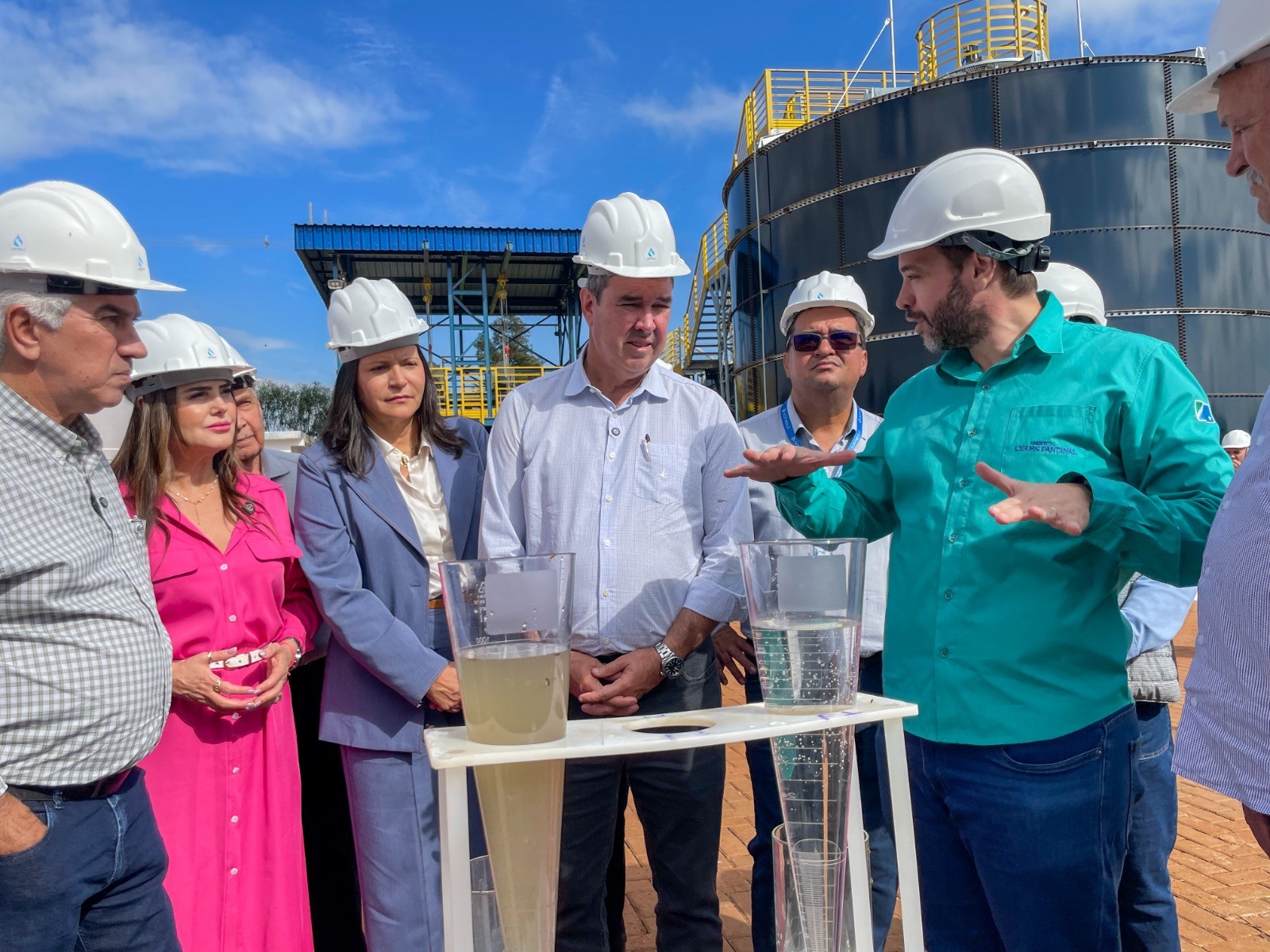
ETE OPENING Advice Ambiental MS Pantanal, in partnership with Sanesul and the State Government, launched last Thursday (11/06), in Caarapó, the municipality's new Sewage Treatment Station, ETE Caarapó.
ETE OPENING
Advice
Ambiental MS Pantanal, in partnership with Sanesul and the State Government, launched last Thursday (11/06), in Caarapó, the municipality's new Sewage Treatment Station, ETE Caarapó. Located in the rural area of Caarapó, the new ETE represents another advance in the sanitation infrastructure in MS.
With a treatment capacity of 60 liters per second, the new unit expands the system's operational capacity, directly contributing to serving the population, protecting water resources and improving environmental quality.
Caarapó is among the municipalities that are moving towards universal sanitation in Mato Grosso do Sul, with 69.17% sewage coverage. Works are ongoing in the municipality and, to date, more than 39.6 kilometers of collection network have been implemented and 2,300 sewage connections have been completed, benefiting approximately 6,500 people.
ETE CAARAPÓ
Advice
The Governor of the State of Mato Grosso do Sul, Eduardo Ridel, reinforced at the inauguration the role of the partnership between institutions in advancing sanitation in MS.
“We inaugurated a station here today that goes from 20 liters per second to 60 liters per second, preparing Caarapó, not only for its universalization in sanitation in this 26, but preparing for the next 20 years”.
For Ambiental MS Pantanal, this advance symbolizes the concessionaire's commitment to the operation, advancement and sustainability of sewage systems in the municipalities served by the Public-Private Partnership signed with Sanesul and the State Government.
The concessionaire's executive director, Clayton Bezerra, highlights the importance of joint investments in the State. “This delivery adds to other strategic structures that we have been following closely, such as the Itaquiraí ETE, the Bonito outfall and the works that are part of the advancement of sanitary sewage coverage in the State”.
The director reinforces that each project represents more than just infrastructure, also bringing public health, environmental preservation, urban planning and development to the 68 municipalities in Mato Grosso do Sul served by the partnership.
“We are talking about a project that expands treatment capacity, strengthens environmental protection and helps the municipality advance with a better quality of life for the population”, highlights Clayton.
This progress is the result of continuous investments in the collection network, household connections, pumping stations and treatment structures. As part of this progress, ETE Caarapó plays a fundamental role in ensuring that the collected sewage is treated appropriately before the effluent is disposed of, increasing the efficiency and operational safety of the system.
“The transformation that this ETE will bring to Caarapó, in terms of quality in sewage treatment, is fantastic, a fully automated system that will guarantee savings and sustainability”, highlighted Márcio Bueno, Supervisor of the Sanesul Local Unit.
The expansion of sanitation infrastructure represents a direct investment in public health, quality of life and environmental preservation. By expanding sewage collection and treatment, the municipality reduces health risks, contributes to the protection of water sources and strengthens the foundations for more sustainable urban development.
Transforming the present and the future
The advances made in Mato Grosso do Sul reflect the work of Aegea, one of the largest private companies in the sector in the country, present in 15 Brazilian states and responsible for bringing treated water, collection and treatment of sewage to more than 39 million people, from the North to the South of Brazil.
The company has transformed realities across the country through actions based on innovation, operational efficiency and commitment to the population's quality of life. More than infrastructure, Aegea contributes to building healthier, more resilient and future-prepared cities, promoting dignity, development and preservation of natural resources.
In different territories of the country, the company's presence translates into concrete changes in people's daily lives. From expanding access to sanitation to environmental recovery, from improving public health to creating opportunities for sustainable development. A trajectory built with the purpose of transforming the present and contributing to a better future for millions of Brazilians.
📰 Related Articles
Find out how to get a bracelet for the Visitors' Festival in Parintins
G1 Globo
Court holds hearing in case of missing and dead pregnant woman in Campos
G1 Globo
Intervention in the Guaicurus Consortium has members from MT, AL, RJ and one from Campo Grande
G1 Globo
Manaus Municipal Guard Competition: preliminary results of the objective test should be published this Tuesday (16)
G1 Globo