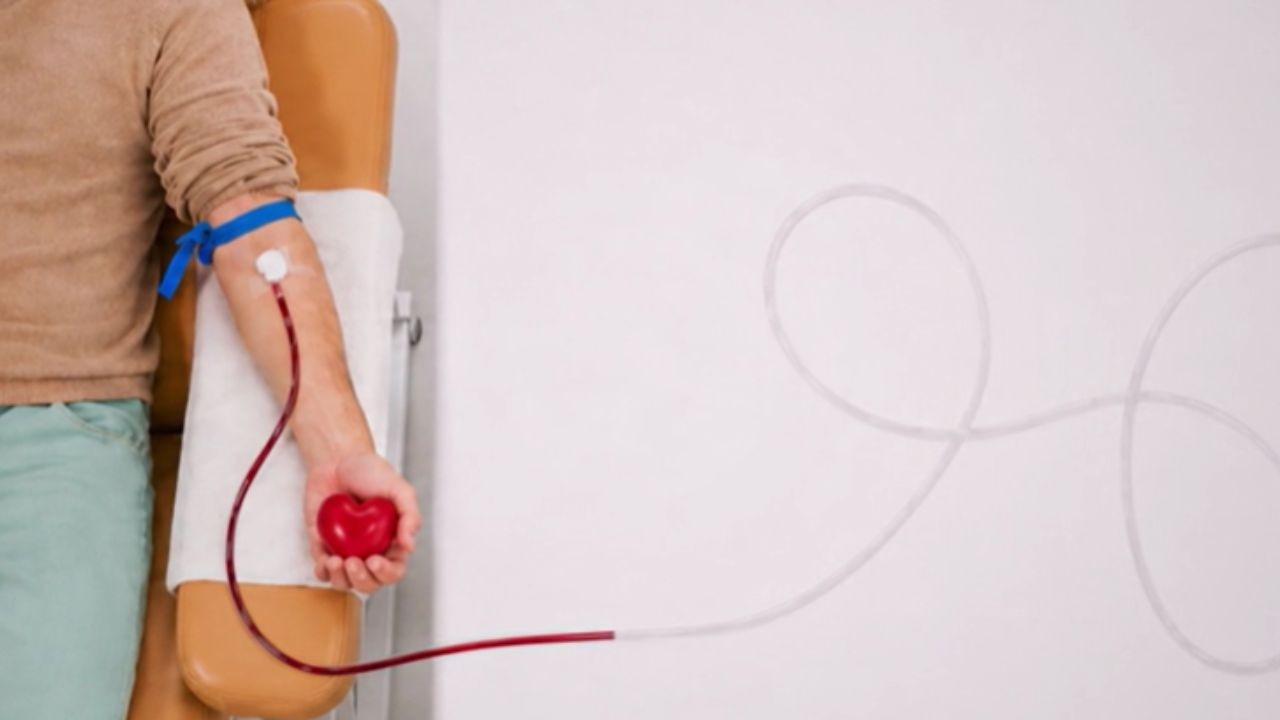
The path of blood: see how a donation made within AM reaches those in need
⚡ Quick Summary
The path of blood see how a donation made inside AM reaches those in need Reproduction/Amazon Network Blood donated by volunteers in the interior of Amazonas goes through a series of steps before reaching patients who need a transfusion.
The path of blood see how a donation made inside AM reaches those in need
Reproduction/Amazon Network
Blood donated by volunteers in the interior of Amazonas goes through a series of steps before reaching patients who need a transfusion. The process involves collection, transportation, examination and separation of components to ensure the safety of the treatment.
In celebration of World Blood Donor Day, celebrated last Sunday (14), Jornal do Amazonas 1st edition begins a series of three reports that show the path taken by donated blood in the state.
Right now, while one person donates blood, another may be waiting for this gesture to continue living. Voluntary, non-profit donations are essential to maintain stocks and serve patients in hospitals.
📲 Join the g1 AM channel on WhatsApp
In Parintins, in the interior of Amazonas, nurse Tiago Roosevelt Mota da Costa is one of the donors who help keep the stocks supplied. As he works in a hospital unit, he closely monitors the importance of donating.
Now on g1
"It's very important, because as I live in the hospital unit, we can see the patients who are really in need and the lack in the state and even in the country of donations, of blood bags. So we are moved by this situation. Of course, the feeling of gratitude comes from seeing people doing well afterwards", he said.
During a donation, Tiago remembered a patient treated at the hospital where he works. The last shift I actually gave had a girl who needed plasma and was also considered a threat. I saw the state in which she arrived and the state in which she left. So it's gratifying for us to be a donor to see the patient, the citizen who needs to leave well and healthy", he reported.
In Tabatinga, on the triple border between Brazil, Colombia and Peru, the donation also helps maintain stocks. Collection is carried out at the military hospital, with support from residents of the region, including people from Benjamin Constant.
For housewife Diana da Silva, donating blood is a way of helping other people. "It's the act of saving many lives, helping those in need. It's rewarding to help others," he said.
Professor Ney Carlos Nascimento started donating after his father had an accident and needed blood.
"When my father had an accident and had to go to the military hospital, it gave me this desire to be able to donate. He needed blood and I had to donate, but sometimes we donate without knowing that it will benefit. This is an act of gratitude because maybe tomorrow we won't need it. If you donate blood, you have love for others", he said.
Logistics to ensure blood safety
But, before a bag collected inside reaches a patient, there is a long transport, analysis and preparation operation.
The Hemocentro do Amazonas (Hemoam) maintains collection and transfusion stations in the capital and in the interior of the state. The samples from Parintins are sent by boat to Manaus. In Tabatinga, due to the distance, the material is transported by air.
Logistics is part of a network organized by the Ministry of Health. In total, there are 13 testing centers in the country, and one of them works in Amazonas.
In addition to the blood collected in Manaus and municipalities in the state, Hemoam also receives and tests samples from Roraima and Rondônia. All material goes through high-tech equipment before being released for use.
According to Hemoam's serology manager, Marcelo Hipólito, the tests identify possible changes in donated blood.
"The samples are subjected to serology and molecular biology tests and then we evaluate the markers of HIV, hepatitis B, hepatitis C, malaria and syphilis in the donor's blood. There are 12 markers in total", he explained.
The results come out within a few hours. When there are no changes, the bags proceed to the next step: separating the components. "For example, the donor came here voluntarily and I gave him a bag, but we still have two more satellite bags, where we will divide the rest of the blood components", he said.
Blood collection in Amazonas
Reproduction/Amazon Network
A donation that goes through several stages to save lives
In the fractionation sector, blood is divided into red blood cells, platelets and plasma. Each component has a specific function in the treatment of patients.
"It already took us around eight hours to extract the blood components. We don't donate money, we don't donate gold, we donate blood, which is a phenomenal, beautiful thing to do", added Marcelo Reis.
At the end of the journey, a donation made in a few minutes goes through many hands, equipment and care until it reaches those in need. For student Camila Silveira, the gesture represents a way of helping.
"We are able to donate and help those in need. There is no other feeling. We feel useful in some way," he said.
📰 Related Articles

Insurance warns of EU passivity in the face of AI
Observador
Why did the sea shine in Figueira da Foz?
Observador
Justice of Alagoas censors newspaper that linked JHC to the Master Case
CartaCapital
Producer declares expenditure of R$75 million on film about Bolsonaro; see different values involving the long
G1 Globo
Accident between 3 trucks and car leaves person injured in MG-285
G1 Globo