


Fighting in Lebanon subsides after US-Iran agreement, but displaced people are warned not to rush home
⚡ Quick Summary
Fighting in southern Lebanon eased on Monday following the announcement of a deal between the US and Iran to end the wider conflict, but local authorities warned displaced people not to rush home, and Israel said it would not withdraw its troops from the region.
Fighting in southern Lebanon eased on Monday following the announcement of a deal between the US and Iran to end the wider conflict, but local authorities warned displaced people not to rush home, and Israel said it would not withdraw its troops from the region.
Lebanon has suffered the deadliest consequences of the US-Iran conflict, with nearly 3,800 people killed and around 1.2 million people displaced by an Israeli offensive against the Iran-backed Hezbollah group, which opened fire on Israel in support of Tehran on March 2.
Pakistan, a key mediator between Tehran and Washington, announced that a deal had been reached in the early hours of Monday local time, calling for “an immediate and permanent end to military operations on all fronts, including in Lebanon.”
The declaration brought relative calm to southern Lebanon, according to Lebanese and foreign security sources.
Hezbollah attacks on Israeli military targets in both southern Lebanon and northern Israel ceased shortly before midnight, the sources reported. The group did not comment on the agreement, but had previously stated that it supports Iran's initiative for a ceasefire in Lebanon.
Israel has also significantly reduced its attacks, security sources said, although some artillery fire was reported in southern Lebanese cities and at least one drone was heard flying over Beirut and its southern suburbs.
ISRAEL SAYS TROOPS WILL REMAIN
In southern Lebanon, municipal councils asked residents to postpone returning home. The Israeli Air Force has heavily bombed some cities in the region over the past three months, and others closer to the border are still occupied by Israeli troops.
Mona Mazeh, a displaced woman sheltering in Beirut's Hamra neighborhood, had no immediate plans to return to her village near the southern city of Tire. "Frankly, we are hesitant; Israel cannot be trusted," she said.
Israeli Defense Minister Israel Katz, whose country is not a signatory to the US-Iran agreement, stated that Israel would not withdraw from safe zones in southern Lebanon, Gaza and Syria, and that it would retaliate if Iran attacks Israel due to events in Lebanon.
Katz said the security zone in southern Lebanon would be cleared of local residents and that “all terrorist infrastructure, including homes in neighboring villages,” a reference to Hezbollah, would be removed.
The Israeli armed forces have been razing sites in southern Lebanon for weeks, claiming they are acting against Hezbollah militants infiltrating civilian areas in the predominantly Shi'ite Muslim region. Hundreds of thousands of Lebanese Shiites are taking refuge in other parts of the country.
In Nabatieh, a devastated southern town, Mohammed Daqdouq said he had returned on Monday morning to check on his home. “We’re going to need a lifetime to rebuild — to rebuild it again and bring Nabatieh back to what it was,” he said.
🗞️ 4 sources covered this story

Israel fakes US-Iran agreement and promises to continue in Lebanon
ObservadorPetrobras (PETR4): ADRs fall 4% following oil after preliminary US-Iran agreement
InfoMoneyIsrael refuses to withdraw troops from Lebanon after announcement of US-Iran agreement
UOL NotíciasKiev's historic monastery on fire after Russian attack leaves people dead
CNN Brasil📰 Related Articles

Montenegro welcomes understanding and hopes for "positive economic"
Observador
This week's two polls on the Haddad x Tarcísio dispute in São Paulo
CartaCapital
São João do Recife: check out attractions in the decentralized hubs chosen by voting
G1 Globo
Daily summary #2018: Peace agreement between the US and Iran brings relief to the market; Iran debuts in the World Cup, and Brazil returns to training after a draw in the first game; Investigations into the death of a woman thrown from a bridge without ropes in SP and the crash between two helicopters in the air that killed 6 people in Rio
G1 Globo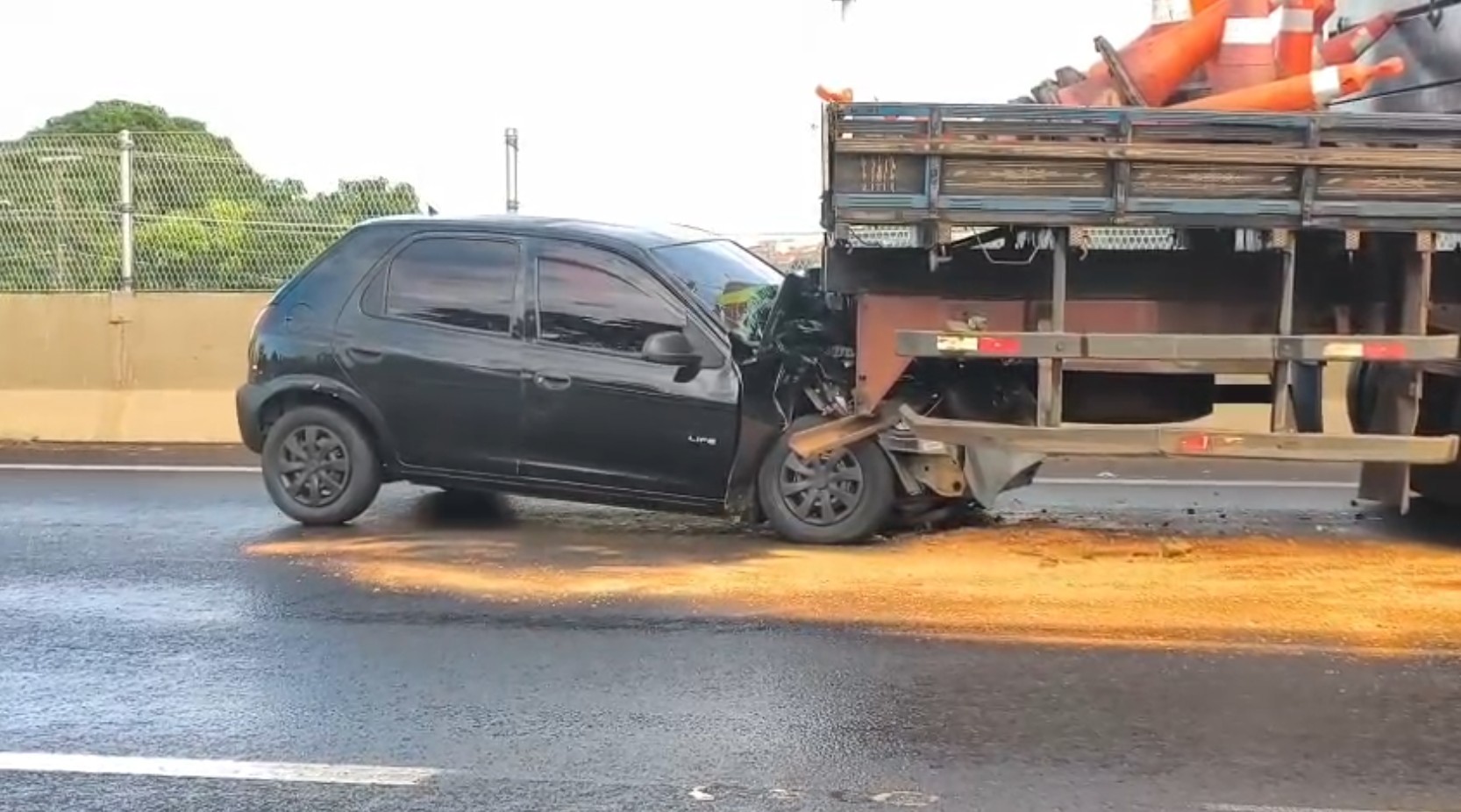
Driver escapes unharmed after car crashes into the back of a truck in Franca, SP
G1 Globo