


New urban province termed ‘an unavoidable necessity’
⚡ Quick Summary
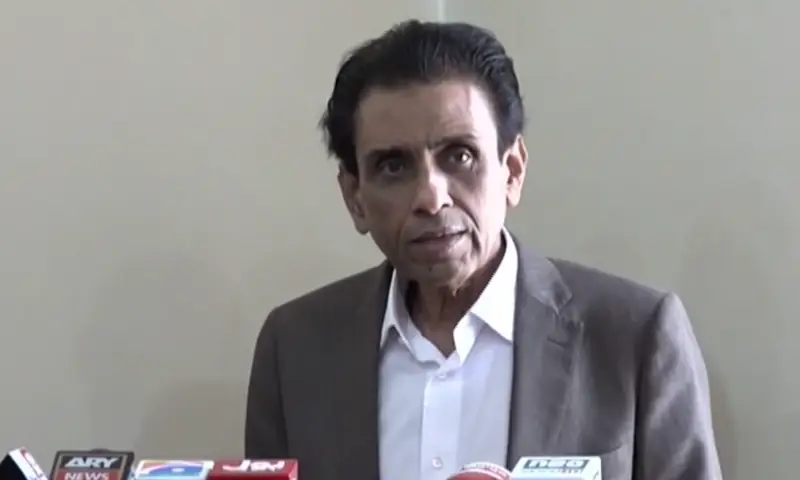
• Muttahida chief says Karachi’s growing population and economic importance require a new administrative framework • Politicians, experts and civil society members call for urgent governance reforms in capital of Sindh KARACHI: Muttahida Qaumi Movement-Pakistan Chairman Dr Khalid Maqbool Siddiqui has stressed the need of carving out a new urban province in Sindh, saying “it has become an unavoidable necessity”.
• Muttahida chief says Karachi’s growing population and economic importance require a new administrative framework
• Politicians, experts and civil society members call for urgent governance reforms in capital of Sindh
KARACHI: Muttahida Qaumi Movement-Pakistan Chairman Dr Khalid Maqbool Siddiqui has stressed the need of carving out a new urban province in Sindh, saying “it has become an unavoidable necessity”.
He said this while speaking to a programme titled ‘The Dialogue Karachi’, organised by his party here at a local hotel on Sunday.
The event brought together politicians, intellectuals, journalists, urban development specialists and governance experts, who agreed that Karachi continues to suffer from chronic injustice, poor governance and a weak local government (LG) system, warning that the country’s economic hub cannot prosper without genuine devolution of powers and administrative reforms.
The participants highlighted decades of neglect, flawed governance structures, inadequate representation and the failure to empower LGs in the metropolis.
They agreed that Karachi’s future depends on empowering local governments, ensuring the effective implementation of Article 140-A of the Constitution and pursuing administrative reforms to address the city’s long-standing governance challenges.
Addressing the gathering, MQM-P Chairman Dr Siddiqui, who is also the federal education minister, defended his party’s political legacy and claimed that much of Karachi’s development was achieved during periods when MQM held local government authority.
He said allegations linking the party to major criminal incidents, including the killings of Hakim Saeed and Amjad Sabri and the Baldia factory fire tragedy, had not been proven in courts.
“From the murders of Hakim Said and Amjad Sabri to the Baldia factory fire tragedy and weapons recovery cases, no allegation against MQM has ever been proven in a court of law”, he said.
“The truth is that whatever development Karachi enjoys today is largely the result of MQM’s efforts,” he added.
Dr Siddiqui argued that Karachi’s growing population and economic importance demand a new administrative framework, including the creation of a new urban province within the constitutional framework.
“A new urban province, within the constitutional framework of Pakistan, has become an unavoidable necessity,” he added.
He also questioned the utilisation of provincial resources and called for a fair population count to ensure proper representation and allocation of funds.
Other speakers also criticised the state of local governance in Karachi.
MQM-P leader and MNA Javed Hanif said the city’s problems persist despite the availability of workable solutions, blaming the lack of political will.
“The solutions to Karachi’s problems exist, but there is a severe lack of political will,” he said. “People sitting in Larkana cannot decide Karachi’s future. The people of Karachi must be allowed to make their own decisions.”
Former Sindh governor and interior minister Moinuddin Haider said rapid urbanisation and population growth had not been matched by reforms in governance and representation.
He claimed that the 18th Constitutional Amendment had strengthened provincial control without adequately transferring powers to the grassroots level.
“Instead of transferring power to the grassroots, the 18th Amendment has led to provincial authoritarianism and the erosion of rights,” he added.
Senior journalist Mazhar Abbas lamented Karachi’s declining civic and cultural standards, saying weak local institutions had undermined democratic development.
He stressed that LGs serve as the nursery of democracy and should be empowered to address citizens’ problems effectively.
Journalist Amir Zia described it as unfortunate that Pakistan’s financial capital continues to rank poorly in global liveability assessments despite its economic significance.
He said Karachi’s challenges were a national issue rather than an ethnic or political one.
Former law minister Barrister Shahida Jameel, Sohail Wajahat Siddiqui, Hasan Bakhshi, Dr Asim Bashir and others also spoke.
Published in Dawn, June 15th, 2026
📰 Related Articles
Transfer Big Board: Best players in each position who could move this summer
ESPNEl-Buba to Tinubu: Rescue our abducted children or resign
Vanguard Nigeria
Eric Trump says 'rigged' UFC fight messages were AI fakes
BBC Sport
Hurricanes win first Stanley Cup for 20 years
BBC Sport