Increasingly anti-immigration, Europe will support children of immigrants at the World Cup
⚡ Quick Summary
Increasingly anti-immigration, Europe will support children of immigrants at the World Cup Amid a widespread movement to tighten immigration rules across the European Union, Europeans from different countries will turn their hopes for a World Cup title to… children of immigrants.
Increasingly anti-immigration, Europe will support children of immigrants at the World Cup
Amid a widespread movement to tighten immigration rules across the European Union, Europeans from different countries will turn their hopes for a World Cup title to… children of immigrants.
✅ Follow the g1 international news channel on WhatsApp
European teams have seen an increase in the number of descendants of immigrants in their squads in recent years. The presence of these players is already consolidated among the main teams of the old continent, and was repeated in the squads for this World Cup:
In the French team, 20 of the 26 (77%) players who will compete in the tournament are children of immigrants;
In the Netherlands, half of the players are direct descendants of foreigners;
In the German and English teams, the children of immigrants represent at least a third of the squads.
➡️ These four teams are among the favorites to win the tournament — along with Spain, Portugal, Argentina and Brazil —, according to a projection made by Opta, specialized in football statistics.
The data comes from a survey carried out by g1 based on the final squads for the World Cup, which will be played between June and July in the USA, Mexico and Canada (see the infographic below).
“These selections are an excellent portrait of these European societies, which have become more multicultural and multiracial [in recent decades],” Maurício Santoro, PhD in Political Science and Sociology from Iuperj, told g1.
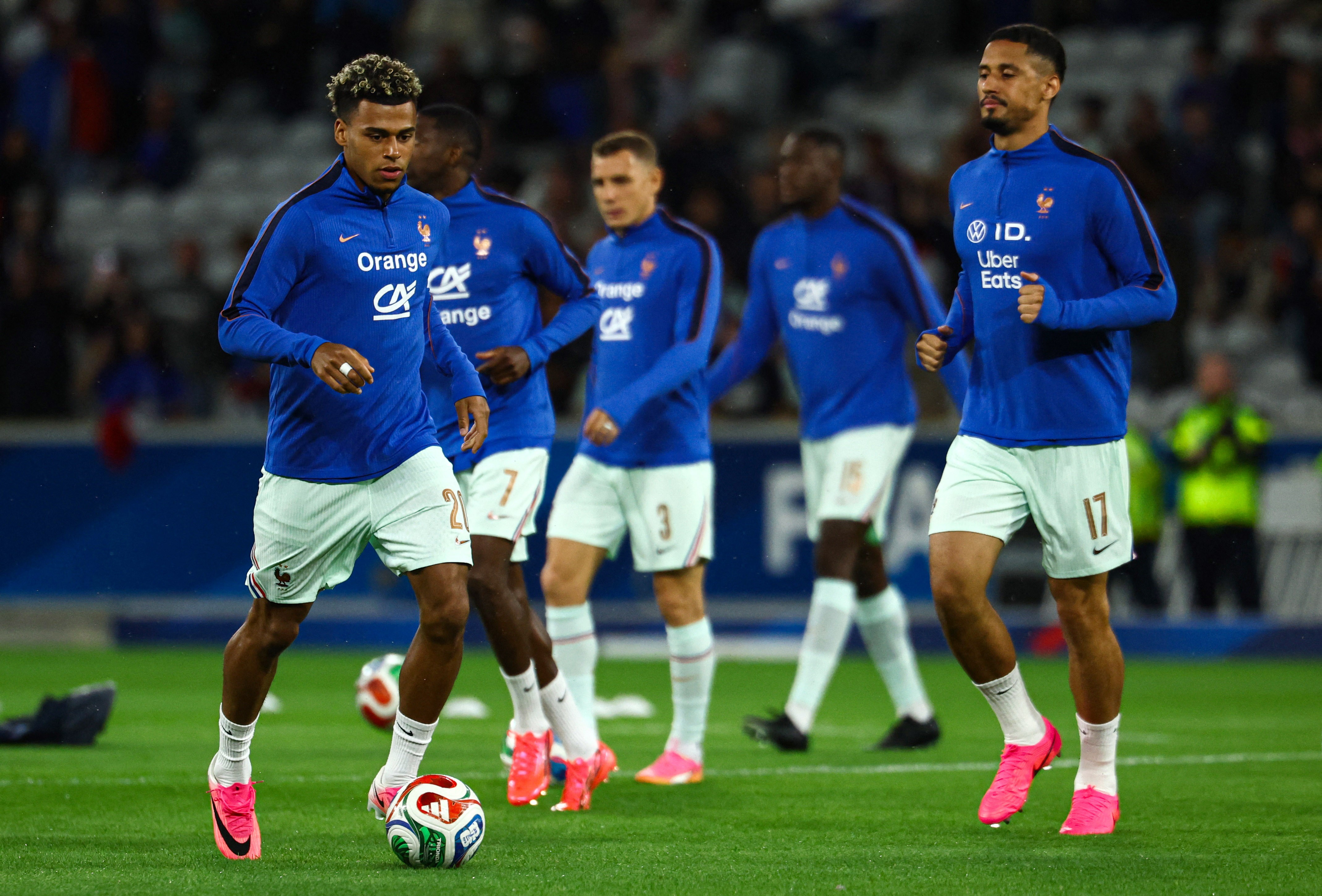
France x Northern Ireland - Pre-World Cup Friendly
REUTERS/Sarah Meyssonnier
France, in fact, is one of the strongest teams in the world in recent decades and reached two consecutive finals in the last two World Cups, in 2018 and 2022 — when they were champion and runner-up, respectively.
These campaigns were built by teams of high ethnic diversity, and this time it will be no different: the team is led by Kylian Mbappé and Ousmane Dembélé, both sons of immigrants and who are among the best players in the world today.
This diversity is the result of a global migratory flow towards Europe that dates back to the 20th century and neocolonialism — a period in which Europeans shared Africa among themselves.
Europe is attractive for its welfare state, especially in member countries of the European Union, and has become home to immigrants from former African colonies and refugees from wars in Asia and Africa (read more below);
The refugee crisis, which completed 10 years in 2026, is also an example of this migratory flow.
At the same time, several countries in the European bloc took measures to tighten migration rules. The anti-immigration discourse is a banner of the extreme right, which has gained ground in recent years and started to occupy more seats in national parliaments and influence governments.
See in the art below the proportions of players who are children of non-European immigrants and the most common ancestries in some of the main European teams in this World Cup:
Infographic shows how many players are children of immigrants in the squads of the main European teams for the 2026 World Cup.
Juan Silva/Arte g1
See the end of the article for more details on the ancestry of the players from these European teams.
Immigration in Europe
The flow of immigration towards Europe began in the mid-20th century, around the 1960s, as European colonies in Africa and Asia began to become independent, as Adriano Freixo, professor of International Relations at UFF and author of “Football — the other side of the game”, explained to g1.
Seeking a better life, immigrants headed to the European continent, in many cases heading to the former colonizer.
The process continued in the following decades. In the 21st century, the refugee crisis led more than 1.5 million people to enter the European Union between 2014 and 2016. In 2022, the number grew even more: 5.3 million people born outside Europe joined the bloc (see below).
Infographic shows the seven European Union countries that received the most non-European immigrants between 2020 and 2024.
Juan Silva/Arte g1
Growth of the far right
High immigration numbers fueled the growth of the far right on the European continent, alongside a context of crisis and declining living conditions.
According to experts interviewed by g1, this political group tends to use immigrants as a "scapegoat" for real social problems, such as unemployment, for example.
"When you want to look for a scapegoat, someone who you will blame for all the problems that exist in society, the easiest thing is to look for someone who is different. (...) The extreme right uses difference to build hatred [for immigrants], which is the basis of their discourse. They can only grow politically based on this dichotomy of friend and enemy", explained professor Adriano Freixo.
One of the consequences of the growth of the extreme right can be seen in the tightening of migration policies in several countries:
France: facilitated the expulsion of illegal immigrants, established quotas for nationalization of descendants and increased the period for unemployed foreigners to unlock housing benefits to 5 years.
Germany: applied measures such as facilitating and speeding up deportations, restricted grants of citizenship and reduced allowances for refugees. In addition, it suspended family reunification for two years - when a refugee already in the country brings their family members.
United Kingdom: doubled the time to obtain permanent residence to 10 years, removed automatic rights to housing and financial support. In addition, it established deportations of refugees if the country of origin is considered safe.
Netherlands: closed borders with the EU, imposed limitations on family reunification, revoked mandatory municipal accommodation laws and declared an “asylum crisis” between 2024 and 2026 to suspend the processing of open cases.
'Internationalization' of European teams
The high migration flow has a direct impact on European football, with an increasing presence of children and grandchildren of naturalized immigrants in their teams — most of them African or Muslim.
For professor Maurício Santoro, descendants of immigrants find space in these teams because football is one of the most meritocratic spaces in society, which helps to minimize its racist bias.
"Football reflects these social tensions resulting from immigration and often takes them to another audience, which perhaps would not engage in this type of debate. (...) Therefore, it also ends up becoming an element of political, ideological and social dispute", stated Santoro.
According to Santoro, success stories of descendants of immigrants who reach the highest level, such as those of Mbappé, Yamal and Zinedine Zidane, personify the social ascension made possible by sport.
On the other hand, many of these players suffer prejudice from organized European fans, highlights professor Adriano Freixo.
"Players of foreign descent tend to be much [more] politicized because they feel this discrimination firsthand. And they often face racism on the field and from the fans themselves. (...) In other words, at the same time that he is there representing the national team, a large part of the citizens of that country do not recognize him as an equal. It is nonsense", explained Freixo.
This contradiction creates a logic of "European when they win, immigrant when they lose", according to Freixo, with fans placing the blame for the defeat on players who are children of immigrants.
Mbappé considered retiring from the national team at just 22 years old after missing a penalty that resulted in France being eliminated from the 2021 Euro Cup against Switzerland. The star said he was called a "monkey" and claimed that he did not receive support from the French football federation. In the final of that same Euro, an English trio of immigrant descent (Bukayo Saka, Marcus Rashford and Jadon Sancho) also suffered racist abuse after missing penalties. In this case, however, the football federation and other English authorities repudiated the case and called for heavy punishments for the criminals.
In reaction to racism, some French national team players stopped singing the French anthem during matches — a phenomenon that has occurred since the end of the 1990s. Striker Benzema, for example, was the target of attacks from the far right for taking this position in games between 2013 and 2018.
Spain: the exception, but not so much
Lamine Yamal on the field before the Nations League final against Portugal
REUTERS/Angelika Warmuth
Spain is among the favorites to win the World Cup, but its team does not have a significant percentage of foreigners among the players called up. Less than 10% are children of immigrants.
Even so, the immigration issue is not left out of conversations about football in the country. This is because the team's current best player, Lamine Yamal, is the son of African parents: his father was born in Morocco and his mother in Equatorial Guinea. Striker Nico Williams, who is also one of the stars of the squad, is of Ghanaian origin.
Yamal's ancestry has also made him the target of racist insults - the most recent of which came during a Spain friendly in March. The fans present at the stadium started chanting “whoever doesn't jump is a Muslim”, which generated condemnation from the Spanish government.
Yamal, now 18 years old, strongly rebuked the racist chants. Days later, he raised the Palestinian flag during celebrations of his team's title, an image that went around the world.
Spain received at least one million non-Europeans per year between 2022 and 2024, according to the European bloc's statistics office. Pedro Sanchez's government, however, runs against the rest of the EU when it comes to migration policy.
In April, Spain approved an extraordinary and mass regularization for half a million immigrants. The prime minister defended the measure as an act of justice and also of necessity, to help address the lack of labor in the country.
Spanish Prime Minister Pedro Sánchez speaks during a press conference after attending a special summit of European Union leaders
REUTERS/Yves Herman
See below who is the son of immigrants in the squads mentioned in the report:
France (20/26)
Robin Risser
Mike Maginan (Milan) - parents of Haiti and Guadeloupe
Brice Samba (Rennes) - born in DR Congo
Lucas Digne
Lucas Hernandez
Theo Hernandez
Maxcence Lacroix
Malo Gusto - country of Portugal and Martinique
Ibrahima Konaté - French Guiana
Jules Koundé - Benin
William Saliba - Egypt and Cameroon
Dayot Upamecano - Guinea-Bissau
N'Golo Kante - Mali
Manu Koné - Ivory Coast
Adrien Rabiot
Aurélien Tchouaméni - Congo and Cameroon
Warren Zaïre-Emery - Martinique
Akliouche - Algeria
Cherki - Algeria
Ousmane Dembélé - Mali and Mauritania
Bradley Barcola - Togo;
Désiré Doué - Ivory Coast;
Kylian Mbappé - Algeria and Cameroon;
Michael Olise - born in England, to Nigerian parents;
Marcus Thuram - born in Italy, and parents from Guadeloupe;
Jean-Philippe Mateta - DR Congo.
Netherlands (13/26)
Bart Verbruggen;
Mark Flekken;
Robin Roefs;
Nathan Aké - parents from Ivory Coast;
Virgil van Dijk - Suriname;
Denzel Dumfries - Suriname;
Jorrel Hato - Ghana;
Jan Paul van Hecke;
Micky van de Ven;
Lutsharel Geertruida - Curaçao;
Frenkie de Jong;
Ryan Gravenberch - Suriname;
Teun Koopmeiners;
Tijjani Reijnders - Indonesia;
Marten de Roon;
Guus Til;
Quinten Timber - Curacao;
Mats Wieffer;
Brian Brobbey - Ghana;
Memphis Depay - Ghana;
Cody Gakpo - Togo;
Justin Kluivert;
Noa Lang - Suriname;
Donyell Malen - Suriname;
Wout Weghorst;
Crysencio Summerville. Germany (11/26)
Oliver Baumann;
Alexander Nübel;
Manuel Neuer;
Waldemar Anton - born in Uzbekistan;
Nathaniel Brown - US parents;
Pascal Gross;
Joshua Kimmich;
Felix Nmecha - Nigeria;
Pavlovic;
Angelo Stiller;
David Raum;
Antonio Rüdiger - Sierra Leone;
Nico Schlotterbeck;
Jonathan Tah - Ivory Coast;
Malick Thiaw - Senegal and Finland;
Nadiem Amiri - Afghanistan;
Maxmilian Beier;
Leon Goretzka;
Kai Havertz;
Assan Ouédraogo - Burkina Faso;
Jamie Leweling;
Jamal Musiala - Nigeria, England;
Leroy Sané - Senegal;
Deniz Undav - Türkiye;
Florian Wirtz;
Nick Woltemade.
England (9/26)
Dean Henderson
Jordan Pickford
James Trafford
Dan Burn
Marc Guehi - Ivory Coast
Reece James;
Ezri Konsa - DR Congo
Tino Livramento;
Nico O'Reilly;
Jarell Quansah - Ghana and Barbados;
Djed Spence - Kenya and Jamaica;
John Stones;
Elliot Anderson;
Jude Bellingham;
Eberechi Eze - Nigeria;
Jordan Henderson;
Kobbie Mainoo - Ghana;
Declan Rice;
Morgan Rogers;
Anthony Gordon;
Harry Kane;
Noni Madueke - Nigeria;
Ollie Watkins;
Marcus Rashford - Saint Lucia;
Bukayo Saka - Nigeria;
Ivan Toney.
Spain (2/26)
Unai Simon;
David Raya;
Joan Garcia;
Pedro Porro;
Marcos Llorente;
Aymeric Laporte - born in France;
Pau Cubarsi;
Marc Cucurella;
Marc Pubill;
Eric Garcia;
Alejandro Grimaldo;
Rodri Hernandez;
Martin Zubimendi;
Pedro;
Gavi;
Mikel Merino;
Fabian Ruiz;
Alex Baena;
Mikel Oyarzabal;
Daniel Olmo;
Lamine Yamal - Equatorial Guinea and Morocco;
Ferran Torres;
Borja Iglesias;
Nico Williams - Ghana;
Yeremy Pino;
Victor Muñoz.
🗞️ 2 sources covered this story

📰 Related Articles
G1 Globo
/https://i.s3.glbimg.com/v1/AUTH_59edd422c0c84a879bd37670ae4f538a/internal_photos/bs/2026/a/9/IU4S9lRayU86UomkCEEQ/14recreio.jpeg)
Explosion in Recreio dos Bandeirantes
G1 Globo
Israeli army attacks Beirut suburbs amid expectations of peace agreement between US and Iran
G1 Globo
Bonfire measuring almost 20 meters maintains a century-old tradition on Saint Anthony's Day in MG; VIDEO
G1 Globo
New visit by Qatar delegation fuels speculation about Iran-US framework agreement
Euronews PT