


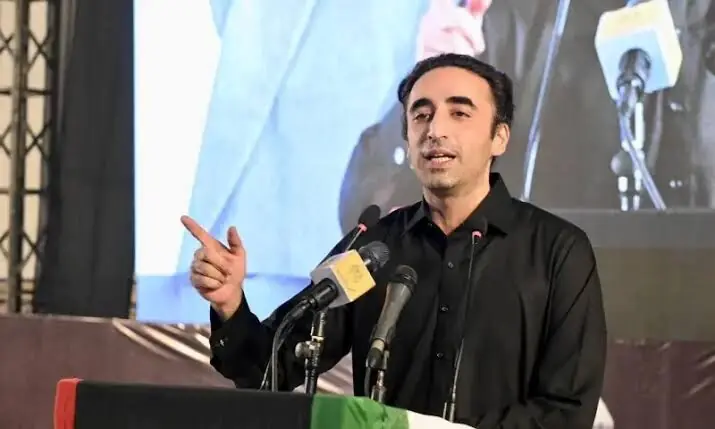
Bilawal calls for end to AJK protests as unrest 'damaging' Pakistan's reputation amid global spotlight
⚡ Quick Summary
PPP Chairman Bilawal Bhutto-Zardari on Sunday appealed to those protesting in Azad Jammu and Kashmir (AJK) to end their demonstrations, cautioning that the ongoing unrest was “damaging both the Kashmiri cause and Pakistan’s reputation”.
PPP Chairman Bilawal Bhutto-Zardari on Sunday appealed to those protesting in Azad Jammu and Kashmir (AJK) to end their demonstrations, cautioning that the ongoing unrest was “damaging both the Kashmiri cause and Pakistan’s reputation”.
The situation in the region has been tense in the past few weeks as supporters of the recently proscribed Joint Awami Action Committee (JAAC) have been staging protests and observing a strike in various areas.
The AJK administration and the JAAC have been at odds over various issues, most notably the committee’s demand to abolish the 12 seats in the region’s Legislative Assembly that are reserved for refugees from Indian-occupied Jammu and Kashmir who settled in mainland Pakistan after 1947.
In a statement issued on Sunday, Bilawal — whose PPP is in government in AJK — noted that the imminent signing of the Pakistan-mediated peace pact between the United States and Iran “marks a historic moment”.
“At a time when the international spotlight is firmly on Pakistan, the ongoing unrest in Azad Jammu and Kashmir is damaging both the Kashmiri cause and Pakistan’s reputation,” the former foreign minister said.
He observed that the unrest was “also creating an unnecessary opportunity for hostile actors and the India-Israel nexus to exploit the situation for their own purposes”.
“I therefore appeal to all protestors to bring their demonstrations to a peaceful conclusion. Those individuals who have taken the law into their own hands should surrender themselves to the local authorities and allow due process to take its course,” Bilawal said.
The PPP chairman called for all political grievances and disagreements to be resolved through “democratic, constitutional, and peaceful means”.
“Parliament and the political process — not the streets — are the appropriate forums for addressing and settling such issues,” he stated.
Bilawal recalled that the PPP had already called upon the AJK Election Commission to withdraw its “premature election schedule”, which had set the polls for July 27.
“We remain committed to pursuing a political solution and would seek to establish a Truth and Reconciliation Commission to address outstanding grievances, move the process forward, and bring these matters to a just and lasting conclusion,” the PPP chairman said, stressing that the people of Kashmir “should not have to endure repeated cycles of protest, confrontation, and uncertainty”.
Apparently referring to the June 5 decision to ban the JAAC, Bilawal said: “If all stakeholders, including the federal government, are in agreement, the AJK government could, in due course, review the notifications issued in relation to protesting parties.
“While there can be no compromise when it comes to upholding the rule of law and holding accountable those who have engaged in unlawful acts, we are equally committed to ensuring that individuals who have done nothing wrong are not made to suffer the consequences of the actions of others,” he affirmed.
On June 5, following the announcement of the JAAC’s June 9 strike, the AJK government declared the body a proscribed organisation, stating that it was “engaged in terrorism” and had acted in a manner “prejudicial to peace and security” of the state.
A day later, AJK authorities launched a crackdown on the JAAC, arresting scores of its leaders and activists from different areas.
On Saturday, two sit-ins by activists and supporters of the JAAC continued on the fringes of Rawalakot for the fourth consecutive day.
Most towns in Muzaffarabad Division and other parts of AJK observed a shutdown amid the continued suspension of public transport for the fifth consecutive day. There were also reports of partial strikes in Mirpur Division.
Though no untoward incident had been reported until evening, mobile phone services in Rawalakot were suspended after 8:30pm.
Reports also said the administration had tightened the noose around key JAAC activists and supporters by seizing the businesses of many of them across the state.
Also on Saturday, the suspension of internet services entered its eighth day, to the exasperation of citizens, particularly students and freelancers, who urged the authorities to show mercy and restore the services in the interest of their education and livelihoods.
🗞️ 2 sources covered this story

📰 Related Articles
Will the US-Iran deal be signed on Sunday? What we know so far
Al Jazeera
Hezbollah drones hit northern Israel as ministers seek retaliation
Punch NigeriaNews: Somaliland president arrives in Israel for first official visit, set to open embassy in Jerusalem
Addis StandardUS-Iran Deal To Be Signed Sunday, Hormuz To Reopen Afterwards – Trump
Channels Television
IAEA Chief Calls for Agency's Involvement in US-Iran Nuclear Deal
Sputnik International