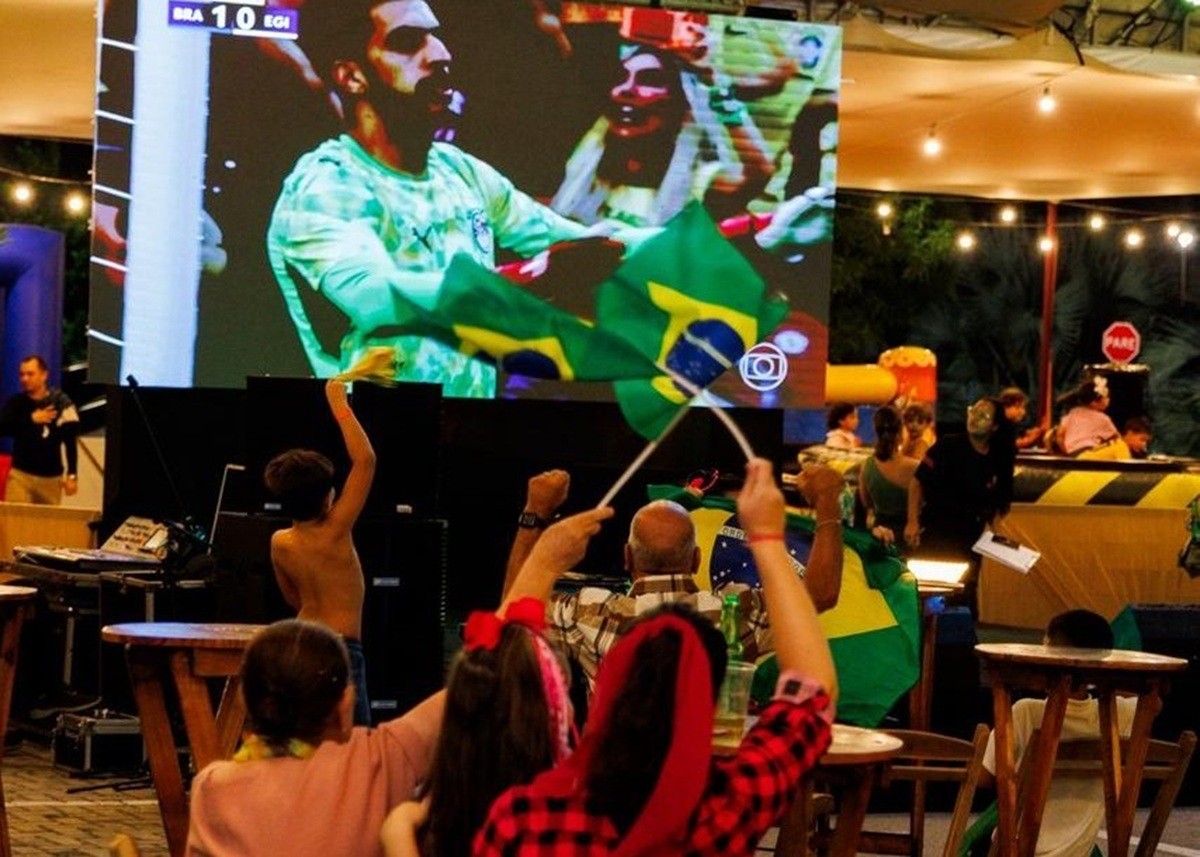
Rio PM reinforces policing during Brazilian team games
⚡ Quick Summary
Places with a large concentration of fans will have increased policing during the Brazilian team's games in Rio de Janeiro.
Places with a large concentration of fans will have increased policing during the Brazilian team's games in Rio de Janeiro. According to the Rio de Janeiro Military Police (PM), the corporation “will mobilize a broad police and technological apparatus to guarantee security”.
This Saturday (13), when Brazil debuts in the 2026 World Cup, in the United States, against Morocco, at 7 pm, at the MetLife Stadium, in New Jersey, the PM's operational and specialized units will operate in several neighborhoods in the city of Rio and in municipalities in Baixada Fluminense, the metropolitan region, Costa Verde and the interior of the state.
Related news:
Banks will have special opening hours on the day of Brazil's World Cup games.
Without Neymar, Brazil finalizes its preparations for its World Cup debut on Saturday.
Neymar remains out of training for the Brazilian team.
In the Grande Tijuca region, in the north of the capital, 246 military police officers from the 6th BPM will reinforce security at events organized on Jorge Rudge, Pereira Nunes and Zulmira streets, in addition to the traditional Alzirão, in Tijuca, which has been welcoming thousands of fans to World Cup games for 48 years.
In the south zone, another 200 military police officers will be mobilized to protect fans who will follow the games broadcast on a big screen at Fan Fest, on Copacabana Beach, near Avenida Princesa Isabel.
The region will also have reinforced patrolling with motorcycles, in addition to 20 vehicles and the presence of police officers from the Dog Action and Special Patrol and Crowd Control battalions.
“The motorcycle teams will carry out patrols along the entire length of Avenida Atlântica, on the edge of Copacabana beach, with the aim of increasing the feeling of security for residents, tourists and fans, in addition to preventing and repressing the crimes of robbery and theft”, informed the PM.
Operational planning also foresees the use of technological resources, real-time monitoring and reinforcement of overt policing in areas with large circulation of people, ensuring a prompt response to possible incidents and helping the population to follow the games calmly and safely.
🗞️ 2 sources covered this story

📰 Related Articles
CNN Brasil
/https://i.s3.glbimg.com/v1/AUTH_59edd422c0c84a879bd37670ae4f538a/internal_photos/bs/2026/X/9/9KboorRsO6FyVbPi3b1g/captura-de-tela-2026-06-12-201126.png)
President of the STF creates working group to discuss reform of the Justice system
G1 Globo
How much does FIFA pay the 2026 World Cup champion?
CNN Brasil
'I'm ready for us to win the World Cup', says Vini Jr.; see interview
G1 Globo
World Cup: three minutes after coming on, Larin equalizes for Canada against Bosnia
CNN Brasil