


Santarém records 35 cases of child labor in 5 years; exploitation occurs in rural areas, street vending and social networks
⚡ Quick Summary
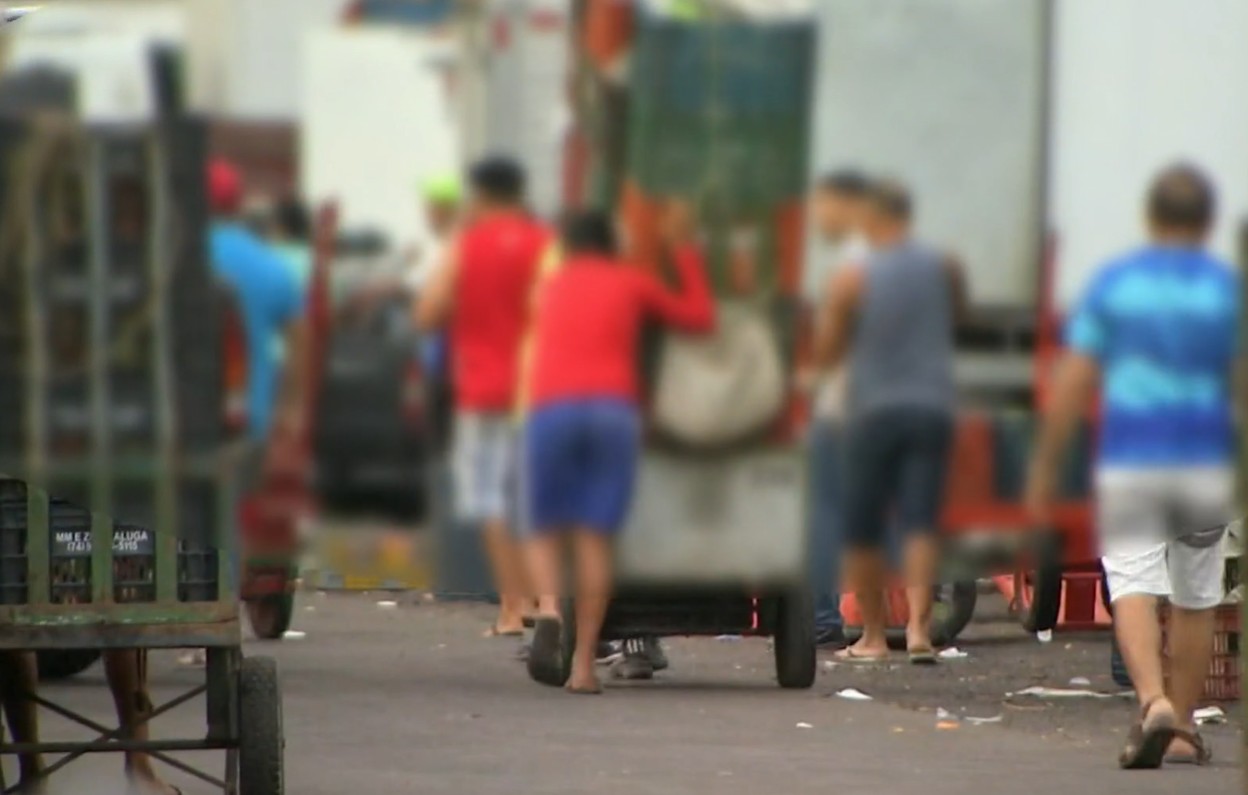
Exploitation occurs in rural areas, street vending and social networks Reproduction/TV Globo Despite advances in awareness and inspection actions, child labor continues to be a reality in Santarém, in the west of Pará.
Exploitation occurs in rural areas, street vending and social networks
Reproduction/TV Globo
Despite advances in awareness and inspection actions, child labor continues to be a reality in Santarém, in the west of Pará. In the last five years, 35 children and adolescents were identified in a situation of child labor by the Municipal Department of Labor and Social Assistance (Semtras), while the Public Ministry of Labor (MPT) received 50 complaints and initiated almost 60 investigative procedures related to the topic.
✅ Follow the g1 Santarém e Região channel on WhatsApp
The data, obtained by g1 Santarém e Região from the two bodies, shows that exploitation occurs in different scenarios: in the countryside, mainly in activities linked to cocoa harvesting and livestock farming; in urban areas, through the sale of products on streets, squares and traffic lights; and, more recently, on social networks, where children and adolescents are exposed to monetized content without complying with legal requirements.
Numbers that worry
Cases of child labor in Santarém
Art Tato Gomes/g1
In the last five years, Semtras recorded:
35 cases of child labor identified
130 prevention, inspection and awareness approaches
All cases referred for monitoring by the social protection network.
The Public Ministry of Labor recorded:
50 complaints related to the topic since 2021;
Almost 60 investigative procedures initiated.
According to the municipal secretary of Labor and Social Assistance, Silvia Freitas, combating child labor requires the involvement of the entire society.
“Child labor is still a reality that needs to be combated with the participation of the entire society”, he highlighted.
Semtras' actions take place permanently in urban areas, in rural communities and also in riverside locations, with guidance to families, distribution of educational material and dissemination of reporting channels.
"In Santarém, Semtras operates permanently through campaigns, approaches, guidance and monitoring of families, always in partnership with the protection network. Our commitment is to ensure that children and adolescents have their rights guaranteed, with access to education, leisure and healthy development", highlighted the Semtras head.
Field and streets concentrate incidents
Cases of child labor in Santarém
Art Tato Gomes/g1
According to the MPT, one of the most recurrent situations is the presence of children in rural activities. In many cases, they accompany parents or guardians hired to work on farms or agricultural production areas, especially in cocoa harvesting and livestock farming.
In cities, street vending on streets, squares, sidewalks and traffic lights also attracts the attention of inspection bodies. In addition to compromising educational development, the activity exposes children and adolescents to the risk of accidents, violence, exploitation and adverse weather conditions.
These activities may be included in the List of the Worst Forms of Child Labor (TIP List), which is prohibited for those under 18 years of age.
On the MPT side, Labor Attorney Cláudia Cararreto, coordinator of the Santarém PTM, points out that the growing volume of records probably reflects the population's greater awareness of the available reporting channels.
"The Labor Attorney's Office in the Municipality of Santarém has been receiving more and more complaints about this issue," he stated.
Social networks are on the list of concerns
Another modality that has attracted attention from authorities is the so-called digital child labor.
According to Labor Attorney Cláudia Cararreto, coordinator of the Labor Attorney's Office in the Municipality (PTM) of Santarém, there are cases in which children and adolescents appear in content produced for platforms such as Instagram, TikTok, YouTube and Kwai without complying with legal requirements. Among the requirements are judicial authorization for artistic activities carried out by children under 16 years of age and the guarantee that participation does not affect school attendance.
Cultural barriers make combat difficult
For the prosecutor, one of the main challenges continues to be the naturalization of child labor.
During inspections, justifications such as “work teaches discipline” or “I worked when I was a child and nothing happened” are still common.
"He may not have died, but there is a high chance of suffering physical, moral, social and psychological damage", she counters. The child who works, adds the prosecutor, "grows up thinking that that is what defines him. This leads to anxiety disorders, low self-esteem, feelings of abandonment and suffering", he added.
What the law says
The Federal Constitution prohibits any form of work for children under 16, except as an apprentice, from the age of 14.
It is also prohibited for minors under the age of 18 to carry out activities considered dangerous, unhealthy, nocturnal or included on the List of the Worst Forms of Child Labor.
When the irregularity is found, the MPT may propose a Conduct Adjustment Term (TAC) to the person responsible or employer. If there is refusal or non-compliance, the body may file a Public Civil Action. Operations are carried out in partnership with Cerest, Ministry of Labor and Employment, Secretariat of Social Assistance and Guardianship Councils.
Campaigns and complaints
On May 29th, Semtras promoted an educational blitz on the Santarém waterfront to raise awareness of the problem. New actions are planned for June 12th, the date marked by World Day to Combat Child Labor.
This Friday, the launch of the Campaign to Eradicate Child Labor in Santarém takes place in the municipality, in line with the national theme “Red Card for Child Labor”. The objective is to raise awareness among the population about the importance of combating child labor, promoting the guarantee of the rights of children and adolescents and strengthening the protection network in the municipality.
Nationally, the scenario is still worrying. Data from the National Household Sample Survey (PNAD) indicate that around 1.6 million children and adolescents between 5 and 17 years old were in child labor in Brazil, while the North Region has some of the highest proportions in the country.
How to report
Public Ministry of Labor: mpt.mp.br
Dial 100 – Human Rights
Ipê System (Ministry of Labor): ipetrabalhoinfantil.trabalho.gov.br
VIDEOS: most viewed from g1 Santarém and Region
📰 Related Articles

What is the role of data in today's world?
Observador
Porto's IPO has a building with asbestos
Observador
Baby son of mayor of Gilbués dies at 5 months
G1 Globo
Staff strike completes 11 days and continues to affect schools and health units in Taubaté
G1 Globo
Brazilians sing happy birthday to Renata Vasconcellos under the Jornal Nacional studio in NY
G1 Globo