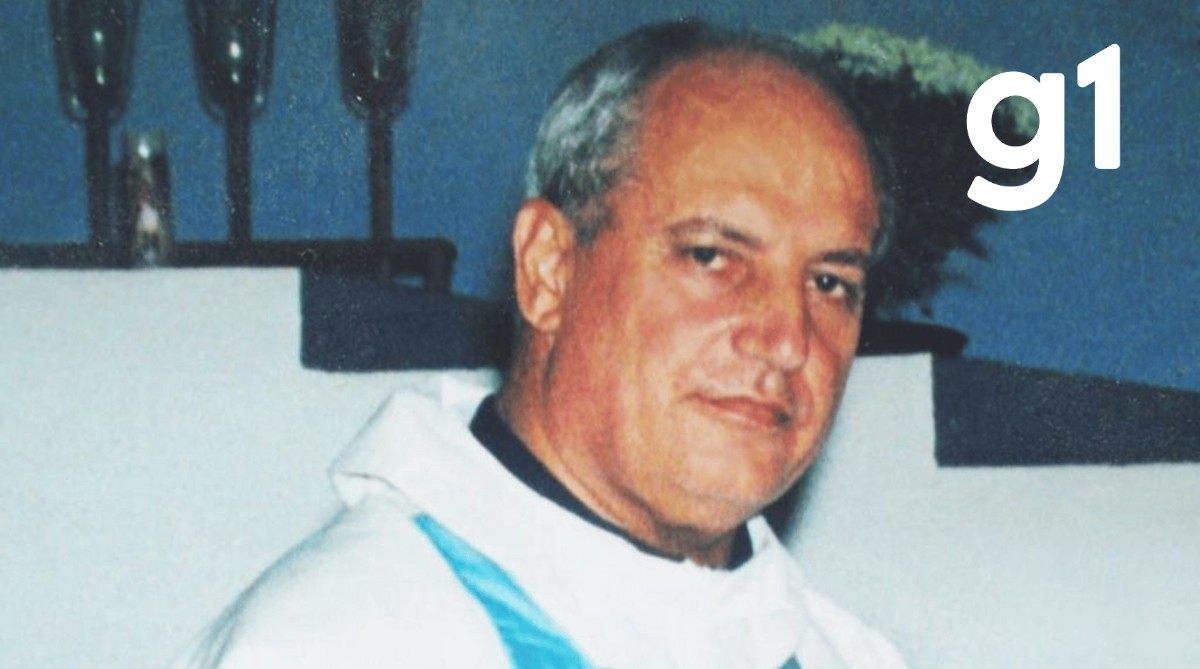
Elevated tomb and exhibition of rare relics: what the beatification of a murdered priest will be like in MT
⚡ Quick Summary
Beatification Father Nazareno Lanciotti The municipality of Jauru (MT) will host, this Saturday (13), the historic beatification ceremony of the Italian priest Nazareno Lanciotti, murdered in 2001.
Beatification Father Nazareno Lanciotti
The municipality of Jauru (MT) will host, this Saturday (13), the historic beatification ceremony of the Italian priest Nazareno Lanciotti, murdered in 2001. He will be the first blessed in Mato Grosso. During the celebration, the religious man's tomb will be elevated and rare relics, such as bone fragments and clothing containing the blood of the attack, will be exposed to the faithful.
One of the main curiosities surrounding the beatification of Father Nazareno is that the process did not require proof of a miracle. To g1, Father Evandro Stefanello, vice-postulator of the cause and Judicial Vicar of the Ecclesiastical Court of Cuiabá, explained that canon law provides two paths to holiness:
📿 The first of these is the "fame of holiness", which requires a proven miracle;
✝️ The second is the path of martyrdom, applied to the Italian missionary for being killed out of hatred for the faith.
"In this case, beatification does not require proof of a miracle and it is enough to prove that the martyrdom was in hatred of the faith. And in the case of Father Nazareno Lanciotti, his beatification took place in this way", highlighted the vice-postulator.
✅ Click here to follow the g1 MT channel on WhatsApp
Father Nazareno Lanciotti
Our Lady of Pilar Parish
Born in Rome, Italy, in 1940, Father Nazareno Lanciotti arrived in Jauru in 1972 and dedicated almost 30 years to evangelization and social work in the region. Founder of the Nossa Senhora do Pilar Parish, he became known for denouncing injustices such as the exploitation of children and adolescents, prostitution and drug trafficking. In February 2001, he was shot inside his home by armed men and died days later.
The decree that validated the martyrdom went through a long process in Rome, where a group of theologians and cardinals evaluated all of the priest's writings and history to ensure that there was no heresy, before sending the document for final approval to Pope Francis at the time.
Exhibition of rare relics
Canonical recognition of the mortal remains of Father Nazareno Lanciotti, in Jauru
@beatonazarenolanciotti.oficial
Unlike other ceremonies of the Catholic Church, where the entire body of the future blessed is exposed, Father Nazareno's mortal remains will remain protected. The public will have access to relics considered invaluable by the Vatican, presented in a special reliquary.
"In November last year, the canonical process called recognition took place, which is the recognition of the body. We will not have the remains on display, but we will have this piece of bone and some also a piece of tissue with the actual blood from the attack", explained the Vicar.
The presence of the fabric stained with blood from the crime that occurred in February 2001 is highlighted as the great historical and spiritual treasure of the process, something considered rare by the Church.
"In the matter of Father Nazareno, we have the advantage that we have the blood of the attack, it is the blood of martyrdom. It is difficult for us to have this relic of fundamental importance in a martyr", emphasized Stefanello.
The mystery of the tomb and the rite of Elevatio
Modified tomb where Father Nazareno is buried.
@beatonazarenolanciotti.oficial
Faced with doubts about the fate of the missionary's remains, the church confirmed that they will not be returned to Europe and will remain in Jauru, where he served for 30 years. For the solemnity, the tomb underwent a physical modification required by the liturgy.
In February this year, the remains were transferred to a new urn installed inside the church where the priest is buried.
"The urn is in the same place where he was always buried. The difference is that now it has been elevated and is visible to the faithful", explained the vice postulator.
According to him, the change is part of a tradition present in the beatification processes.
“Whenever a beatification takes place there is what we call elevatio, which is the elevation of the body for the veneration of the faithful,” he added. What changes after beatification
Although the process has already been approved by the Vatican, the public ceremony is necessary to formalize the cult of the new blessed.
"Legally, Father Nazareno is already blessed. However, in order to promote public worship, this celebration that will take place in Jauru is still necessary. It is from that moment on that he can be officially venerated as blessed", he explained.
Italy-Brazil connection
In addition to the tributes in Jauru, the Italian city of Subiaco, where Father Nazareno was born, should also promote parallel celebrations. There are even conversations about future tributes between the two municipalities.
“There is great affection in the city for the memory of Father Nazareno [...] there is the possibility of symbolic initiatives between Jauru and Subiaco, such as the naming of streets or squares in honor of the two cities”, he stated.
Subiaco is an Italian commune in the Lazio region, province of Rome.
Personal article
Vatican will have Brazilian representative
The initial expectation was that the celebration would be presided over by Italian Cardinal Marcello Semeraro, prefect of the Dicastery for the Causes of Saints, representing Pope Leo XIV. However, a last minute change altered the schedule.
In a statement, the bishop of the Diocese of São Luiz de Cáceres, Dom Jacy Diniz Rocha, informed that Semeraro fell ill and canceled the trip to Brazil. To represent him, the Brazilian cardinal Dom João Braz de Aviz, archbishop emeritus of Brasília, was appointed.
“We guarantee our prayers for the health of Cardinal Semeraro and we thank him for his provision in sending us Cardinal Dom João Braz de Aviz, who will represent Pope Leo XIV at the ceremony”, highlighted the bishop.
📰 Related Articles

Uruguay's Maracanazo among the party prepared by Brazil
Observador
Who is the greatest player of all World Cups? BBC list has 3 Brazilians
BBC Brasil
VIDEO: Police officer gets dribbled during football match with teenagers in Uberlândia
G1 Globo
USA “fought” for the first World Cup hat-trick for almost 80 years
CNN Brasil
Suspected case of Ebola is investigated in RS; see what is already known
G1 Globo