


What was Porto Alegre like 24 years ago, when Brazil won the penta?
⚡ Quick Summary
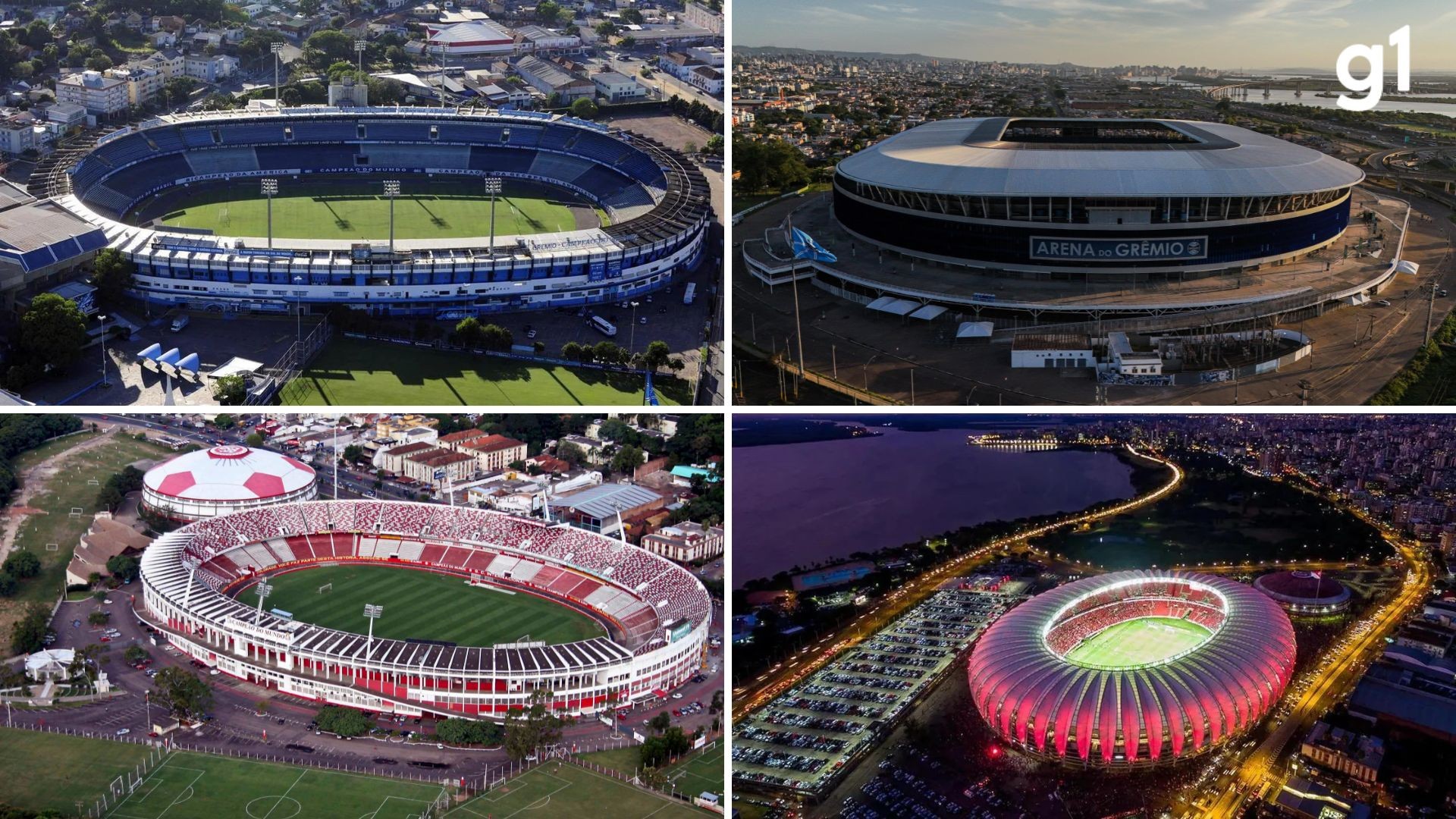
Beira-Rio and Monumental Olympic Stadium in the past Ivo Gonçalves/PMPA; Ronaldo Bernardi/RBS Agency A lot has changed around the globe since Brazil last won a World Cup.
Beira-Rio and Monumental Olympic Stadium in the past
Ivo Gonçalves/PMPA; Ronaldo Bernardi/RBS Agency
A lot has changed around the globe since Brazil last won a World Cup. It's been 24 years since winning the penta in 2002 and Amarelinha equals the longest title drought since lifting its first cup in 1958.
Likewise, Porto Alegre is also different. Despite the little population variation, having gained just over 20 thousand inhabitants in more than two decades — an increase of 1.58% — the capital of Rio Grande do Sul has undergone changes in its physical structure and in football itself.
📲 Access the g1 RS channel on WhatsApp
Now on g1
Grêmio and Inter, the main clubs in Rio Grande do Sul, have new homes. 24 years ago, Tricolor played at the Monumental Olympic Stadium and it was not even thought that they would start playing their games at the Arena, one of the most modern in Latin America.
Initial plugin text
Colorado completely renovated the Beira-Rio Stadium, implementing important changes such as the construction of a complete roof to host the 2014 World Cup.
Initial plugin text
The teams themselves have changed a lot since 2002. At that time, Inter had never won the Copa Libertadores da América, while Grêmio were already World Champions and had conquered America on two occasions. On the other hand, the Colorados were proud of never having been relegated, while the Gremistas were already suffering a fall to Series B.
Since then, Inter has won the continental championship twice and was World Champion in 2006 — and had its first relegation. Grêmio, in turn, won another Libertadores, winning the tri, but fell two more times to the second division.
Even the number of clubs changed: the people of Porto Alegre saw EC Cruzeiro, the traditional Cruzeirinho, which from 1913 until 2018 had been a club in the capital of Rio Grande do Sul, move to Cachoeirinha. They also saw the birth of Porto Alegre FC in 2006, a club founded by Ronaldinho Gaúcho, which would go extinct in 2012.
In 2002, the Brazilian team was coached by Luiz Felipe Scolari from Rio Grande do Sul. Felipão, who to this day remains the last Brazilian coach to win a World Cup, would years later lead Brazil to a 7-1 defeat against Germany in Mineirão, in 2014.
Initial plugin text
New postcard
24 years ago, Orla do Guaíba was little more than an area on the banks of a lake, with the Usina do Gasologista, the Amphitheater Pôr do Sol and areas of forest. More than two decades later, the Orla was revitalized, gaining spaces for leisure and sports, including multi-sports courts, society football, tennis, basketball, beach volleyball and one of the largest skateboarding rinks in Latin America.
Initial plugin text
The Pôr do Sol Amphitheater was disowned. The space, which suffered from the ravages of time and lack of investment, is now closed. Even events that take place in the region, such as the Turá festival, receive their own temporary structure to take place.
Orla do Guaíba would recently receive spaces such as Cais Embarcadero and Parque Pontal.
Road infrastructure
Today one of the city's main expressways, the Third Perimetral was still being built during the penta. The avenue is more than 12 kilometers long and crosses 20 neighborhoods in the capital of Rio Grande do Sul. The works were only completed in 2006 and had a considerable impact on urban mobility in the municipality.
Another important project was the inauguration of the New Guaíba Bridge. Another alternative to cross the Jacuí River Delta was an old demand.
Another construction that took time, but was completed, was the duplication of Avenida Tronco, a project scheduled for the 2014 World Cup in Porto Alegre, delivered 10 years late in 2024.
Tragedies
Until Cafu lifted the cup in Yokohama, 1941 was known as the year of the great flood for the people of Porto Alegre. For 22 days, the waters of Guaíba reached a level of 4.76 meters. It was the biggest flood recorded in the city. Until, in 2024, this mark was surpassed, with the Lake reaching a level of 5.37 meters.
Initial plugin text
Another historical fact that had not occurred until 2002 was the fire at Mercado Público, in 2013. The establishment, considered by grocers as the "heart of the Capital", only returned to normal operation in 2022, after a renovation marked by stoppages.
Bohemian life
Over the years, some of the most classic bars and restaurants in the capital of Rio Grande do Sul have closed their activities. Some examples are Bambus, Van Gogh, Natalício, Caverna do Ratão, Copacabana, Dona Neusa and Fornão.
On the other hand, other alternatives have arrived. In addition to the traditional bohemian areas such as the Cidade Baixa and Bom Fim neighborhoods, in addition to Rio Branco, which has gained strength in recent years, the 4th District has year after year gone from being a degraded area to becoming a nightlife alternative in Porto Alegre.
Orla do Guaíba, in Porto Alegre, has gained a new look over the years
Ricardo Giusti/PMPA and Omar Freitas / Agencia RBS
Since winning the penta, Grêmio and Inter, the main clubs and Porto Alegre, have found themselves in a 'new home'
Ronaldo Bernardi/RBS Agency, Renan Mattos/RBS Agency, Ivo Gonçalves/PMPA and Omar Freitas/RBS Agency
VIDEOS: Everything about RS
📰 Related Articles

Decon holds a debt negotiation campaign at the Conjunto Ceará Leisure Center, in Fortaleza
G1 Globo
Belgium: Jordan Bardella strengthens ties with Vlaams Belang on visit to Brussels
Euronews PT
'It fills your heart with longing', says Pelé's daughter at the first World Cup without the King
G1 Globo
Neymar 'giant': court gets special painting with number 10's face and art goes viral on social media
G1 Globo
Albania: thousands demonstrate on the 12th day of protests against Trump-linked resort
Euronews PT