World Cup and São João should reduce votes in Congress; see proposals that may be affected
⚡ Quick Summary
The start of the World Cup and the São João celebrations should slow down the pace of voting in Congress in the months of June and July.
The start of the World Cup and the São João celebrations should slow down the pace of voting in Congress in the months of June and July.
Parliamentarians must follow the Brazilian team's games and travel to electoral bases to participate in the June festivities, especially those held in the Northeast.
As a result, some issues with an impact on society, such as the end of the 6x1 work schedule, the Proposed Amendment to the Constitution (PEC) for Security, and the reduction of the age of criminal responsibility from 18 to 16 should be postponed to the second half of the year.
Congress will also have its work affected due to the parliamentary recess, which takes place between July 18th and 31st.
Now on g1
The following month, in August, with party conventions, candidate registrations and the start of the electoral campaign, parliamentary activity should be reduced even further.
Slow pace in the Chamber
The pace of work in the Chamber, which slowed down last week due to the blocking of the agenda — a mechanism in the legislative process that paralyzes voting on other projects until a proposal considered a priority is analyzed — is expected to remain lukewarm at least until the end of June.
Parliamentarians decided to hold virtual votes until after the June festivities, which begin on June 24th. Controversial topics are usually avoided in virtual sessions.
Added to this, the World Cup is a period that generally reduces the mobilization of parliamentarians in Brasília.
On game days in Brazil, the federal government usually establishes an optional point for public servants a few hours before the matches. Servers must stop three hours before the game and resume service after the match.
Political advisors and parliamentarians, however, are not in the habit of returning to work.
At this first stage of the competition, with Brazil's games on Saturday and Friday, the impact on legislative activity should be smaller, but deputies will now be free to register their presence and vote through Infoleg – the Chamber of Deputies' application that allows attendance registration and remote voting.
The following week, however, the game against Scotland will be on a Wednesday, Saint John's Day. A deputy joked, stating that, on this day, it will be a public holiday twice: for the World Cup and for Festa Junina.
It's for later
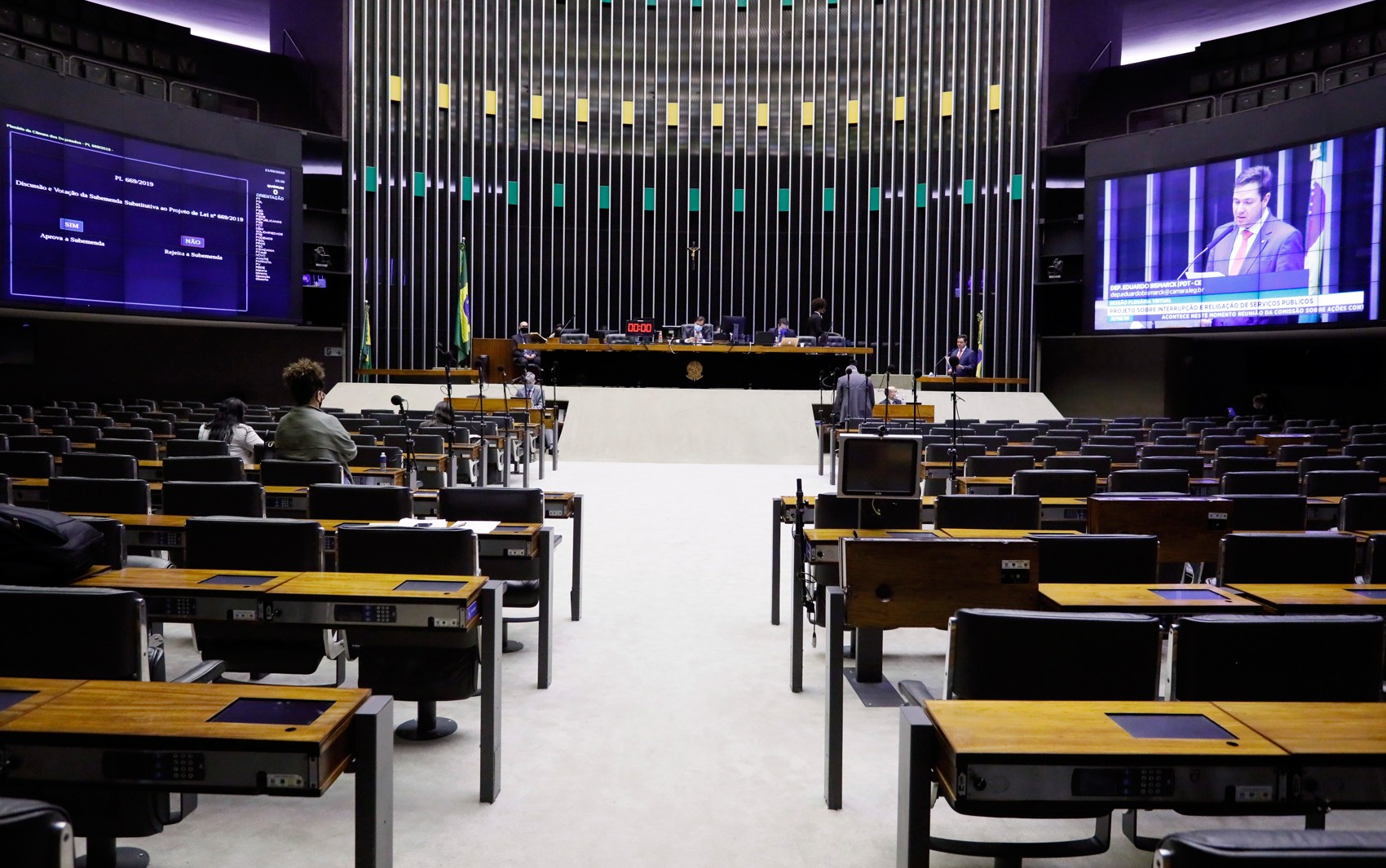
Empty Chamber Plenary during empty session
Maryanna Oliveira/Chamber of Deputies
The Chamber's agenda is blocked because the government did not remove the urgency of the project that regulates working hours for certain professions.
In an attempt to resolve the situation, the president of the Chamber, Hugo Motta (Republicanos-PB), decided to vote on the text and appointed the rapporteur last week.
The project that proposes to mitigate the effects of the crisis in the Middle East on fuel prices has not yet been voted on and could be delayed until July.
The project that regulates the use of Artificial Intelligence (AI) should also be postponed for the second half of the year.
Senate
Senate Plenary in file image
Jefferson Rudy/Senate Agency
In the Senate, proposals with great repercussion may also have their processing affected by the festive period.
Among the topics that may be left for the second semester is the PEC that proposes the end of the 6x1 work schedule.
The proposal still needs to advance through important stages of processing before reaching the plenary, including analysis by the Constitution and Justice Commission (CCJ) and the definition of a rapporteur.
The analysis of the Public Security PEC, a government proposal that seeks to restructure the public security system and strengthen the fight against organized crime, may also be delayed.
Among the projects awaiting consideration by senators is the one that creates the National Policy for Critical and Strategic Minerals. The proposal provides incentives for the exploration, processing and recycling of minerals used in technologies, batteries and electronic equipment. Another matter that depends on the Senate's legislative agenda is the provisional measure that creates the Special Tax Regime for Data Centers (Redata), considered strategic to stimulate investments in digital infrastructure in the country.
📰 Related Articles

Anthropic or OpenIA: who will win the trillion-dollar dispute?
G1 Globo
See what the bank hours are like on game days for the Brazilian team at the 2026 World Cup
G1 Globo
Trump says the US “ended the war” with Iran
Observador
Iran parliamentarian cites “deception” in Trump’s speech about agreement
CNN Brasil
They collect trash, fold clothes and learn from mistakes: the robots already working in Chinese homes
G1 Globo