Disney ball in Maré became a focus for drug sales, stolen products and TCP money laundering, police say
⚡ Quick Summary
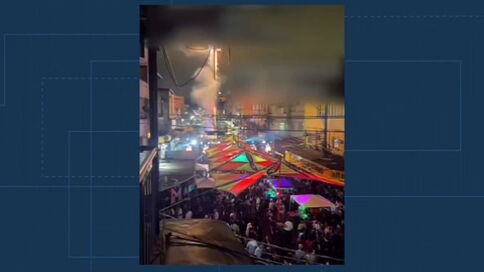
Disney Ball, in Maré Reproduction Investigations into Operation Trinus, against drug trafficking in Complexo da Maré, showed that the Disney Ball, in Vila do João, is more than a musical event: the funk ball is also used to sell drugs, drinks and products stolen by drug dealers, armed in large numbers in the crowd.
Disney Ball, in Maré
Reproduction
Investigations into Operation Trinus, against drug trafficking in Complexo da Maré, showed that the Disney Ball, in Vila do João, is more than a musical event: the funk ball is also used to sell drugs, drinks and products stolen by drug dealers, armed in large numbers in the crowd.
Furthermore, the income obtained enhances the payment of fees to artists and VIP guests and is directed to finance the advertising of the mega event, considered one of the largest in areas dominated by the Third Pure Command (TCP).
"In this place, where it is pretended to be just holding a festival for the community's enjoyment, this environment is used to sell stolen material, alcoholic beverages, food products, and used to sell drugs", said Chief Raíssa Celles, director of the Capital Police Department.
Operation in Maré to arrest 56 people mobilizes Bope and Core; there is gunfire and burning barricades
For the Civil Police, the Disney ball is considered a "central" element of the faction's money laundering structure.
“The event, which became a popular reference for its themed production with decoration, pyrotechnics, circus attractions and children's characters, was identified by investigators as a platform for the broad monetization of organized crime,” described the police.
“The ball operates as an immediate outlet for stolen goods and allows concentrated collection of drinks, food and spaces under the exclusive control of the faction”, he continued.
Crime 'offices' in Maré
Barricades are burned in Vila do João, in Complexo da Maré, during a police operation
Reproduction/TV Globo
Delegate Thiago Dorigo, one of those responsible for the investigations, stated that the TCP favelas in Maré today represent a refuge for gangs that carry out scams over the phone or the internet. Many open real 'crime offices' in the region:
"So, the most varied types of scammers and embezzlers today left the city center and opened their offices in different communities because they know how difficult it is for the police to locate and carry out a large-scale operation", explained Dorigo.
The faction, according to him, still profits from renting space to commit crimes:
"They charge a kind of rent, a kind of fee, to be able to release that criminal activity", he pointed out.
Stores with stolen products
Civil police officers at the entrance to Vila do João, in Complexo da Maré, where they carry out warrants against the TCP
Reproduction/TV Globo
During an operation this Wednesday (10) in Complexo da Maré, the Civil Police found stores in a shopping center that were selling products stolen by criminals from the Third Pure Command (TCP). The criminal organization also maintained a warehouse with the materials.
Until the last update of this report, 25 men had been arrested.
According to the director of the General Police Department of the Capital, Raíssa Celles, the police found electronic cigarettes and cell phones of unproven origin.
"Inside them, a large quantity of smuggled electronic cigarettes that were being displayed for sale in these stores were found, as well as a large quantity of cell phones of illicit origin, and at least three stolen cell phones," said the director of the DGPC.
Police chief Thiago Dorigo explained that traffickers from Pedreira and Maré formed a "criminal consortium", and highlighted that the faction commits cargo thefts on an almost daily basis:
"The traffickers from Pedreira were responsible for approaching the trucks on Avenida Brasil, Linha Vermelha and Linha Amarela and bringing them to one of these communities here in Maré," said the delegate. According to him, there is even a pre-defined division of the money obtained from each crime:
"25% of the value obtained from cargo theft goes to the Pedreira leadership, 25% to the Pedreira thief who is involved in the criminal action, 25% to the Maré thief who is making the approach and 25% to the TCP leadership in Maré", he explained.
6 simultaneous actions
The Civil and Military Police began Operation Trinus this Wednesday, against drug trafficking in Complexo da Maré, in the North Zone of Rio de Janeiro.
Since early Wednesday morning (10), there have been 6 simultaneous actions to combat different crimes, including robberies, homicides and child sexual exploitation.
The agents are trying to execute 56 arrest warrants and 42 search and seizure warrants against drug traffickers from the Third Pure Command (TCP).
📱Bookmark g1 on Google and follow the main news of the day
Marijuana plants seized by police during operation in Complexo da Maré
Reproduction
The teams were met with gunfire, and criminals also set fire to barricades. With the action, schools and health units closed preventively.
Participating in the offensive are men from the Special Police Operations Battalion (BOPE) and the Special Resources Coordination (Core), the elite troops of RJ's security forces.
Agents seized weapons, such as rifles and grenades, and found 2 marijuana greenhouses and a cocaine laboratory. A cryptocurrency mining “farm” was also located.
"It's not just drug trafficking that feeds these criminal organizations. They encourage and finance cargo theft", said delegate Raíssa Celles.
Raíssa said that the teams found “an immense amount of stolen cars and motorcycles” and “a large warehouse with a large amount of stolen material”. Trucks were mobilized to bring these items to the Police City.
🔎 Complexo da Maré is dominated by different factions. Most of it is controlled by the TCP and includes, for example, Vila do João, Conjunto dos Pinheiros, Morro do Timbau and Baixa do Sapateiro, where the security forces went this Wednesday. There are also areas under the control of the Red Command (Nova Holanda and Parque União) and the militia (Piscinão).
Criminals set fire to barricades in Complexo da Maré to prevent the police from arriving
Reproduction/TV Globo
Six ongoing procedures
The investigation by the 21st DP (Bonsucesso) was divided into 6 fronts:
Cargo theft and money laundering: Investigates the systematic theft of trucks on expressways (such as Avenida Brasil) and the use of the Disney Ball and local businesses as platforms to transport goods and launder money.
Theft and reception of cell phones: Focused on an organized chain that uses motorcycles to steal devices, demanding that victims hand them over unlocked, for later resale in establishments within the communities.
Attempted murder against a teenager: Refers to the investigation of criminals who shot at a vehicle belonging to a family that mistakenly entered Baixa do Sapateiro in September 2024, injuring a teenager.
Child sexual exploitation: Deals with the storage and sharing of child sexual abuse material in application groups, in addition to the articulation of abuse against minors.
Domestic violence and illegal possession of weapons: Originated from a case of physical aggression against a woman in Baixa do Sapateiro, which led to the discovery that the attacker kept weapons and replicas in his residence.
Circumstantial robbery on Avenida Brasil: Investigates a specific robbery against a couple last month, in which the criminals used the victims' cell phones and cards to carry out financial transactions and improper purchases.
🟩Bom Dia Rio is on GloboPop, Globo's new vertical short video app, available for free on your cell phone. On the app, you can follow the Bom Dia Rio stage so you don't miss any details. Download GloboPop. Police helicopter flies over Vila do João, in Complexo da Maré, during operation
Reproduction/TV Globo
See below for details on each front.
1. Cargo theft and money laundering
The 21st DP speaks of “systematic actions” by the TCP to intercept cargo vehicles on the capital’s main expressways, such as Avenida Brasil, Linha Vermelha and Linha Amarela.
According to investigations, the gang uses motorcycles and support vehicles to surround moving trucks.
The victims, surrendered under threat and violence, were forced to drive their vehicles into communities dominated by the faction to collect the goods. In some cases, TCP even mobilized forklifts.
The district states that the proceeds from the thefts “were not simply resold in an improvised way”. “The investigations identified that commercial establishments in the region were used to receive, store and resell the stolen cargo, forming part of the economic trafficking chain.”
The police also recalled that the TCP imposes monopolies on internet, gas cylinders and even water.
According to investigations, TCP transferred the “logistics center” for cargo thefts from Complexo da Pedreira to Maré.
"Complexo da Maré started to centralize the receipt, control and distribution of goods. This transition was accompanied by an intensification of armed clashes, with shootings between criminals and police on the access roads to Maré, involving rifles and even involving armored personnel carriers", said the police.
"We found a small shopping mall with several stores. One had a large quantity of smuggled electronic cigarettes. There was also a large quantity of cell phones of illicit origin", explained Raíssa.
According to data from the Public Security Institute (ISP), the 21st DP district recorded 4,328 incidents of vehicle theft and 1,350 of cargo theft between January 2020 and June 2026.
2. Theft and receiving of cell phones
In June 2025, 2 men were arrested for cell phone theft in the Bonsucesso region. The 21st DP stated that the pair “decided to collaborate spontaneously” and provided “detailed information about the functioning of the criminal scheme”.
The “operational manager” supplied weapons and stolen motorcycles for the attacks and established “revenue targets”, requiring the obtaining of a certain number of unlocked devices per raid.
The victims were approached and coerced, at gunpoint, to unlock their cell phones during the robbery.
The TCP established a “reward table” for thieves. Unlocked devices fetched up to R$2,500, while locked devices were valued between R$300 and R$600.
3. Attempted murder against a teenager
On September 18, 2024, at around 9:50 am, a father and his teenage daughter were traveling in a vehicle along Avenida Brasil when, when trying to access Linha Amarela with the help of GPS, they took the wrong path and entered Baixa do Sapateiro.
Michel Simioni and Valentina Betti Simioni came to Rio to obtain an American visa at the United States Consulate.
Upon realizing the mistake, Michel tried to retreat. A blue HRV pulled up to the family car, and the occupants, with the windows open, ordered it to stop. Michel saw a rifle in the HRV and chose to speed up to escape.
The criminals opened fire, and Valentina, who was in the passenger seat, was hit by the shots. Upon accessing the Yellow Line, the driver found a Military Police vehicle and asked for help.
The police identified 2 drug soldiers in the episode.
Valentina was hospitalized for almost a month.
4. Child sexual exploitation
A complaint to the 21st DP provided evidence of the dissemination and exchange of child sexual abuse material on messaging applications. Among the victims in the videos there were even babies.
Investigations identified that one of the targets was holding conversations to arrange meetings with a 13-year-old teenager. This Wednesday, agents carried out search warrants to seize electronic devices.
5. Domestic violence and illegal possession of weapons
In the early hours of January 12, around 1:30 am, a woman was informed that her teenage daughter, aged 14, was in a bar in Praça do 18, in Baixa do Sapateiro, accompanied by her ex-stepfather.
When going to the location to remove the minor, this mother was attacked by her ex, who grabbed her by the hair, threw her to the ground and punched her in the face, in addition to threatening her.
The victim appeared at the 21st DP and requested criminal representation and urgent protective measures under the terms of the Maria da Penha Law.
During the investigation, the police department discovered that the person being investigated possessed firearms without authorization.
6. Circumstantial robbery on Avenida Brasil
On the morning of May 26, around 8 am, a couple was approached by 2 criminals while driving along Avenida Brasil.
The duo acted in a coordinated manner: one of them, carrying a pistol, held the driver under threat, while the other opened the passenger door and began stealing the couple's goods.
Among the stolen objects were a ring, watch, lanyard, cell phone and bank card. The victim in the passenger seat reported that the criminal bit her to forcibly rip off her wedding ring, in addition to demanding the password to unlock her cell phone. The bandits fled in the opposite direction.
After the robbery, the victim accessed his account via computer and found that the criminals began sending payment links and carrying out various financial transactions.
Investigations also revealed that the perpetrators used the stolen bank card to purchase a television worth R$1,400, with delivery to an address in the Ramos neighborhood.
The analysis of these links associated a specific CNPJ with one of the thieves, allowing identification by name, CPF, telephone number and social network profile. The victim recognized him immediately.
The 21st DP represented the preventive arrest of the person being investigated. The other thief has not yet been identified.
📰 Related Articles

Rising interest rates. "It's a monetary policy error"
Observador
Fire in Terras de Bouro fought by more than 70 operators
Observador
Minor uses codes to alert 112 of attempted abuse
Observador
"This Trump tactic has not been working"
Observador
From airline tickets to tithes: see spending made by an employee suspected of embezzling R$200,000, according to a lawyer
G1 Globo