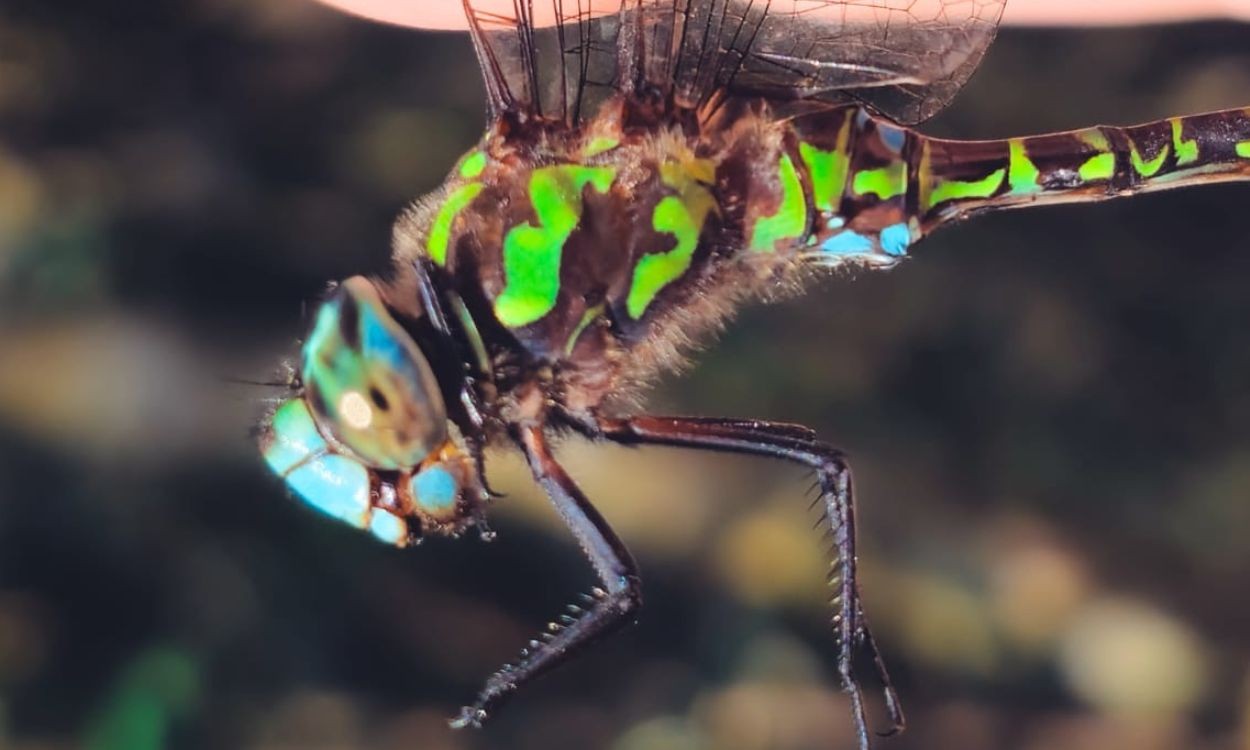
Serra do Japi reveals species of dragonflies never seen in São Paulo
⚡ Quick Summary
USP researchers spot three new species of dragonflies for the first time in SP Disclosure / researchers An unprecedented survey carried out in Serra do Japi (SP) recorded for the first time the occurrence of three species of dragonflies in the state of São Paulo.
USP researchers spot three new species of dragonflies for the first time in SP
Disclosure / researchers
An unprecedented survey carried out in Serra do Japi (SP) recorded for the first time the occurrence of three species of dragonflies in the state of São Paulo. The discovery, the result of an expedition by researchers from USP, UFS and UFSCar at the end of last year, also revealed the presence of rare and almost endangered insects in the middle of the Atlantic Forest of Jundiaí (SP).
📱 Receive content from Terra da Gente also on WhatsApp
📱Bookmark g1 on Google and follow the main news of the day
Serra do Japi
Serra do Japi is home to one of the largest continuous areas of Atlantic Forest in the interior of São Paulo. The territory is located between the municipalities of Cabreúva, Cajamar, Jundiaí and Pirapora do Bom Jesus, in the middle of the metropolitan regions of Campinas and the capital.
See more:
'OCEAN WITHOUT LIGHT': Study reveals enigma about the most abundant microbes in the depths
MURIQUI: Group of the largest primate in the Americas will be reintroduced after seven years of preparation
THREAT: Giant Asian shrimp invades protected areas in Brazil
Despite its proximity to urban areas, the mountains preserve a rich wildlife. In the 1990s, the municipality of Jundiaí transformed a 20 square kilometer territory into a biological reserve. It was exactly in this area that researchers carried out the first inventory focused on insects of the order Odonata.
The name of the order refers to the strong and robust teeth present in the jaws of adult individuals.
Serra do Japi reveals species of dragonflies never seen in São Paulo
Disclosure / researchers
Biologist and postgraduate student at the University of São Paulo (USP), Aline Gonçalves, explains the origin of the work:
"The interest arose during a Field Entomology course in the Postgraduate Program in Entomology at USP. Serra do Japi is one of the most important areas for the conservation of the Atlantic Forest in the state of São Paulo, but until then there were no studies focused specifically on the dragonfly and damselfly fauna of the Biological Reserve. This sparked our interest in carrying out an initial survey of local biodiversity."
The survey brought together researchers from USP, the Federal University of Sergipe (UFS) and the Federal University of São Carlos (UFSCar). In addition to Aline Gonçalves, the team included Antonio Bruno Silva Farias, Camila Eduarda Fernandes Pires, Tomás Matheus Dias-Oliveira, Eike Daniel Fôlha Ferreira, Herbeson Ovidio de Jesus Martins, Carlos A. Martínez-Martínez, Giovana Leme Bartoletti, Maria Virginia Urso-Guimarães and Jean Carlos Santos.
See what's trending on g1:
Now on g1
Efficient predators
Dragonflies and damselflies act as excellent hunters of mosquitoes and other small insects. Although very similar, they present differences in anatomy and behavior. Dragonflies have more robust bodies and keep their wings open when resting. Damselflies are thinner and fold their wings back, close to their bodies, when they rest.
"The collections took place between October and November 2024, at 11 points in the reserve. As the work arose from a field discipline, we had a relatively short period for sampling. Therefore, the study is considered preliminary. The expectation is that new collections throughout the different seasons of the year will reveal even more species, since many dragonflies have seasonal cycles, that is, different species can be found at different times of the year", reports Aline Gonçalves.
Some of the species found by researchers
Disclosure / researchers
New records in São Paulo
The study revealed an interesting fact: three species already known to science had never been recorded in São Paulo. These new occurrence records in the state belong to the species Heteragrion tiradentense, Brechmorhoga goncalvensis and Rhionaeschna planaltica. The discovery in a relatively well-studied region demonstrates the existence of important gaps in knowledge. The scenario suggests that Serra do Japi may be home to other species not yet recorded in the state, in addition to possible little-known organisms from other biological groups.
Bioindicators and conservation
In total, despite the short sampling period, the researchers recorded 22 species of dragonflies and damselflies. Among them, biologists found rare species and two considered almost threatened with extinction: Heteragrion tiradentense and Brechmorhoga goncalvensis.
The find reinforces the importance of Serra do Japi as a refuge for sensitive species with restricted distribution.
Study areas in Serra do Japi (SP)
Disclosure / researchers
This survey provides an essential scientific basis for understanding the reserve's biodiversity. Dragonflies function as excellent bioindicators of environmental quality, especially in aquatic environments.
In this way, knowing the species that inhabit the area helps guide conservation actions, monitoring and management of the protection unit.
The result highlights the role of Serra do Japi as one of the most important remnants of the Atlantic Forest in the interior of São Paulo and highlights the importance of maintaining protected areas to conserve biodiversity.
"This study is just a first step. The sampling curves indicated that new species could probably be recorded with additional collections. The next steps include expanding sampling throughout different times of the year and exploring other areas and altitudinal gradients of the reserve so that we can obtain a more complete panorama of the local fauna", concludes Aline Gonçalves.
VIDEOS: Terra da Gente Highlights
See more content about nature on Terra da Gente
📰 Related Articles

World's largest whale cemetery discovered
Observador
Suspect of trying to kill father and attacking pregnant wife with knife dies in confrontation with police in Bahia
G1 Globo
More than R$1 million worth of goods are seized in containers on BR-153, in MG
G1 Globo
9 homemade teas to alleviate poor digestion
CartaCapital
Tendinitis: 4 precautions to avoid pain caused by routine in front of screens
CartaCapital