Dogs are trained to sniff out cancer and tuberculosis in unprecedented research in the country
⚡ Quick Summary
Dogs will be trained by researchers to "sniff out" cancer in patients An unprecedented study in Brazil developed by the Federal University of Espírito Santo (Ufes) intends to use dog scent to help identify diseases such as cancer, tuberculosis and schistosomiasis.
Dogs will be trained by researchers to "sniff out" cancer in patients
An unprecedented study in Brazil developed by the Federal University of Espírito Santo (Ufes) intends to use dog scent to help identify diseases such as cancer, tuberculosis and schistosomiasis. The objective is to use the olfactory capacity of animals to detect signs of these diseases in human biological samples.
Named "Xero", the project involves training dogs of different breeds in sessions lasting one to two hours, held once or twice a week. In total, the research, which is conducted by the Infectious Diseases Center (NDI/Ufes), should last four years.
📲 Click here to follow the g1 ES channel on WhatsApp
The dogs will be trained at the Health Sciences Center (CCS/Ufes), on the Maruípe campus, in Vitória, and will participate in the study through voluntary registrations made by their owners.
The general coordinator of the study and professor at the Department of Pathology at Ufes, Carlos Graeff, explained that the training will be done through positive reinforcement and the animals will be rewarded with the food they like most when they correctly complete each proposed step.
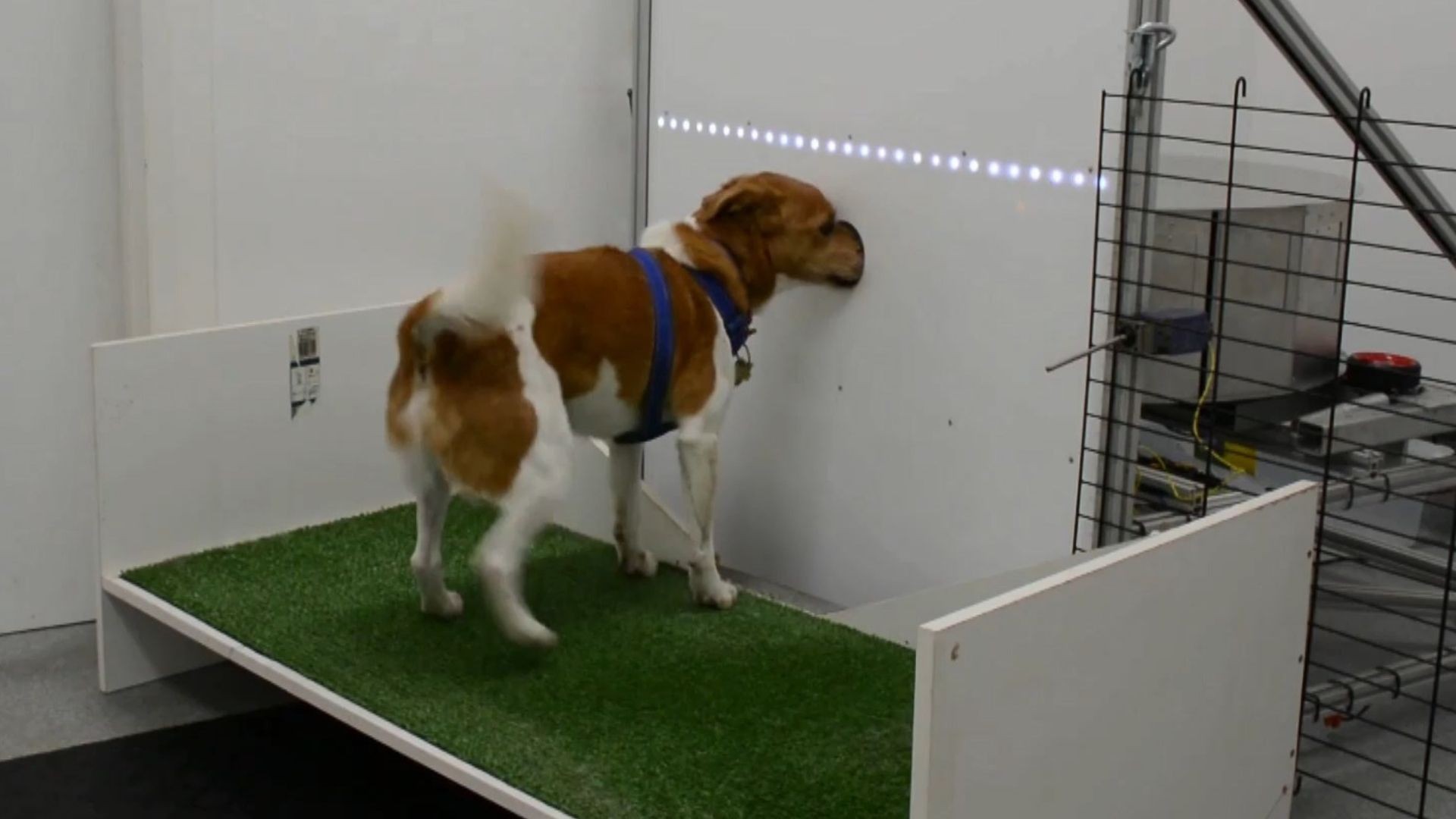
"When the dog is faced with a positive sample, a food dispenser that he likes will automatically drop and he will get this reward. Then, he will start to associate that, every time he detects that smell, he gets food. And that is the training", he said.
Dogs are trained to sniff out cancer, tuberculosis and schistosomiasis in an unprecedented project in the country, conducted in Espírito Santo
TV Gazeta
READ ALSO:
'CPF CAPIXABA': Almost 100 humpback whales will be born on the coast of ES in 2025, shows unprecedented research
WATCH VIDEO: Child goes viral after saying he wanted to appear on Globo during an interview with another broadcaster in ES
NEW FASHION: X-cake goes viral on social networks and promises to increase sales of confectioners
The study conducted in Espírito Santo is carried out in partnership with researchers from New Zealand and seeks to explore the olfactory capacity of dogs to identify disease-causing microorganisms or biological signs associated with them, whether in the air, urine or other biological materials collected.
In the Oceanian country, similar research is already showing promising results.
"The dogs that perform best have more than 90% accuracy. That's fantastic", highlighted the professor.
Dogs are trained to sniff out cancer, tuberculosis and schistosomiasis in an unprecedented project in the country, conducted in Espírito Santo
TV Gazeta
How the training will work
Training will be carried out in a controlled environment to ensure the health of the dogs. The biological samples will be stored in isolated containers and protected by filtration systems, while the animals will sniff out biological patterns associated with diseases.
The researchers' expectation is that, in the future, the technique will help make early diagnosis of these diseases more accessible.
The stages will be supervised by veterinarian Gustavo Jantorno, who works in training dogs used by federal agencies, such as the Federal Revenue Service and the Ministry of Agriculture and Livestock.
To indicate the presence or absence of signs of the disease, the samples will be organized on a mechanical carousel developed by the team led by Professor Tim Edwards, from the University of Waikato, in New Zealand.
Through the system, the dog will be able to activate the equipment with its nose when it does not identify the disease, allowing a new sample to be presented.
All tests will be automated and monitored by cameras to reduce human interference and increase the accuracy of results. Dogs are trained to sniff out cancer, tuberculosis and schistosomiasis in an unprecedented project in the country, conducted in Espírito Santo
TV Gazeta
All dogs can participate
To participate in Xero and help identify diseases, the dog does not need to belong to a specific breed, it may even not have a defined breed, the famous "mutt". According to the researchers, however, some characteristics can favor the performance of the animals.
"Theoretically, all dogs can participate, because they all have olfactory cells that are much more evolved than ours. However, dogs that really like to play and eat are generally the candidates who will do best in this job", jokes Carlos Graeff.
How to volunteer
Interested parties can contact us via WhatsApp (51) 99981-8599, via email at [email protected] or via the profile @caes.cancer on Instagram.
Videos: everything about the Holy Spirit
See the latest news from g1 Espírito Santo
📰 Related Articles

G1 Globo

Opposition in Taiwan tells US and China it is not a "pawn"
Observador
G1 Globo

BC Place: series, films and the Pope's "Celebration of Life"
Observador
Are you going to have a June party? See how to request road closures and provisional power connections in Macapá
G1 Globo