


Crime monopoly: drug trafficking and militia even control who supplies food to markets and bakeries in Rio
⚡ Quick Summary
Militia and drug trafficking turn traders and customers into hostages in Rio de Janeiro Hundreds of traders in Rio de Janeiro live as hostages to drug trafficking and militias, who control the sale of products in communities and impose suppliers chosen by criminals.
Militia and drug trafficking turn traders and customers into hostages in Rio de Janeiro
Hundreds of traders in Rio de Janeiro live as hostages to drug trafficking and militias, who control the sale of products in communities and impose suppliers chosen by criminals.
The Fantástico report investigated for two months an illegal monopoly scheme that affects everything from bakeries and markets to barbershops.
Merchants are forced to buy goods from companies determined by criminals, without the possibility of choosing. Anyone who tries to purchase products from other suppliers receives threats. In one of the statements, a victim summarizes the situation: "You have to buy, without a choice."
The scheme affects basic consumer products, such as flour, eggs, garlic, onions, coal, water, gas and construction materials. In addition to the imposition of suppliers, traders claim that they are forced to pay fees to keep the establishments operating.
"We work on the negative, because you have to act like criminals, that's the reality", reported one interviewee.
The investigation monitored warehouses and distribution centers and identified companies that, according to police, are associated with criminal organizations.
In the West Zone of Rio, control even extended to the sale of roast chicken. Merchants claim that they stopped buying directly from traditional suppliers and started purchasing the product from distributors appointed by the militiamen. According to reports, anyone who refuses to follow the order is prevented from working.
Traders are forced to buy chicken from companies linked to factions.
Fantastic
Trucks from competing companies are prevented from entering areas controlled by factions and militias. Drivers receive threats of vehicle theft and fire if they return to the regions.
In many cases, merchants are informed that from that moment on, they will only be able to buy from a specific company.
"They just warn us that from now on, we are forced to buy from this company", said one interviewee. "And the message has already been given and you have to carry it out."
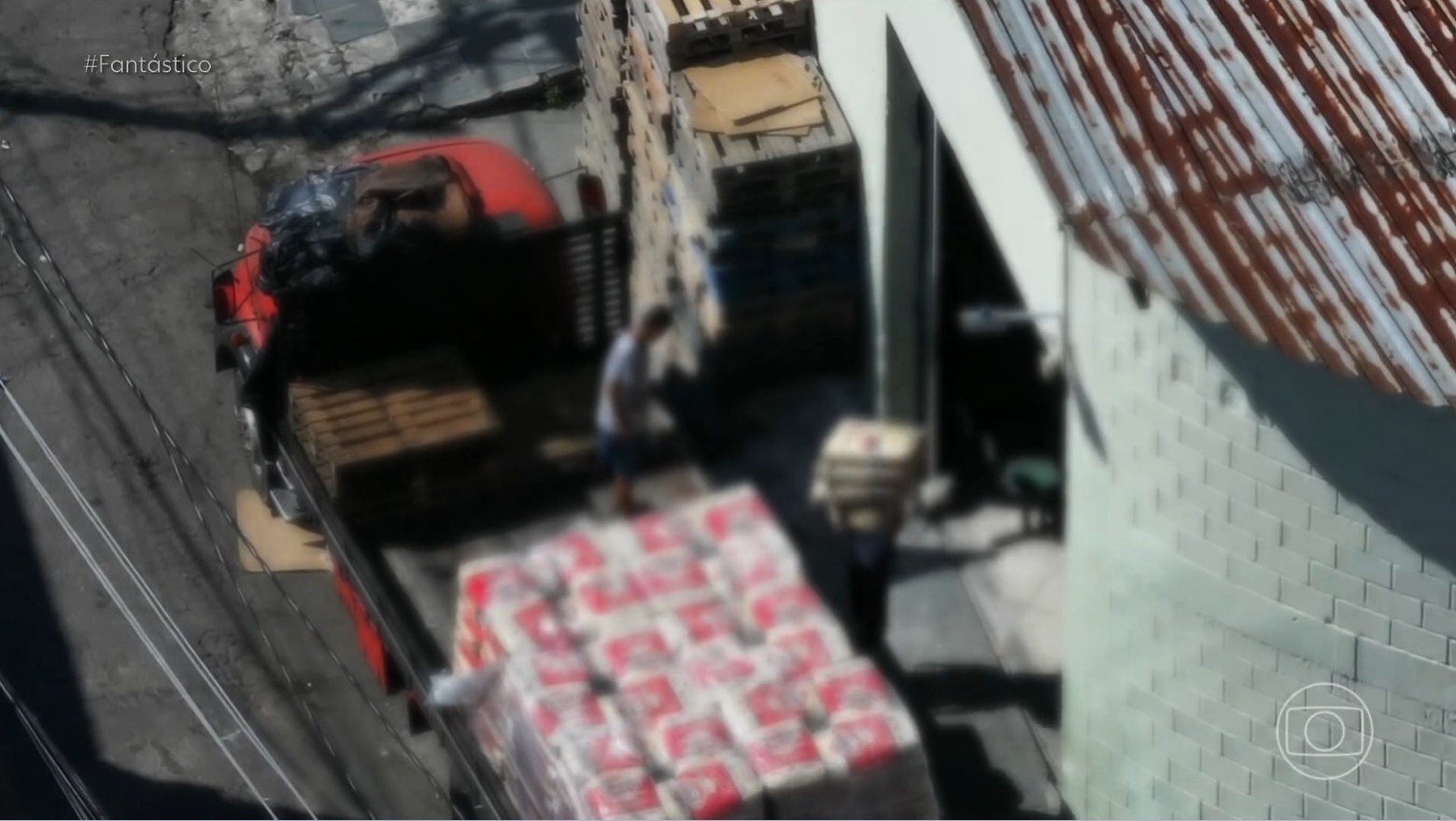
Delivery of flour made by companies investigated for links to the Rio de Janeiro faction.
Fantastic
Higher prices for the consumer
The monopoly also causes price increases for consumers. In some locations, the price of roast chicken rose from R$10 to R$40 after criminal groups entered the market.
The practice, according to experts interviewed by the report, reduces competition and allows prices to be charged above those normally charged.
Wheat flour is among the main targets of investigations. Fantástico recorded the movement in two companies investigated, Evolucion, in Campo Grande, in the West Zone, and Fênix, in Madureira, in the North Zone, an area dominated by the Third Comando Puro faction.
Truck from a company linked to factions in Rio de Janeiro.
Fantastic
Merchants claim that they were forced to buy products from these companies, often in larger quantities than requested and for higher prices. Even the quality and price of daily bread have suffered due to factional rule.
"A low quality flour, which costs around 70 reais, we were forced to buy in the range of R$100 to R$110", says a producer. "Ultimately, the price of French bread has to increase to be able to feed all of this."
When asked about the deliveries filmed by the report, lawyers from the company Evolucion stated that they cannot respond because they do not have access to the images. "This, for us, is mere speculation", says Luis Felipe Vieira, lawyer.
Evolution lawyers claim to have no knowledge of illicit activities involving the company.
Fantastic
The company Fênix told Fantástico that it does not have any link, relationship, participation or association with criminal factions or any illicit organization and that it remains at the disposal of the authorities to provide all necessary clarifications. Traders suffer threats and take risks
Anyone who does not obey the order may be targeted by the militia.
In March last year, trader Rafael Oliveira Braga was killed in front of his own bakery after refusing, according to investigations, to purchase flour from one of the distributors linked to the scheme. Two men identified as members of the militia were indicted for the crime.
Rafael Oliveira Braga refused to buy flour.
Fantastic
Last Wednesday, the Civil Police carried out 14 search and seizure warrants at addresses related to the companies being investigated.
In one of the warehouses, agents found expired products and arrested a man red-handed. In another location, precarious storage conditions were identified, with food close to animal feces.
Investigations indicate that controlling the sale of products generates an important source of income for criminal organizations. According to the police, the resources supply the so-called war chest of factions and militias, used to purchase weapons and maintain territorial dominance.
Meanwhile, traders report a feeling of helplessness in the face of threats.
"I confess to you, I lost the desire to work. Soon, God willing, I will move on to my store. You work for them, become their employee", said one of the victims interviewed by Fantástico.
Listen to Fantástico podcasts
THIS IS FANTASTIC
The Isso É Fantástico podcast is available on g1 and the main podcast apps, bringing great reports, investigations and fascinating podcast stories with the Fantástico journalism seal: depth, context and information. Follow, like or subscribe to Isso É Fantástico on your favorite podcast player. Every Sunday there's a new episode.
📰 Related Articles

Do you want to win elections? Call Mourinho!
ObservadorUse of antimicrobials in animals is expected to rise 30% by 2040
CNN Brasil
Two years after the crime, those accused of attacking a young woman with caustic soda in Paraná will be tried; remember the case
G1 Globo
Those affected by bad weather will not receive support until the end of the month
Observador
About the catering review and being angry with Toy
Observador