Crypto czar holds 'constructive' discussion with Mufti Taqi Usmani on Shariah status of digital assets
⚡ Quick Summary
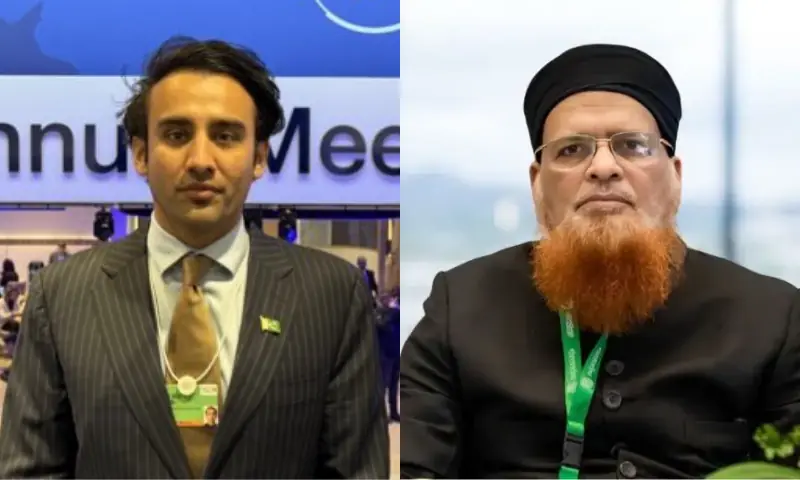
Pakistan Virtual Assets Regulatory Authority (PVARA) Chairman Bilal bin Saqib on Saturday said he held a “constructive discussion” with religious scholar Mufti Taqi Usmani on the Shariah status of digital assets.
Pakistan Virtual Assets Regulatory Authority (PVARA) Chairman Bilal bin Saqib on Saturday said he held a “constructive discussion” with religious scholar Mufti Taqi Usmani on the Shariah status of digital assets.
Their meeting comes after it surfaced that Mufti Usmani and six others had declared purchasing goods with cryptocurrency “impermissible” in a fatwa (religious decree) issued on June 10. It described cryptocurrency as “merely the recording of fictitious numbers in an account”.
Subsequently, Saqib — who has been leading Pakistan’s efforts to adopt cryptocurrency since early 2025 — posted on X: “Today, I had a constructive discussion with Mufti Taqi Usmani sahib on digital assets and the ongoing conversation around their Shariah status.”
“We are united on one fundamental objective: protecting Pakistanis from fraud, exploitation, and financial harm.”
The crypto czar said he shared with Mufti Usmani that “blockchain, digital assets, stablecoins, and tokenised real-world assets represent a broad spectrum of technologies and use cases”.
“As such, they merit careful technical assessment alongside rigorous Shariah examination, rather than being viewed through a single lens,” he contended.
“As this field continues to evolve, I look forward to continued engagement between respected scholars, regulators, and industry experts so that Pakistan’s approach is guided by both Islamic principles and a comprehensive understanding of emerging technologies,” Saqib wrote.
Originally issued by Darul Ifta, Jamia Darululoom in Karachi, the decree also had a former judge of the Federal Shariat Court and five other prominent scholars as its signatories.
“According to research and opinion of experts so far, cryptocurrency is not considered ‘maal’ (wealth) in Sharia. Instead, it is merely the recording of fictitious numbers in an account, whether in the form of USDT (Tether stablecoin) or other crypto tokens,” it stated.
As cryptocurrency was not recognised as wealth, the edict maintained that the buyer did not technically become the owner of those books through such transactions. It cited various references from works of religious jurisprudence.
Responding to a similar query about benefiting from a course purchased with cryptocurrency, it said: “Obtaining an educational course through cryptocurrency is not valid.”
Saqib heads PVARA, an autonomous federal body governed by a multi-stakeholder board including the State Bank of Pakistan (SBP) governor, as well as the chairmen of the Securities and Exchange Commission of Pakistan (SECP) and the Federal Board of Revenue (FBR).
Its mandate is to curb illicit finance, protect consumers and unlock opportunities in fintech, remittances and tokenised assets, while fostering Shariah-compliant innovation through regulatory sandboxes.
Although Saqib has been serving as the chief executive officer (CEO) of the Pakistan Crypto Council (PCC) launched in March 2025, the body’s status remains unclear.
The SBP legalised the use of virtual assets in April through the enactment of the Virtual Assets Act 2026, allowing banks to open accounts for licensed virtual asset service providers.
In May, the crypto czar said Pakistan was moving ahead with developing a regulatory framework for digital assets as the adoption of blockchain-based technologies continues to expand.
Saqib, also a state minister, noted that around 40 million Pakistanis were already engaged with digital assets, largely through informal platforms operating outside regulatory oversight, creating both opportunities and risks.
In December 2025, the PVARA chairman announced that Pakistan was set to launch its first “stablecoin” as part of its drive to make virtual assets a part of the economy.
A stablecoin, according to Bloomberg, is a digital token whose value is intrinsically linked to a physical currency, such as the US dollar, making it more stable than other cryptocurrencies like Bitcoin.
📰 Related Articles
Rescued Oriire pupils, teachers to remain under observation for 48 hrs — Makinde
Vanguard Nigeria
Embezzlement at Ram Temple is a disgrace, ‘we feel humiliated’, says Nripendra Mishra
The Hindu2027: Replacing Shettima would disrupt APC’s stability- Presidential Aide
The Guardian Nigeria News
Train lovers seek out the lingering romance of steam locomotives
CBS News