Pink football boots in the World Cup are about rainbows, tube TV and the brain's 'gimmick'; understand mystery
⚡ Quick Summary
It's not just on Wednesdays (of Brasileirão) that we wear pink. It's in basically every game of the 2026 World Cup.
It's not just on Wednesdays (of Brasileirão) that we wear pink. It's in basically every game of the 2026 World Cup.
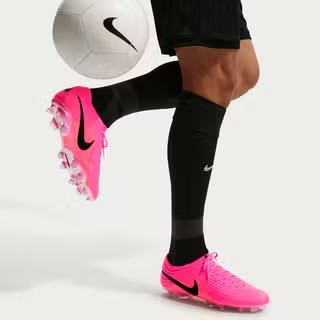
This is the color of many of the boots worn by players in matches: in Brazil alone, we have seen Alisson, Vini Júnior, Bruno Guimarães, Endrick and Rafinha, for example. All the major sportswear brands launched a magenta version of the product for the World Cup.
🌸But it's not just for marketing (of course there is a commercial interest in fashion) or for good taste. There is a physical explanation for this choice: the hot pink contrasts with the green of the pitch and attracts the attention of fans, especially on television broadcasts.
Below, understand why this happens. Spoiler: it's no surprise that pink doesn't appear in the rainbow.
Vini Jr. trains with pink boots on June 15
Caean Couto/Reuters
What a wave!
Marquinhos' football boots for the World Cup
Reproduction/Nike
Imagine the waves of the sea. If you look at their trail, some come in a well-spaced sequence, while others arrive close together, breaking very quickly.
Well: light waves also have these spacings and can be measured. Depending on their size, we see them in a certain color.
🟥🟩🟦Longer wavelengths tend to be perceived as red; intermediate lengths, like greens; and shorter lengths, like blues and violets.
🌈Bug in the system: why doesn't pink appear in the rainbow?
Light waves.
Art/g1
If you look closely at a real rainbow, you'll notice something intriguing: there's no pink there. There is no such thing as a purely "pink" wavelength.
This color is, in fact, a creation of our heads (yes).
This happens because human eyes cannot directly see wavelengths of light. The retina has cells called cones, sensitive mainly to three bands of the spectrum: red, green and blue.
"We define these three colors as primary colors. From them, we can form any other color that we see through the superimposition process. In practice, regardless of whether a color is in the visible spectrum or not, it is always constructed in our brain from the intensities of red, green and blue", says Acauan Figueiredo, Physics professor at the Anglo Course.
When a player puts on hot pink football boots, the fabric of the shoe reflects red light (long wave) and bluish/violet light (short wave) into our eyes at the same time. The green (medium wave), which is in the center of the ruler, is completely absorbed by the fabric and does not reach our eyes.
In other words: light stimulates the two opposite ends of our visual receptors.
"Imagine that the rainbow is a straight line that starts with red and ends with violet. To create pink, your brain needs to see red light (long wave) and violet light (short wave) hitting your eyes at the same time", explains Felipe Ribeiro, physics professor at the Universidade Federal Rural do Semi-Árido and coordinator of the Science for All program in the Semi-Árido Potiguar.
“As these two colors are at opposite ends of that line, the brain cannot simply choose a color in the middle, so it closes the circle and invents a new color to mix the two, which is pink or magenta.”
In other words: pink is the neurological response to the mixture of two opposing lights.
⚪Chromatic circle: from fashion to football
color circle
Art/g1
It is because of this “biological compromise” that the world of design does not use physics as it is (linear sequence), but rather the famous color circle, the first version of which was developed by Isaac Newton.
We've already seen that the brain tends to visually join the two ends of the line, right? With that, he turns it into a ring, creating a "bridge" formed by pink.
On the color wheel, colors that are exactly opposite each other are called complementary colors. They offer the highest possible contrast to human eyes. And the exact opposite of lawn green is... hot pink. Quando a chuteira entra no campo, acontece um fenômeno chamado contraste simultâneo.
Como passamos muito tempo observando uma superfície predominantemente verde, o sistema visual se adapta a essa cor. Quando surge um objeto magenta, o contraste percebido torna-se ainda mais intenso.
“Nosso cérebro sempre vai dar mais ênfase para o contraste do que para detalhes — é uma questão até de sobrevivência e economia de energia. Mudanças bruscas de cores quase sempre indicam onde um objeto começa ou termina”, explica Caio Britto, autor de Física do Sistema de Ensino pH.
📺Tecnologia nos ajudou a chegar ao rosa
Coreia do Sul compareceu em peso com chuteiras cor-de-rosa
Daniel Becerril/Reuters
Se o contraste físico sempre existiu, por que as chuteiras desta Copa cobram tanta atenção e parecem mais brilhantes do que nunca? A resposta está na evolução da indústria química e das telas de TV.
Primeiro, as chuteiras de hoje utilizam pigmentos genuinamente fluorescentes. Segundo o professor Felipe Ribeiro, há um truque quântico acontecendo nos pés dos atletas:
"Se o rosa for fluorescente, ele vai captar luz invisível (Ultravioleta, por exemplo) e transformar em luz visível, dando aquele efeito luminoso brilhante e chamativo, tanto ao vivo quanto na TV."
Em termos práticos: a chuteira absorve a luz invisível do sol ou dos refletores do estádio e a "devolve" para o ambiente como luz rosa visível.
Para completar, quem assiste de casa hoje conta com tecnologias como telas OLED, QLED e transmissões em HDR (Grande Alcance Dinâmico). Antigamente, as câmeras de TV e os televisores de tubo não conseguiam processar cores tão saturadas — o rosa borrava ou parecia um vermelho lavado.
Hoje, as telas modernas conseguem acender pixels individualmente com precisão, dando muito mais destaque para as chuteiras pink.
Agora no g1
🗞️ 3 sources covered this story

"I cried, but it's not about football. I went through difficult days"
ObservadorLive football match: Argentina vs Algeria - The current World Cup champions show their strength.
Vietnam.vn
"Football history": international press reports Messi's record breaking in the World Cup
gauchazh.clicrbs.com.br📰 Related Articles
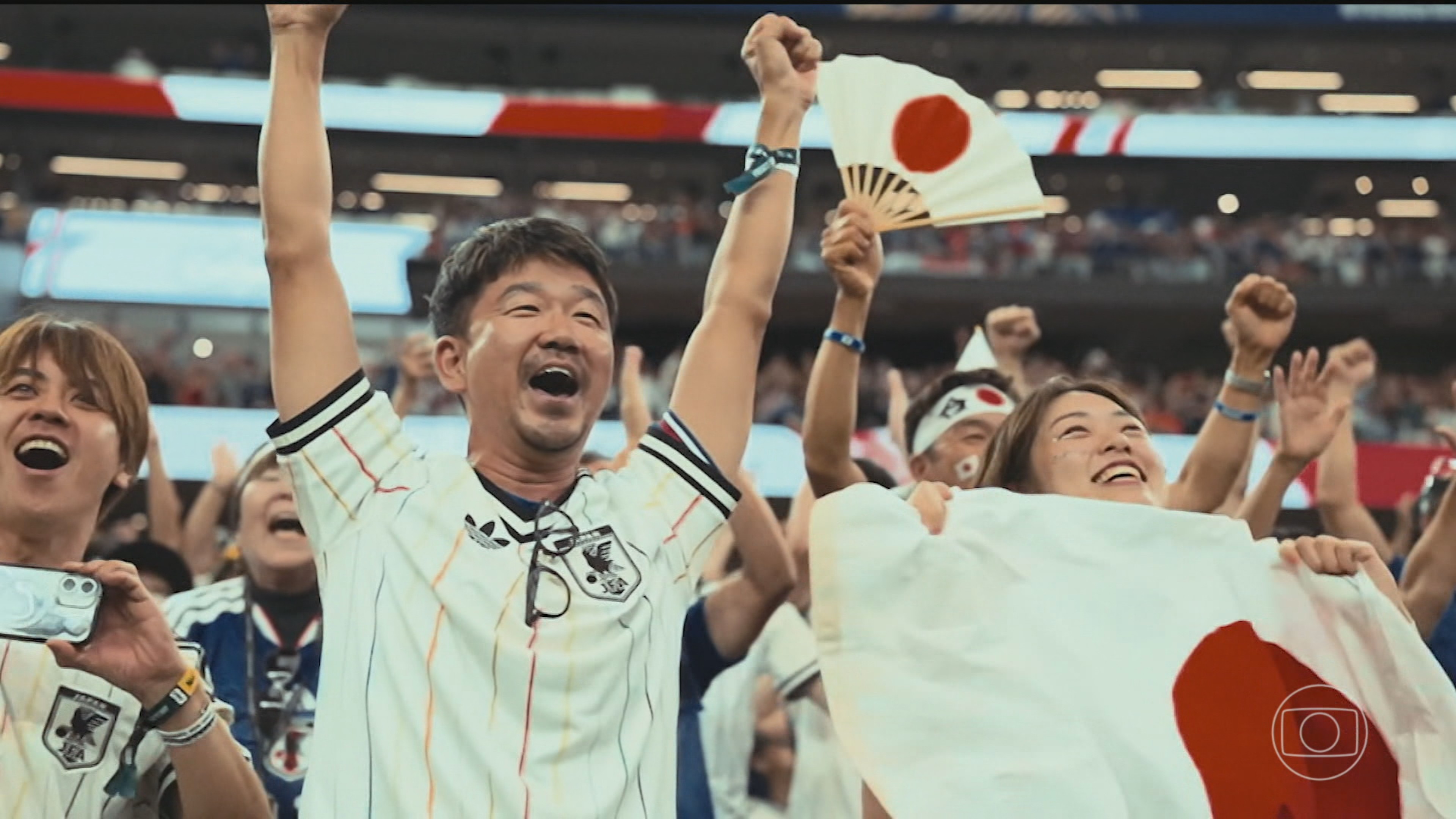
In the first World Cup with 48 countries, fans from all over the world meet to celebrate
G1 Globo
2026 World Cup: see the ranking of World Cup top scorers
CNN Brasil
Douglas Santos spent almost a decade without defending the national team until the chance given by Carlo Ancelotti
G1 Globo
Neymar trains with the Brazilian team for the first time at the World Cup
G1 Globo
World Cup: Harry Kane's England face Luka Modric's Croatia in Group L
G1 Globo