Whale puts on a show in Ipanema; Rio welcomes humpbacks again and turns winter into observation season
⚡ Quick Summary
Whale puts on a show in the sea of Ipanema; Rio once again becomes the route of sea giants A humpback whale jumping in front of Ipanema Beach, in the South Zone of Rio, could look like a scene produced by artificial intelligence.
Whale puts on a show in the sea of Ipanema; Rio once again becomes the route of sea giants
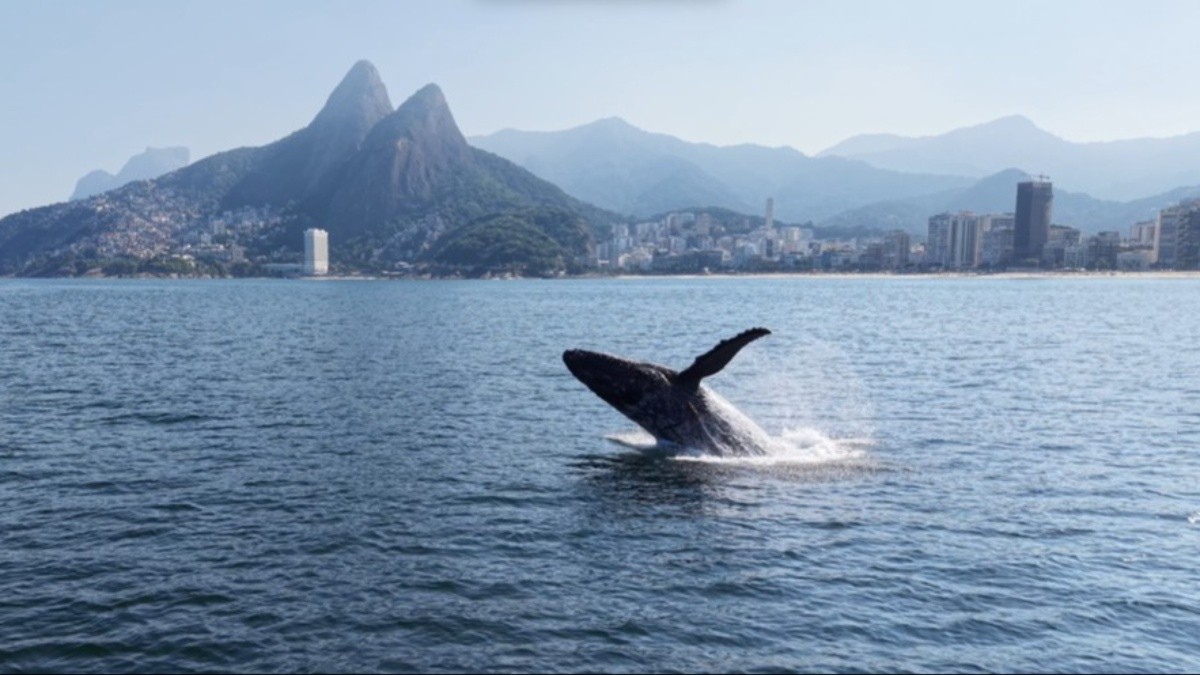
A humpback whale jumping in front of Ipanema Beach, in the South Zone of Rio, could look like a scene produced by artificial intelligence. But it happened on Tuesday morning (9) and was recorded by photographer Gabriel Klabin, who lives in the neighborhood and ran home to get his drone when he noticed movement in the sea (see above).
In total, according to him, the animal made more than 50 jumps and remained close to the coast long enough for him to record one of the most impressive images of the season.
"In total, there were more than 50 jumps. And it's very difficult to catch the jumps because we never know when they're going to be. But there were so many that there was time to do it from a cool angle.", Gabriel told g1
"It's like the astronauts when they went to the moon for the first time, the most impressive thing was the photo they took of planet Earth. It's the same as that image of the whale, the coolest thing was having it jumping, with Rio in the background, with the buildings, the beach, my house", compared the photographer.
📱Download the g1 app to see news from RJ in real time and for free
Whale puts on a show in Ipanema.
Gabriel Klabin
The sequence of meetings continued this Friday (12). In a new trip to the sea, in partnership with Instituto Vida Livre, Gabriel Klabin recorded 14 humpback whales during the period he remained on the vessel. Among the images, one of the most impressive shows five whales swimming together, a rare record that reinforces the spectacle provided by the giants of the sea on the coast of Rio.
The records made by Gabriel help to illustrate a phenomenon that has been consolidating on the coast of Rio de Janeiro: the beginning of the humpback whale season, which occurs between June and August and turns winter into one of the most special times for those who enjoy nature and ecological tourism.
"She was less than 1km from the beach. About 600 meters from the beach at the closest point. Then she went towards the sea, but kept jumping", said Gabriel.
Photographer records 14 whales on the coast of Rio and catches five humpbacks swimming together
More than impressive images, they are symbols of the species' recovery in Brazil. If at the beginning of the 1990s the population was estimated at between 1,500 and 2,000 whales, today this number exceeds 35,000 individuals, according to the Instituto Baleia Jubarte.
Throughout this report, g1 explains how observation tours work.
Route of 35 thousand humpbacks
The growth of the humpback whale population on the Brazilian coast is considered one of the greatest examples of the recovery of a species after the end of commercial hunting.
"Due to the implementation of the Abrolhos Park, we discovered this small population restricted to Abrolhos, at the end of the 1980s. In 1990, we made our first estimate which was around 1,500 and 2,000 whales. We currently have more than 35,000 whales. A spectacular figure, a feeling of mission accomplished", said Enrico Marcovaldi.
According to Enrico Marcovaldi, vice-president of Instituto Baleia Jubarte, this growth occurred because "whale hunting was banned between 86 and 87" and, since then, the population has been "slowly recovering and reoccupying old breeding areas like this one here in Rio de Janeiro".
Researchers expect an intense season this year.
"Seasons are cyclical, there are seasons when they arrive later, there are seasons when they arrive earlier and in smaller quantities (...) everything indicates that they arrived earlier and in greater quantities this time", explained Marcovaldi.
Photographer records 14 whales on the coast of Rio and catches five humpbacks swimming together
Gabriel Klabin
For researchers, Rio is no longer just a passing point. According to Enrico, "the occurrence of whales comes from Ilha Bela to Fernando de Noronha and Rio de Janeiro is a passage. But it's not just a passage, we are finding that they stay here too." The researcher highlights an important discovery: the birth of baby whales in Rio de Janeiro indicates that it is not just a passage route for them.
"Last year we had the first records of the birth of puppies, which proves that Rio de Janeiro is an important breeding area", said the researcher.
The season, according to him, takes place "from the beginning of June to the beginning of August. For ninety days."
Observation on land
You don't always have to go on board to see a whale. Sugarloaf Mountain is the first and only whale watching point in the city, where researchers use binoculars capable of reaching around 15 kilometers away to follow the migratory corridor of humpbacks.
"Here we are facing the migratory corridor of humpbacks on the coast of Rio de Janeiro. They pass exactly between the islands towards the northeast", explains researcher and photographer Pedro Fróes.
Humpback whales visit Rio at this time of year
Monitoring on land is also important for science because it allows animals to observe their behavior without interference.
"This is the first and only whale watching point in the city of Rio Janeiro. We don't need to go to the sea to observe the animals. It has no influence on their behavior. We observe them alone in the sea, as long as they need to move", reported Fróes.
Furthermore, researchers are able to quantify the animals and study their behaviors.
Whales in Rio
Humpbacks cover approximately 10,000 kilometers during their annual migration. They leave the cold waters of the Southern Ocean in search of the warmer waters of the Brazilian coast, where they reproduce and care for their young.
Whale and calf in São Conrado
Gabriel Klabin/Personal archive
The population that visits Brazil feeds in the region of the South Sandwich Islands and South Georgia and migrates to the coast of Bahia, especially the Abrolhos archipelago.
On this route, they pass along the coast of Rio de Janeiro, where they can be observed between June and August.
The calves are born with little body fat and depend on warm waters to develop before facing the southern cold again.
For Enrico Marcovaldi, the return of these animals represents a natural heritage for the city. However, he warns of the concern that observers should have.
"It is a privilege for Rio people to have this true natural heritage visiting our seas and beaches."
"People have to have a lot of respect. Whales are an animal that makes people very sensitive. But at the same time it has to be done in a respectful way", he explains.
How whale watching tours work in Rio
The increase in the presence of humpbacks has given rise to a new tourist attraction in Rio's winter: whale watching tours.
Departures normally take place at dawn, departing from Marina da Glória, and last between four and five hours. The vessels head approximately 10 kilometers from the coast, where there is a greater likelihood of sightings.
Photographer records 14 whales on the coast of Rio and catches five humpbacks swimming together
Gabriel Klabin
The route depends on signals observed by researchers and crews, such as spray, surface movements and information shared between vessels.
It is important to remember that the sighting depends on nature.
"It could be that in 15 minutes we find a group of whales or it could take 2, 3 hours."
Rules to protect sea giants
To ensure the safety of animals and passengers, the Port Authority started to register vessels authorized to carry out this type of tour.
So far, 36 boats have received the orange seal, which certifies that the driver has undergone specific training. Rules include:
Maximum approach of 100 meters;
Maximum two boats per group of whales;
Stay of up to 30 minutes with the same group;
Engine always running, in neutral, so that the animals notice the presence of the vessel.
Initial plugin text
Despite inspections, there are reports of violations, which could harm the presence of whales on the Rio coast.
"What I have observed is that 70% (of vessels) do not respect the whales and do not comply with the legislation. They do not come here in ideal nutritional conditions and they still have to get rid of tourist boats. It is an unnecessary expenditure of energy for the animals", warned biologist Liliane Lodi.
READ ALSO:
Photographer records whale jump aligned with Sugarloaf Mountain and goes viral: 'Photo of life'
Humpback whale is spotted in the sea of Ipanema at the beginning of the migration season
Two whales and two penguins are spotted on beaches in the West Zone of Rio
Group of humpback whales seen on the shore of Rio
Humpback whale puts on a show at Praia da Joatinga
What to know before boarding
Companies that offer this type of tour must follow environmental and safety standards established by the Navy and Ibama. Some are partners with the Humpback Whale Project and have biologists on board to guide passengers and monitor the animals' behavior.
See what is important to check before booking the tour:
Price: varies depending on the type of vessel and services included (such as food or the presence of a specialized guide). The companies consulted by g1 showed price variations between R$385 and R$600.
Duration: on average, 4 to 5 hours.
Departure location: generally from Marina da Glória.
Capacity: vessels range from small speedboats to sailboats with larger groups.
Itinerary: navigation in the open sea with a focus on whale watching.
Safety: use of life jackets, instructions before boarding and trained crew.
Animal care: respect the approach rules, engine in neutral, time and distance limits.
"When we give the animal the opportunity to feel comfortable, it shows itself to us", summed up producer Rayssa Vieira, who returned to Brasília with her heart racing after the tour.
Open season: Humpbacks travel around 10,000 kilometers from Antarctica to the warm waters of the Brazilian coast
Rafael Mesquita
🐋See some companies that offer whale watching tours in Rio:
C2Rio Tours & Travel
Price: from 5x R$114.40 per person (no difference between adults and children).
Duration: between 3 and 5 hours, depending on sea conditions.
Departures: from Marina da Glória; daily until the end of July and, in August, only on Saturdays and Sundays until the 10th.
Capacity: up to 12 people per tour, focusing on a more private experience.
Itinerary: sailing to the Cagarras Islands, with a stop for diving. The vessel has a bathroom, solarium and sound system.
What's included: snacks, 4 drinks per person, insurance and safety equipment.
Refund: There are no refunds if the whales are not sighted, due to the unpredictable nature of the sighting.
Contact: Instagram: https://www.instagram.com/c2rio.travel/
Sagarana sailboat
Price: R$500 per person (children up to 10 years old pay half price: R$250).
Duration: around 6 hours.
Departure: from Marina da Glória, with tours held every week.
Capacity: up to 25 passengers per tour.
Itinerary: navigation around the islands of Rio, in areas with a high chance of sighting. There are no stops for swimming, out of respect for legislation that prohibits diving near whales.
Included in the tour: Accompaniment by a biologist from the Humpback Whale Project; onboard photographer; complete brunch, with seasonal fruits, cake, esfiha, cheese bread, juices and soft drinks; complete safety equipment, as required by the Port Authority. Refund: There are no refunds for no sightings, but the experience includes learning, scenery and contact with experts.
Contact: Instagram: https://www.instagram.com/veleirosagarana/
Rio Boat Experience
Price: R$385 per person.
Duration: around 3 hours.
Departures: daily, from Barra da Tijuca (Ilha da Coroa, 2) or Píer da Urca, depending on sea conditions.
Opening hours: Weekdays: 8:30 am (flexible). Weekends: 8am, 11:30am and 2:45pm.
Type of tour: shared option (minimum 5 people) or private option.
Refund: 50% refund guarantee or rescheduling in case of non-sighting.
Accompaniment: presence of a biologist or whale specialist during the tour.
Contact: Make your reservation here. Instagram: https://www.instagram.com/rioboatexperience/
Boat Trip RJ
Price: from R$450 per person.
Duration: approximately 6 hours.
Departure: embark from Urca beach, with transport by boat to the sailboat. Arrival at 7:30 am, departure at 8 am and return scheduled for 2 pm.
Type of tour: exclusive and limited experience, with sporadic departures as assessed by the team.
Included in the tour: Breakfast (cake, juice, cheese bread, fruit). Snacks and non-alcoholic drinks throughout the day. Permission to bring your own drinks, such as beer or wine.
Cancellation policy: rescheduling and cancellations must be requested at least 7 days in advance.
Contact: WhatsApp: (21) 98119‑9252 / E‑mail: [email protected]. Instagram: https://www.instagram.com/boattriprj/
Saveiros Tour
Price: R$470 per person. 50% via pix on reservation. The remainder can be paid by pix upon boarding or credit (up to the day before) via link.
Duration: around 5 hours.
Departure: board a speedboat at Marina da Glória (RJ).
Opening hours: from 7am to 12pm.
Itinerary: navigation towards the whale route and the Cagarras Archipelago, with contemplation of the landscape and attempted sightings.
Sighting: this is the main objective of the tour, but it is not guaranteed. The success rate in 2024 was 96%.
Refund: no refunds in case of non-sighting. Full refund only if tour is canceled due to weather conditions.
Contact: Instagram: https://www.instagram.com/saveirostour/
Rio Boat Charters
Price: R$450 per person.
Duration: up to 4 hours.
Departures: daily, with two times available — 8 am and 1:30 pm.
Boarding: Marina da Glória (South Zone of Rio).
Itinerary: navigation passing through the Cagarras Islands, Redonda Island, Rasa Island and high seas areas.
Capacity: tour carried out with a minimum of 5 people per trip.
Included in the tour: Guides specialized in marine fauna; fruits, juices and water on board; high speed internet; modern vessel.
Refund: 50% refund guarantee or free rescheduling in case of no whale sighting.
Reservation: limited places; It is possible to book the experience now and set the date later via customer service.
Contact: Website / Instagram: https://www.instagram.com/rioboatcharters/
Sail in Rio
Price: R$480 (adult) R$300 (for children aged 3 to 10)
Departure: Wednesdays, Fridays, Saturdays and Sundays. Location: Marina da Glória.
Duration: Approximately 5 hours. Boarding at 6am and return scheduled for 11:30am.
Capacity: Kamehameha sailboat (40 feet) up to 10 passengers. Makani Maikai sailboat (50 feet) up to 16 passengers.
Itinerary: Navigation at sunrise along the edge of Aterro do Flamengo, towards the Cagarras Islands Archipelago. Passage close to the Cagarras Islands, Redonda Island, Rasa Island, Comprida Island and Palmas Island. Total focus on the sighting of humpback whales, without stops for swimming.
Included in the tour: Full breakfast: coffee, juice, fruit, bread, cake. Lesson with a biologist on board about humpback whales. Photographer to record the experience. Complete safety equipment, including vests, buoys, VHF radio.
Refund: There is no compensation if there is no whale sighting
Season: Until August 10th.
Contact: Instagram: https://www. instagram.com/sail_in_rio/
📰 Related Articles

Fishermen complain about not having a beach to work on
Observador
Creamy peanut jam: learn a recipe with just three ingredients
G1 Globo
"I never thought Cevicheria would make 200 meals/day"
Observador
Russian mathematics professor who works in Rio is arrested in Armenia at the request of Moscow, says Impa
G1 Globo
PS accuses Leitão Amaro of “Trumpism”
Observador