Skin cancer: research tests new treatment that can reduce tumors without invasive surgery
⚡ Quick Summary
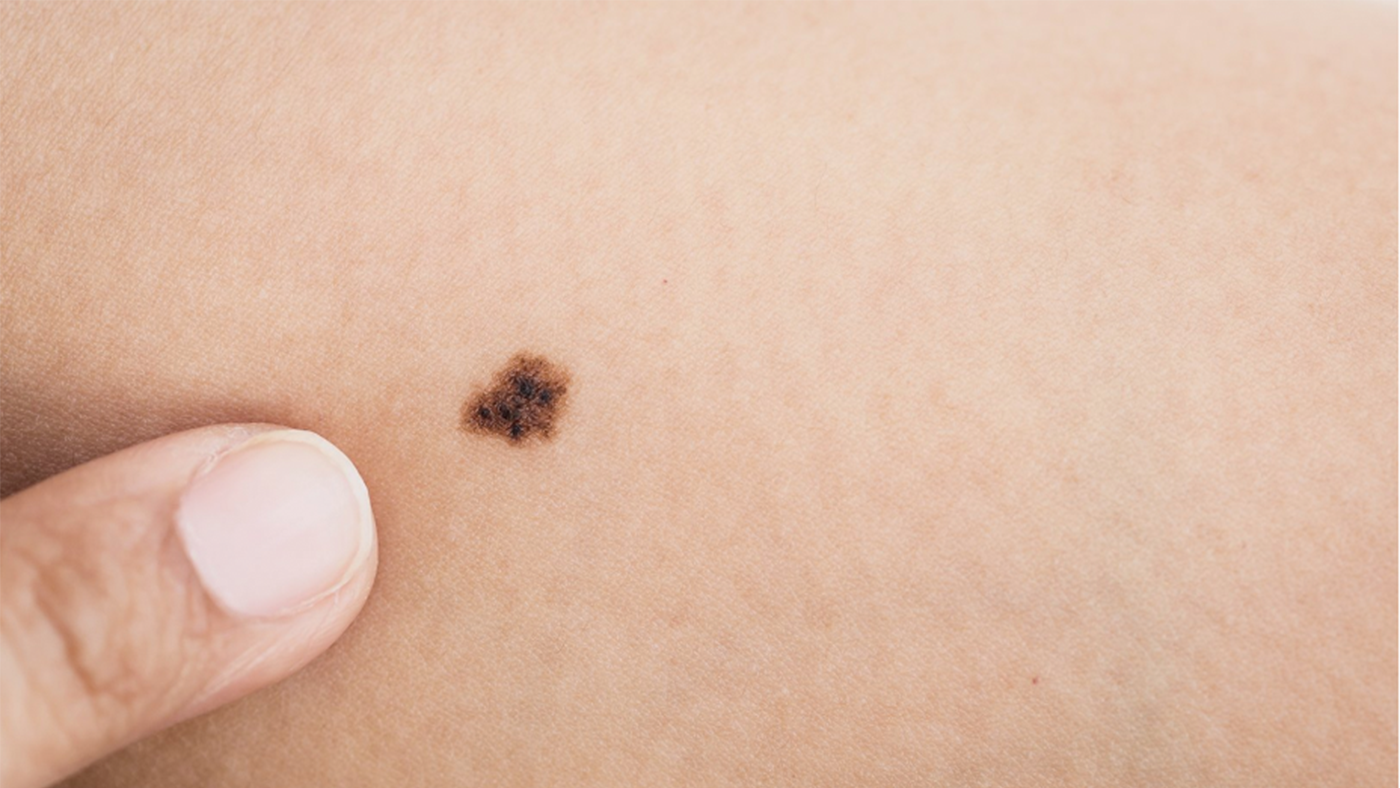
File image shows mole that could be skin cancer Disclosure The combination of an anti-inflammatory and a silver complex can transform the treatment of non-melanoma skin cancer, considered the highest incidence in Brazil, into a less invasive and traumatic therapy for patients.
File image shows mole that could be skin cancer
Disclosure
The combination of an anti-inflammatory and a silver complex can transform the treatment of non-melanoma skin cancer, considered the highest incidence in Brazil, into a less invasive and traumatic therapy for patients.
The technique, which is in the testing phase, is part of research at the State University of Campinas (Unicamp) that seeks to develop an alternative to conventional treatments for this type of cancer.
In preliminary studies, the treatment showed the potential to eliminate surgery, as it consists of applying, directly to the skin, the substance that combines silver with the anti-inflammatory.
✅ Click here to follow the g1 Campinas channel on WhatsApp
Non-melanoma skin cancer affects areas of the body that are most exposed to the sun, such as the ears, nose and mouth. The main conventional treatment is called “resection”, which consists of removing part or all of the affected organ or tissue. This procedure can be aggressive, affect tissue function and the patient's self-esteem.
The study has already gone through pre-clinical stages, which involve tests on cells and mice, and has been evaluated in humans since the beginning of 2026.
Depending on the results, the researchers intend to submit the technique for analysis by the National Health Surveillance Agency (Anvisa), with the expectation that it could reach the market in the coming years.
Global Non-Melanoma Skin Cancer Awareness Day is celebrated this Saturday (13). To understand the treatment, g1 spoke with oncologist Carmen Silvia Passos Lima, coordinator of the Clinical Oncology Service at the Unicamp Hospital de Clínicas and the Cancer Genetics Laboratory (Lageca) at the Faculty of Medical Sciences (FCM).
In this report you will see:
What is the purpose of treatment with the silver and anti-inflammatory complex
Why the combination is promising for researchers
How the treatment works and what studies have shown
What stage is the research currently at?
What are the other advantages of therapy created at Unicamp?
Innovative treatment aims to reduce mutilations and scars
Non-melanoma skin cancer is not the most lethal type, nor the most aggressive. However, according to data from the National Cancer Institute (INCA), it has the highest incidence in Brazil. Although it has a high chance of cure, especially if detected early, it can leave quite significant mutilations.
This is because the main treatment is to remove, through surgery, the tumor and the surrounding tissues, as explained by the oncologist. "Resection of the tumor can leave consequences for the patient. The surgery can leave, for example, a mutilation of the lip. You remove a piece of the lip and the person is left with aesthetic changes, in speech, in chewing."
"You can have a nasal prosthesis, which is a well-made prosthesis, but it changes the person's features and functionality. So, you lose the important organ, you lose sensitivity", adds Carmen.
🩹 Understand: melanoma is a type of skin cancer that appears in melanocytes (cells that produce skin pigment), while "non-melanoma skin cancer" is the term used to bring together other more common types of the disease, such as basal cell and squamous cell carcinomas. The word "melanoma" literally means a tumor originating from melanin-producing cells.
The research, which has been underway for 12 years at Unicamp, aims to minimize this and reduce the need for resection. Scientists are working on creating a compound that has proven efficient in tests with cells and animals.
Why combine silver complex and nimesulide
The treatment is being applied in cases of cutaneous squamous cell carcinoma (CCEC) and uses the silver complex compound (Ag) associated with nimesulide (NMS) developed by researchers from the Unicamp Chemistry Institute. According to the doctor, silver is described in the literature as a metal with antitumor potential, while nimesulide acts on the inflammatory process of the tumor, which controls its development and progression. The combination is being called AgNMS.
"We thought like this: if combining the two compounds, a compound that is known to have an antitumor effect, inhibiting cell proliferation, and an anti-inflammatory, on which this tumor depends, could it be a good option, that is, a good alternative?", comments Carmen.
☀️ Understand: CCEC is the second most prevalent among human cancers – basal cell skin cancer is the most common, with 70% of cases, and CCEC is the second, with 30%. It originates in the outermost layer of the skin and occurs mainly due to exposure to UV rays.
READ ALSO:
Poorer people have a higher risk of death from cancer, even with fewer diagnoses, according to a Unicamp study
Theranostics: approach that tracks and attacks cancer with radiation directly into the cell is tested in Brazil
From decline to remission: what the first tests show
Carmen explains that the initial objective was just to reduce the size of the tumor and, consequently, reduce the area of skin that needed to be removed. However, the promising results opened up the prospect of complete remission. See what was observed in the first stages of the study:
First, AgNMS was tested on tumor and non-tumor (normal) cells from different cancer lines, including CCEC. This test showed that the substance inhibited the proliferation of CCEC without affecting healthy cells, which showed that the compound has selective action against tumor cells.
Then, experiments were carried out on mice with CCEC. In them, the AgNMS was attached to a bacterial membrane and an adhesive patch, like a bandage, placed directly on the tumor area. AgNMS reduced tumors or led to their disappearance without toxic effects on animals.
🦠 The bacterial membrane causes AgNMS to be released continuously into the skin, unlike what would happen with a topical cream, for example, which would need to be reapplied. The association of the membrane with the adhesive received two patents, one national and one international, as it is an innovative technique for treating CCEC.
"We use it like a band-aid, a patch, to hold this membrane. There is a sticky tape holding the bacterial membrane, which looks like gelatin. The membrane is impregnated with this substance and is glued onto the tumor region. The animals had a very good response, a very important reduction. In some, very large tumors disappeared."
"After that, in those animals where the tumor disappeared, we did a biopsy. We took fragments of that skin to see if there was a tumor from a microscopic point of view and there wasn't. There was also no local or systemic toxicity. We did a blood test and a liver and kidney function test, and the toxicity was minimal", adds the doctor.
These first results were published in the scientific journal Pharmaceutics in 2022.
What are the next steps and when will it hit the market?
The AgNMS study went through the basic development research stage, which consists of the synthesis of the molecule; through the pre-clinical phase, which are experiments on cells and animals, and, since the beginning of this year, it has been under evaluation in the clinical phase, with experiments on humans.
At this stage there will be two phases: I, in progress, and II, scheduled to begin within three months.
The phase I study aims to verify whether, at increasing doses, AgNMS causes toxicity to the patient. It will determine the appropriate dose to be used in phase II and, for now, it has been applied to three patients with CCEC treated at the Hospital de Clínicas at Unicamp.
The phase II study will be carried out in a group of 20 to 30 patients with CCEC also from HC at Unicamp. They will be treated with AgNMS at the dose defined in the phase I study, also with application of the bacterial cellulose membrane patch.
According to the researchers, if partial or total tumor reductions are observed at this stage in humans, the complex could reach the market after being evaluated and approved by the National Health Surveillance Agency (Anvisa).
Alternative to chemotherapy, immunotherapy and radiotherapy
In addition to reducing or eliminating the need for surgery, treatment with the compound created at Unicamp has the potential to be an efficient alternative to chemotherapy, immunotherapy or radiotherapy, according to the researchers.
They explain that currently, patients with advanced stages of ESCC are often ineligible for surgery or radiation therapy, as these options can cause functional abnormalities, disfigurement, or psychological problems.
In these cases, chemotherapy with cisplatin is recommended, which offers clinical benefits but has potentially serious toxicity. Another option is immunotherapy with cemiplimab, which has a high cost for patients who depend on the Unified Health System (SUS).
Carmen states that AgNMS, when applied adhesively with a bacterial membrane, has presented, in studies carried out to date, lower toxicity than that of chemotherapy, being also less aggressive than surgery or radiotherapy, and cheaper than immunotherapy.
The advancement of research is the result of the interaction of basic, pre-clinical and clinical research carried out at the Center for Theranostic Innovation in Cancer, CancerThera, which has financial support from the São Paulo State Research Support Foundation (Fapesp) and is headquartered at Unicamp.
Theranostics: approach detects and treats cancer with radiation directly into the cell
VIDEOS: Everything about Campinas and the Region
AgNMS, in the adhesive application with bacterial membrane, and
See more news about the region on the g1 Campinas page.
📰 Related Articles

Rosário and Tiago like "difficult" countries
Observador
Spring: Gorillaz, as vital as in 2001
Observador
At 8am. Alfama wins the Lisbon Popular Marches
Observador
Study links home working to more loneliness and greater demand for mental health services
G1 Globo
Lawyer will be tried for intermediating order for detainee to kill rival drug dealer in ES
G1 Globo