BRB: what is already known and what is still uncertain about the R$6.6 billion loan to save the bank
⚡ Quick Summary
BRB President promises to release delayed balance sheet by June 30 The Federal District government is on track to take out, in the coming weeks, a loan estimated at up to R$6.6 billion to reinforce the cash flow of Banco de Brasília (BRB) – a bank that got into trouble after unsuccessful transactions with Banco Master, owned by Daniel Vorcaro.
BRB President promises to release delayed balance sheet by June 30
The Federal District government is on track to take out, in the coming weeks, a loan estimated at up to R$6.6 billion to reinforce the cash flow of Banco de Brasília (BRB) – a bank that got into trouble after unsuccessful transactions with Banco Master, owned by Daniel Vorcaro.
The DF government is the controlling shareholder of the bank and uses BRB to operate more than 30 social programs, offer housing credit and even to operate the district employee payroll.
Therefore, it is up to the local Executive to ensure that the bank operates within the rules of the country's financial system – which was compromised by the alleged fraud in transactions with Master.
This Tuesday (9), the Legislative Chamber of the Federal District approved, by a narrow margin (11 to 9), the authorization for Governor Celina Leão (PP) to request the loan. Opposition and allied deputies, however, echoed the same complaint: the lack of details about the credit operation.
Also this Tuesday, the president of BRB, Nelson Antônio de Souza, went to the Senate to talk about the bank's crisis. There, he detailed the modeling that the government proposed – but recognized that those who define the terms of the agreement are those who lend, not those who borrow.
Until this Wednesday morning (10), the details of the transaction remained unclear. Neither the government, nor the BRB, nor the Credit Guarantee Fund (FGC) had defined how the loan will be operationalized. And not even how the DF will pay this debt in the coming decades.
Understand below:
why BRB needs these billions;
what the loan negotiations are like;
the model that the DF proposed to the financial market;
which will still have to be defined until the contract is signed.
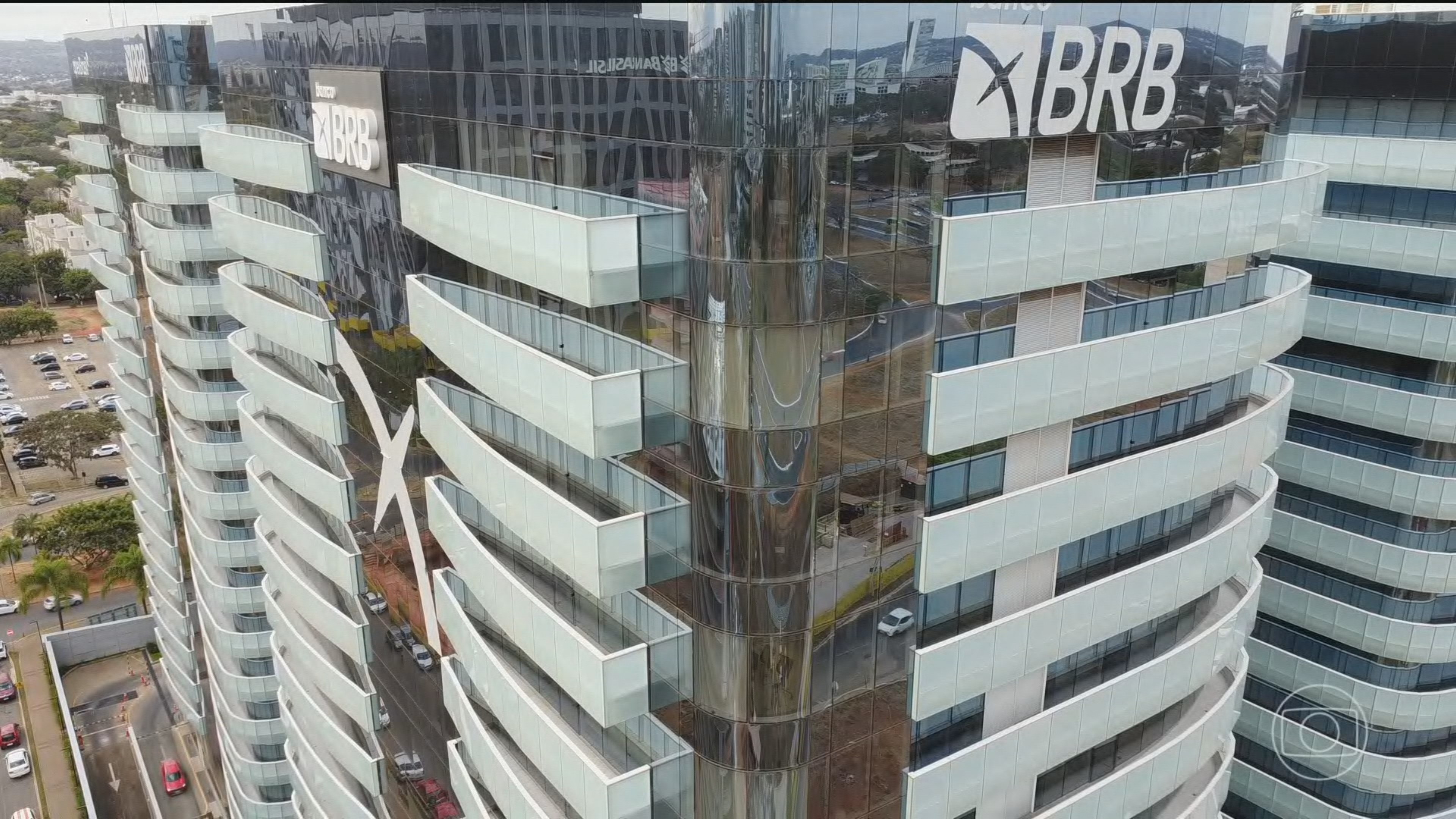
BRB headquarters in Brasília
National Newspaper/ Reproduction
Why is BRB in crisis?
The current BRB crisis is linked to negotiations and operations carried out with Banco Master between 2024 and 2025, which totaled R$30 billion according to data from the bank itself.
In November 2025, the Federal Police launched Operation Compliance Zero and identified an alleged billion-dollar financial fraud scheme – including a large part of these transactions.
In April this year, a new phase of the investigation led to the arrest of former BRB president Paulo Henrique Costa. The PF claims that he would have allowed business with the Master without collateral and without following adequate governance practices.
BRB estimates that at least R$8.8 billion of the Master credits purchased by BRB are non-existent, fraudulent or difficult to recover securities. In practice, "bad credit" that can turn into a hole in the bank's assets.
The government says it can recover R$2.2 billion to cover part of these bad bonds with other measures – but it would need a loan for the other R$6.6 billion.
"What was done with the BRB was cruel, it was very difficult. The recovery of the BRB is not easy. The amounts placed were very large between the purchase and sale of portfolios", stated the bank's president, Nelson Antônio de Souza, at the Senate hearing this Tuesday.
'What was done with BRB was cruel', says bank president about crisis with Master
What does the signed agreement provide?
The agreement between the Union and DF was approved at the end of May, after a week of negotiations led by the Minister of the Federal Supreme Court (STF) Luiz Fux.
It was necessary because the DF has a bad public finance score and, therefore, could not take out a loan of this size on the market.
The DF government contacted the STF to request that these restrictions be suspended. And he said that, without this, BRB could even be liquidated, which would cause even greater damage to the financial system.
According to the agreement reached, there will be no transfer of federal resources or endorsement from the Union. Instead:
the money will come from the Credit Guarantee Fund (FGC), a private institution made up of contributions from the country's largest banks precisely to avoid systemic crises that threaten the financial system;
these large banks in the country will be the guarantors of the loan – and may be called upon to restore the FGC if the DF government does not pay the installments;
If this happens, the DF offers federal transfers from the State Participation Fund (FPE) and the Municipal Participation Fund (FPM) as a counter-guarantee, to reimburse the banks.
The agreement also provides that, until the DF regains the "good paying" seal or until it pays off the loan with the FGC (whichever happens first), the fiscal adjustment restrictions provided for in article 167 of the Federal Constitution remain in force.
DF and the Union close an agreement to facilitate a loan of up to R$6.5 billion to save BRB
In practice, this means that, during this period, the DF will not be able to:
give raises to public servants, unless there is a definitive court order;
hold a competition to create new positions (you can only replace retirements and dismissals);
change public sector career structures, if this involves more expenses;
create any ongoing mandatory expenditure, including social programs and lines of financing;
grant tax benefits.
What model did DF propose?
Within the "mediation" carried out by the STF, the government of the Federal District and the BRB proposed a model for the loan to be taken from the FGC.
The details that have already been released provide:
value: R$6.6 billion in a single installment
grace period: 18 months (i.e., the first payment installment would be due in 2028)
interest: IPCA + 4.5% per year
payment: 180 monthly installments (15 years)
"Under these conditions, the first installment would be to be paid from 2028 onwards, in the range of R$95.6 million per month", estimated Nelson Souza in the Senate.
According to the executive, BRB's own tables predict that, when the DF starts paying the loan, in 2028, the bank will have already returned to the level of R$1 billion in annual profit. The distribution of dividends and profits from BRB could help Palácio do Buriti pay off its debt.
BRB President explains loan modeling that could save the bank
What is still not clear?
In practice, this entire loan modeling can still change.
BRB itself recognizes that, in the financial market, the one who establishes the conditions of a credit is the side that lends, and not the side that borrows.
Negotiation is monitored by control bodies, including the Federal Audit Court (TCU). If the conditions of the agreement are too far from market practices, the private and public banks that act on the guarantee may be pressured to withdraw from the transaction.
Therefore, it is not yet possible to answer the following questions:
What will be the total cost of the loan?
When will the DF start paying off? At what rate, and how much will the monthly disbursement be?
Where will the money come from for the DF to pay these monthly installments estimated at almost R$100 million? Does the capital's budget accommodate these amounts? If not, what will be cut?
Will BRB be able to return resources to the DF coffers when it recovers? If so, how much and at what pace?
Will the executives who are punished return money to reimburse BRB's coffers? If so, will this money be used to pay off the loan?
Calculations made by the opposition to the Celina Leão government estimate that the loan could cost the capital's coffers more than R$1 billion per year in interest payments alone.
g1 questioned the government and BRB about these projections, but received no response.
Read more news about the region on g1 DF.
🗞️ 4 sources covered this story




📰 Related Articles

In hospital, young woman attacked by shark resumes her college studies and receives support from her colleagues: 'She deserves all the help'
G1 Globo
Nego Di appears in bodybuilding video and MP points out non-compliance with legal measure
G1 Globo
Antoni Gaudí: 100 years ago, the architect who designed Sagrada Familia was mistaken for homeless and died after being denied help
G1 Globo
'Without a solution, the ball isn't rolling': teachers call for 100% increase in protests against the World Cup in Mexico
G1 Globo
Woman who pretended to be 12 years old and claimed victims across the country 'left everything behind' before being discovered, police say
G1 Globo