


STJ does not consider rape of a vulnerable person in a relationship between an 18-year-old boy and a 13-year-old girl; 'Very exceptional case', says rapporteur
⚡ Quick Summary
Unanimously, the Fifth Panel of the Superior Court of Justice (STF) understood this Tuesday (9) that there was no rape of a vulnerable person in the relationship between an 18-year-old young man and a 13-year-old girl in Paraná.
Unanimously, the Fifth Panel of the Superior Court of Justice (STF) understood this Tuesday (9) that there was no rape of a vulnerable person in the relationship between an 18-year-old young man and a 13-year-old girl in Paraná.
The case is being processed in secret at the STJ. During the session, the case's rapporteur, Minister Messod Azulay Neto, gave few details about the process and stated that it is necessary to understand that there are exceptional cases.
"The defendant has always worked, he has no criminal records. And the most important thing of all is that they form a family nucleus. They have a five-year difference [in age], there is no abuse, there is no violence," he said.
"Applying a prison sentence to a case like this, despite the new law that does not allow for relativization, but it seems that the distinction cannot fail to be made. I am maintaining the defendant's acquittal. A very exceptional case," stated the minister.
🔎Sanctioned in March, the new law cited by Azulay Neto established, in the Penal Code, the absolute presumption of the condition of victim in the crime of rape of a vulnerable person. According to the standard, there is no circumstance that can relativize a crime of rape of a vulnerable person, not even any conduct by the victim or those responsible.
🔎🔎According to the Penal Code, anyone who has sexual intercourse or commits another libidinous act with a minor under the age of 14 commits rape.
Now on g1
According to Azulay Neto, "breaking up the family nucleus, removing the father from his son and mother, will turn [the situation] into a tragedy", he stated.
Minister Maria Marluce Caldas said that this is not just a criminal problem and needs to involve the whole of society to guarantee effective protection for children. The minister highlighted that, out of every 10 rape cases, eight would involve vulnerable people.
"We have to transform this culture. Our teenagers, when they become young women, are not ready to lose their life projects and suffer embarrassment. We are faced with an established family situation, first-degree, second-degree acquittal, we are just reinforcing and establishing what was decided in the lower courts", he stated.
Minister Ribeiro Dantas said that these cases are very difficult to decide, that public opinion is not informed about the entire process and that newspaper headlines tend to criticize the STJ when these exceptional cases are dealt with by the Court.
"Criminal law cannot be a single answer and answer for everything. It has to be applied fragmentarily. It cannot be, above other alternatives and repressive of certain behaviors", stated Dantas.
"We cannot sacrifice the nucleus, the family group that in this case is functional and moving along normally, and which is what we would like every child and teenager to have, a family group capable of providing support. And are we going, in the name of inflexibility, of punitiveness, to seek only the sanction? Therefore, very exceptional conditions", added the magistrate.
Minister Joel Ilan Paciornik stated that the rapporteur's vote makes a distinction for the specific case, such as family consent, family formation, absence of violence and abuse.
Despite the decision in the specific case this Tuesday, the STJ has a consolidated understanding (summary) that serves as guidance for the lower courts in other cases.
The Court establishes that the "crime of rape of a vulnerable person involves sexual intercourse or the practice of a libidinous act with a minor under the age of 14, with the victim's eventual consent to the practice of the act, their previous sexual experience or the existence of a romantic relationship with the agent being irrelevant."
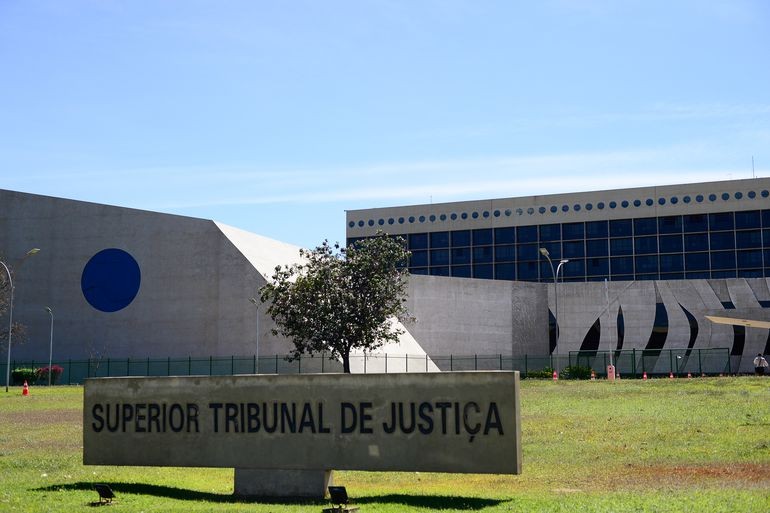
Building of the Superior Court of Justice (STJ), in Brasília.
Marcello Casal Jr/Agência Brasil
🗞️ 2 sources covered this story


📰 Related Articles
Rare feline puppies are rescued and returned to their mother in a forest area in the south of Roraima
G1 Globo
Video with meeting between former chief of investigators and accused of planning prosecutor's death was recorded at the businessman's request
G1 GloboEducation workers protest against layoffs and call for reforms in schools in Parauapebas
G1 Globo
Dias Toffoli takes office as effective minister of the TSE
CNN Brasil
Apple Introduces New Smart Features for 2027; look
CNN Brasil