


Transforming seawater into drinking water: desalination plant in Ilhabela should be delivered by 2029
⚡ Quick Summary
Desalination plant must be delivered by 2029 in Ilhabela Transform sea water into drinking water. In Ilhabela, on the North Coast of São Paulo, construction began on the state's first public desalination plant.
Desalination plant must be delivered by 2029 in Ilhabela
Transform sea water into drinking water. In Ilhabela, on the North Coast of São Paulo, construction began on the state's first public desalination plant. Delivery is expected to take place by 2029.
The technology, already used in countries with a shortage of fresh water, uses a filtration process that removes salt and other impurities.
The expectation is that the new structure will help reduce a problem known to residents and tourists: the lack of water during the busiest periods on the island.
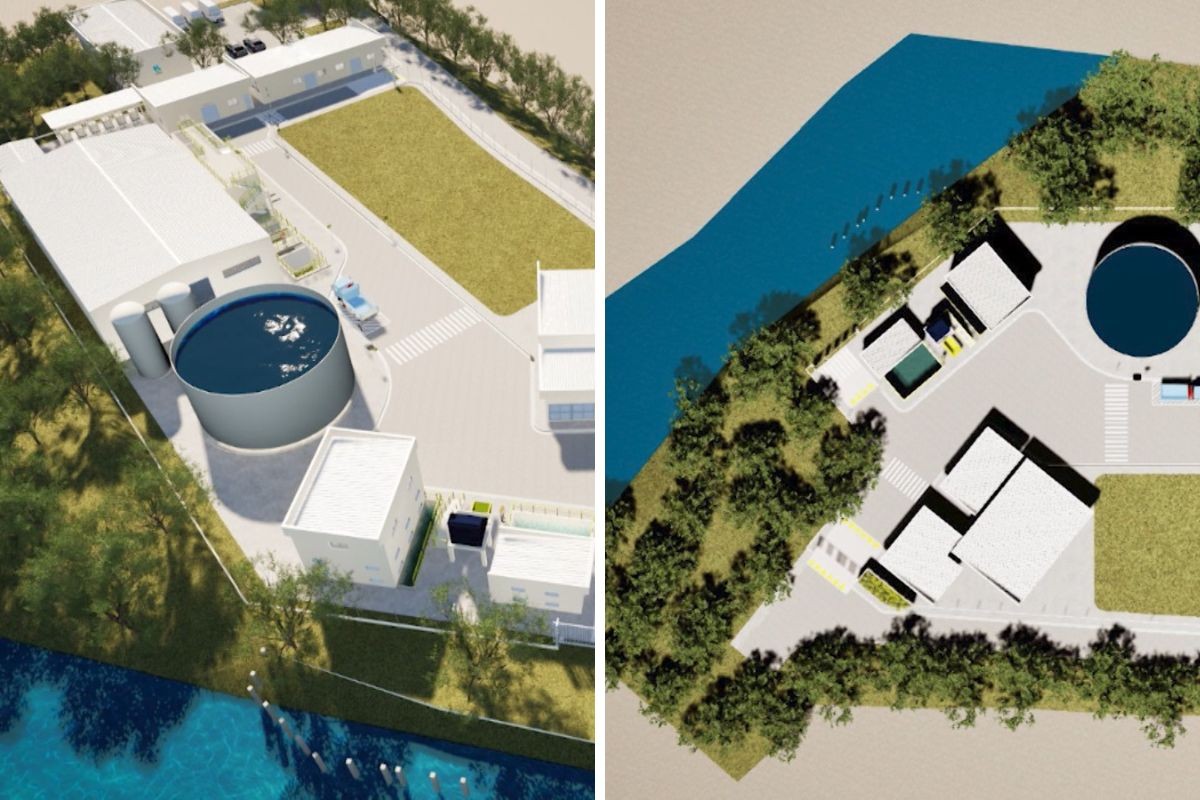
Images of the project show that the plant will have treatment equipment, reservoirs and support structures. The construction of an environmental education center is also planned.
Images of the de-signaling plant project in Ilhabela.
Reproduction/Sabesp
How will it be
The project, by Sabesp, foresees the capture of 40 liters of seawater per second. Of this volume, around 30 liters per second will be transformed into water suitable for human consumption and public supply.
The estimate is that production will increase water supply in the city by 20% and benefit approximately 60,000 residents and visitors from the Central and Northern regions of the city.
The works began this year and are still in the initial phase, with land preparation work. The first stage of the structure is expected to be completed by the end of 2027, while complete delivery is scheduled for 2029.
Plant is under construction in Ilhabela, on the North Coast of SP.
Reproduction/TV Vanguarda
But how does sea water become drinking water?
The process used will be reverse osmosis. The technique consists of subjecting salt water to high pressure so that it passes through special membranes capable of retaining salt and other particles. At the end of the process, the water meets the standards required for human consumption.
See more news from Vale do Paraíba and the Bragantina region
📰 Related Articles

Costa defends more EU support for affordable housing
Observador
The night a river was bigger than two ocean shots
Observador
PS wants to change the law to combat illegal online gambling
Observador
Man convicted of sexual crimes against his daughters is arrested by the PM in Monte Alegre, PA
G1 Globo
Prosecutor talks about eliminating 'bad oranges' after arrest of former head of Dise and MP intern for links with PCC
G1 Globo/https://i.s3.glbimg.com/v1/AUTH_59edd422c0c84a879bd37670ae4f538a/internal_photos/bs/2026/n/Y/BwNOetR5uaSLYnL29dGQ/edicao-imagens-g1-57-.jpg)