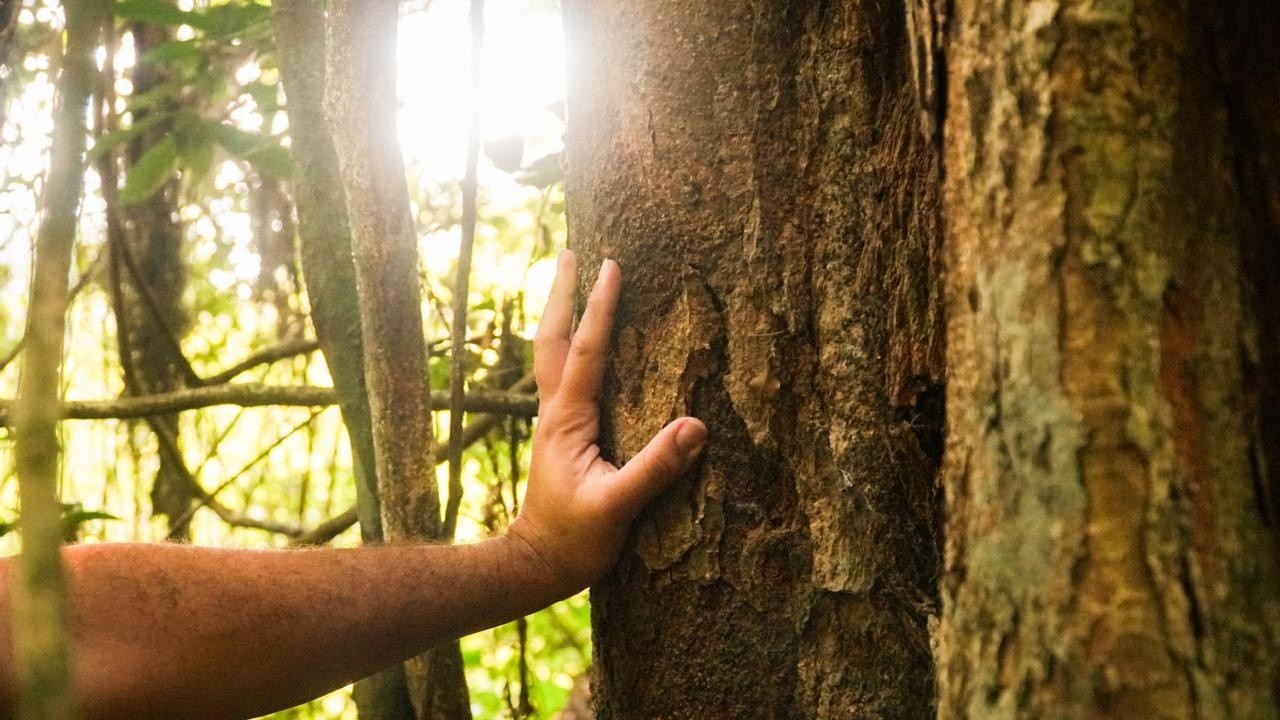
One of the largest specimens of Brazilwood ever identified in RJ is found in Pedra Branca State Park
⚡ Quick Summary
One of the largest specimens of brazilwood ever identified in RJ is found in Pedra Branca State Park Disclosure/INEA One of the largest examples of Brazilwood ever identified in the City of Rio de Janeiro was located in the Pedra Branca State Park, reported the State Environmental Institute, responsible for managing the conservation area.
One of the largest specimens of brazilwood ever identified in RJ is found in Pedra Branca State Park
Disclosure/INEA
One of the largest examples of Brazilwood ever identified in the City of Rio de Janeiro was located in the Pedra Branca State Park, reported the State Environmental Institute, responsible for managing the conservation area.
Measuring 16 meters in height – the equivalent of a five-story building, the species was identified by the Transcarioca Trail volunteer coordinator, researcher Diego Monsores during a monitoring activity, at the beginning of May, in the Piraquara nucleus of the Pedra Branca State Park, in Realengo.
The tree has a circumference of 2.35 meters: to hug its trunk you need three adults holding hands. The brazilwood, which may be more than 200 years old, was located through aerial monitoring carried out with drones, along sections of the trail. According to Monsores, technology has been a great ally of environmental conservation.
"We use everything from trap cameras to monitor fauna to drones that carry out aerial mapping of the tree canopy. The objective is to observe, locate and map threatened species, directly assisting the conservation unit in protecting these very important species. The proposal is to collect seeds and produce seedlings from these specimens, in order to guarantee the preservation of local genetic diversity and strengthen future ecological restoration actions", he highlighted.
Now on g1
An Inea partner, the Transcarioca Trail promotes the Pró Espécies project, which works to map the community of endangered plants present in the forests of the trail's forest corridor, which is more than 184 kilometers long and is considered the first long-distance trail in the country.
According to the institute, the presence of a century-old example of Brazilwood associated with an endemic and rare lineage "highlights the strategic importance of the Pedra Branca State Park for the conservation of biodiversity and the genetic heritage of the Atlantic Forest."
"These findings show that urban forest fragments can play a decisive role in maintaining threatened species and reinforce the need to expand research, monitoring and conservation actions in these protected areas", says the director of Biodiversity, Ecosystems and Protected Areas at Inea, Julia Bochner.
One of the largest specimens of brazilwood ever identified in RJ is found in Pedra Branca State Park
Disclosure/INEA
50 specimens of rare species
On the same trail, another surprise: a population of approximately 50 individuals of pau-brasil-folha-arruda-RJ was found, a very rare species and exclusive to the State of Rio de Janeiro.
Until a few years ago, Brazilwood was only known as three morphotypes: Arruda leaf, coffee leaf and orange leaf. However, with the advancement of research on the Brazilwood genome, five lineages that live on the Brazilian coast were identified: northern, Arruda-BA, orange, coffee and Arruda-RJ, the latter being exclusive to the State of Rio de Janeiro, according to researcher Dr. Haroldo Cavalcante de Lima, from the Research Institute of the Rio de Janeiro Botanical Garden, one of the authors of this study.
Recently, a study conducted by the biologist and researcher at the State University of Rio de Janeiro (UERJ), Patrícia da Rosa, confirmed the existence of the native pau-brasil-folha-arruda-RJ population.
According to the researcher, the Arruda-RJ lineage is endemic to Rio de Janeiro. This makes the State of Rio directly responsible for the conservation of this unique genetic diversity of Brazilian flora. These discoveries also show that urban forest fragments still preserve biodiversity of extremely high ecological and genetic value. "The Piraquara nucleus, for example, was identified as one of the few fragments of high priority for the conservation of the Arruda-RJ lineage, bringing together healthy populations, natural regeneration and potential for the production of seeds and seedlings intended for ecological restoration. The rediscovery of these native populations represents extremely important news for the conservation of the Atlantic Forest in the State of Rio de Janeiro. This confirms that there are still Brazilian wood remnants of the Arruda-RJ lineage surviving in urban areas, even after centuries of exploitation and loss of habitat", highlighted Patrícia da Rosa.
About the park
Pedra Branca State Park covers part of 17 neighborhoods in the west and southwest zones of Rio de Janeiro.
With an area of 12,491.72 hectares, the park was created by State Law No. 2,377 of June 28, 1974. It is considered one of the largest urban forests in the world. The conservation unit covers part of 17 neighborhoods in the west and southwest zones of Rio de Janeiro: Jacarepaguá, Taquara, Camorim, Vargem Pequena, Vargem Grande, Recreio dos Bandeirantes, Grumari, Padre Miguel, Bangu, Senador Camará, Jardim Sulacap, Realengo, Santíssimo, Campo Grande, Senador Vasconcelos, Guaratiba and Barra de Guaratiba.
The park was created with the aim of preserving forest remnants and water sources threatened by urban expansion, protecting historical buildings, ruins and archaeological sites, among others.
📰 Related Articles
Do new attacks by Iran reveal a change in war strategy?
BBC Brasil
Recife opens voting to choose the attractions of the decentralized centers of São João; find out how to vote
G1 Globo
Launch of the 50th Folkloric Festival brings together 4 thousand people in Santarém and defines order of presentations
G1 Globo
Daily summary #2009: Iran and Israel stop exchanging attacks; Philippines earthquake death toll rises; PF remains dissatisfied with Vorcaro's accusation; Éderson joins the US national team and more
G1 Globo
Israel rejects demands and continues to attack Hezbollah
Observador