


Check out how the presidential race in Peru is going in each region of the country
⚡ Quick Summary
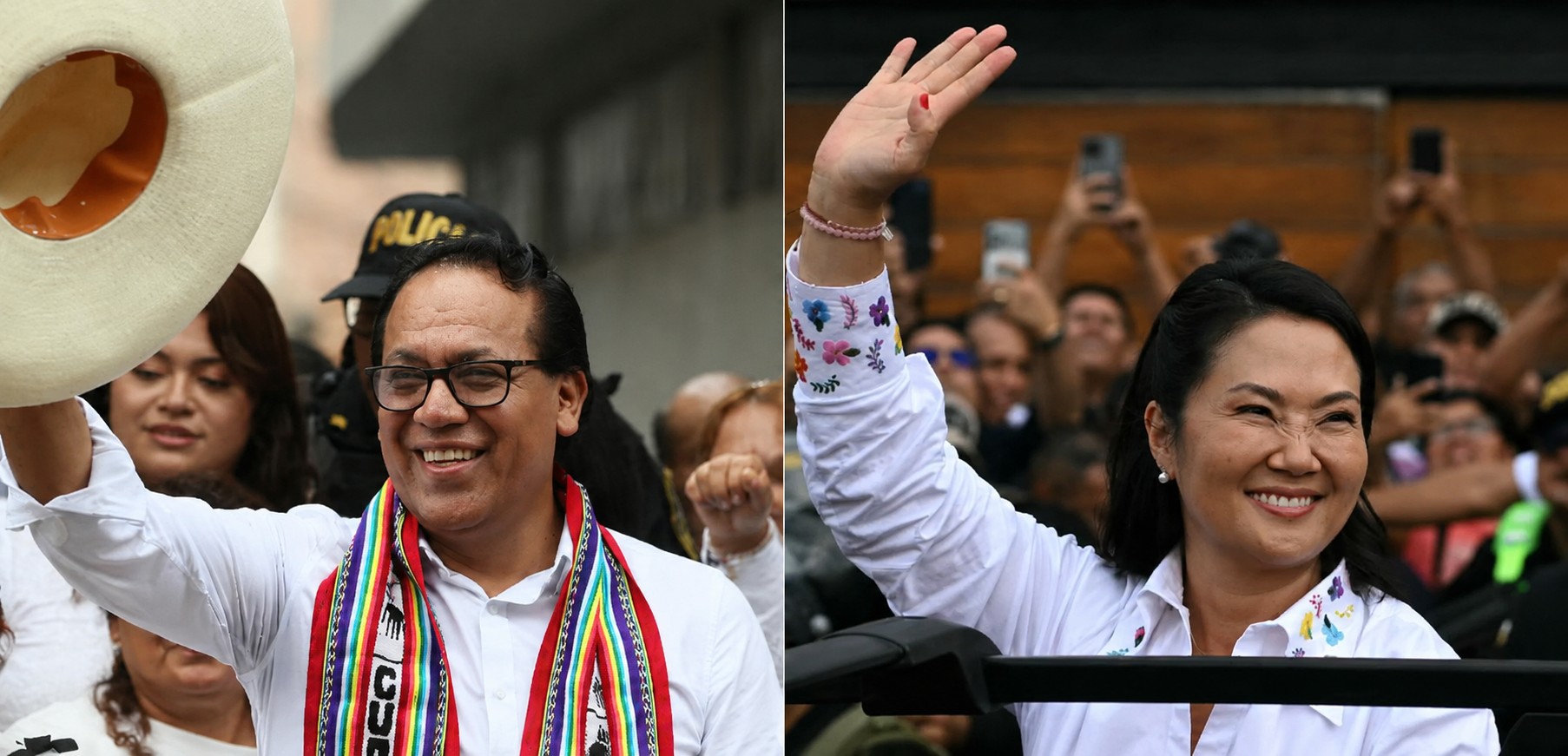
Montage shows Peruvian presidential candidates Roberto Sánchez and Keiko Fujimori on June 7, 2026, the day of voting in the second round ERNESTO BENAVIDES / AFP Candidates Keiko Fujimori, from Força Popular, and Roberto Sánchez, from Juntos pelo Peru, compete vote by vote in the presidential election in Peru in the second round.
Montage shows Peruvian presidential candidates Roberto Sánchez and Keiko Fujimori on June 7, 2026, the day of voting in the second round
ERNESTO BENAVIDES / AFP
Candidates Keiko Fujimori, from Força Popular, and Roberto Sánchez, from Juntos pelo Peru, compete vote by vote in the presidential election in Peru in the second round. The vote took place this Sunday (7) and the investigation is ongoing.
With 95.7% of the country's ballot boxes counted, official data from the National Office of Electoral Processes (ONPE) indicate that Keiko has 50.1% of valid votes against Sánchez's 49.9%.
Considering the polls in which Peruvians voted abroad, the total count is at 93.5% with 50.04% for Keiko and 49.96% for Sanchez.
The electoral authority reported that the release of the final result could take days.
Check out how the count is going in each Peruvian region this Monday (08):
Elections in Peru: Check out the counting of the ballots in dispute between Keiko Fujimori and Roberto Sánchez
Art/g1
Results by region
The pace of counting the ballots varies in each location. There are regions with 99.6% of the ballots counted, such as Lambayeque, in the northwest of the country. Meanwhile, in others, the index is 60.5, as is the case of Loreto, in the northeast of the country, in the Peruvian Amazon.
According to official data so far, see how candidates fare in the departments:
Keiko Fujimori leads in 9 regions: Callao (65.6%), Tumbes (64.3%), Lima (63.5%), Lambayeque (58.8%), La Libertad (57.5%), Piura (56.9%), Loreto (55.7%), Ucayali (53.4%) and Ica (51.9%).
Roberto Sánchez leads in 16 regions: Puno (86.5%), Huancavelica (81.5%), Apurímac (81.2%), Ayacucho (79%), Cusco (77.8%), Moquegua (72.6%), Tacna (71.3%), Madre de Dios (67.8%), Cajamarca (66.8%), Huánuco (64.1%), Arequipa (63.6%), Amazonas (62.4%), Pasco (60.9%), Áncash (56.6%), Junín (54.9%) and San Martín (54.2%).
Now on g1
Candidates' profile
Keiko Fujimori is running for the Força Popular party, a party she founded in 2008 to lead the Fujimorist movement. Daughter of former president Alberto Fujimori, the candidate is running for president for the fourth time, having been defeated in the second round in the 2011, 2016 and 2021 elections.
In the first round vote in 2026, Keiko obtained 17.2% of the valid votes.
Representative Roberto Sánchez, from Juntos pelo Peru, reached the second round after obtaining 12% of the votes in the first round.
Sánchez's support base is mainly identified in rural areas and areas far from urban regions.
History and electoral context
The 2026 elections saw a record 35 presidential candidates in the first round. The process takes place in a scenario in which Peru has registered 9 presidents in 10 years, and constitutional terms should be five years.
Survey data indicate that 90% of Peruvians express little or no confidence in the government and the National Congress.
Furthermore, only 10% of Peruvians say they are satisfied with democracy in the country, a situation that researchers classify as "chronic distrust".
🗞️ 3 sources covered this story

📰 Related Articles
RJ PM arrested for theft at Belo Horizonte International Airport
G1 Globo
Kremlin turns off surveillance on Putin after attack on Khamenei
Observador
Residents report water leaks in neighborhoods of Itaperuna
G1 Globo
Apple launches iOS 27, new operating system for iPhones
G1 Globo
Drop in cancer diagnoses in the Covid-19 epidemic
Observador